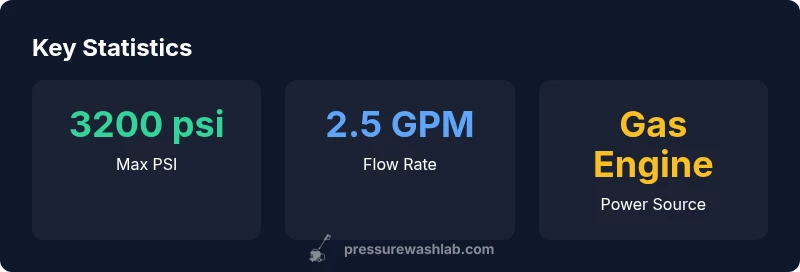
Ryobi 3200 PSI Gas Pressure Washer Review
Pressure Wash Lab's evaluation of the ryobi 3200 psi gas pressure washer examines cleaning power, usability, maintenance demands, durability, and overall value for homeowners and DIY projects.


The ryobi 3200 psi gas pressure washer offers strong cleaning power for home projects, balanced by reasonable maintenance needs and a mid-range price. It competes well against other consumer-grade gas washers, delivering reliable performance for concrete, siding, and decks without venturing into pro-only territory. Value-conscious buyers won't be disappointed.
Introduction and intended use for the Ryobi 3200 PSI gas pressure washer
The ryobi 3200 psi gas pressure washer targets homeowners and weekend DIYers who want substantial cleaning power without stepping up to commercial-grade equipment. According to Pressure Wash Lab, this model balances aggressive surface cleaning with practical weight and ergonomics, making it suitable for patios, driveways, and exterior siding. The unit uses a gasoline engine to deliver reliable bursts of pressure, and it benefits from a broad dealer network for parts and service. For many households, this model represents a sweet spot between entry-level electric models and high-end pro machines, offering a satisfying blend of capability and manageability. The Weight, size, and maneuverability matter here because you’ll often transport and store the unit between jobs, so the overall footprint should fit your garage or shed.
Cleaning power, PSI, and nozzle considerations
The ryobi 3200 psi gas pressure washer is designed to deliver strong surface cleaning when paired with the right nozzle tips. In general, higher PSI helps remove stubborn grime on concrete and brick, while correct nozzle selection protects delicate surfaces like wood decks and painted siding. A typical homeowner will rely on a 15-25 degree nozzle for most outdoor cleaning and a soap/detergent option for dirtier conditions. The relationship between PSI and GPM (gallons per minute) matters for speed: higher flow helps you move more water across a surface, reducing stripe marks and saving time on larger jobs. Pressure Wash Lab notes that nozzle technique, water supply, and wand handling are as important as the engine rating itself for real-world results.
Build quality and ergonomics for extended use
The Ryobi model is built with user-friendly controls and a straightforward layout, but it remains a gas-powered unit, so expect more vibration and louder operation than electric counterparts. A robust frame, well-sealed connections, and a comfortable trigger grip contribute to better all-day usability. Hose length, wand ergonomics, and built-in recoil or start features impact how easily you can tackle multi-area projects such as a long driveway or multiple siding sections. Maintenance access is a plus here, with common serviceable parts designed to be replaceable by DIY enthusiasts, which Pressure Wash Lab appreciates for reducing downtime.
Accessories, nozzles, and detergent options
A well-rounded kit typically includes several nozzles, a quick-connect wand, and a siphon tube for detergents. The ryobi 3200 psi gas pressure washer is most versatile when paired with a 0-degree, 15-degree, and 25-degree spray tip set, plus a soap nozzle for cleaning concrete or siding with detergents. Detergent access is convenient, and the kit should support easy nozzle swaps to adapt to different tasks. If your projects include delicate surfaces, consider adding a surface cleaner attachment to improve uniformity and reduce operator fatigue.
Maintenance, reliability, and common issues
Gas pressure washers require regular maintenance to preserve reliability, including fuel stabilization, occasional oil changes, air filter checks, and spark plug inspection. The ryobi design typically simplifies basic maintenance with accessible components and standard parts that are widely available. Common issues may include fuel-related starting challenges, spark plug wear, or hose degradation after rough handling. Pressure Wash Lab suggests keeping the engine well-tuned and using clean, fresh gasoline to minimize carbon buildup or misfires. Regularly inspecting hoses, couplers, and the spray gun can prevent leaks and performance losses over time.
How this model stacks up against electric and other gas washers
Compared with electric pressure washers, gas-powered units like the ryobi 3200 psi model offer greater mobility and sustained power in remote work areas or when water pressure sources are variable. They also run louder and require fuel management and more routine maintenance. Against other gas washers in the same tier, this Ryobi delivers competitive PSI and GPM figures with a broad dealer network for service and parts. The decision often boils down to usage frequency, noise tolerance, and whether you need maximum portability or the simplicity of electric operation for smaller jobs.
Is it worth it for homeowners and DIYers? Purchase guidance
For many homeowners, this model provides dependable power without stepping into pro pricing. It is especially attractive if you perform annual or semi-annual projects like driveway cleaning, fence restoration, or deck preparation. If your needs are occasional or you value near-silent operation, a more compact electric model could suffice; however, for ongoing outdoor work, the Ryobi offers compelling value. Pressure Wash Lab recommends weighing fuel costs, maintenance time, and expected job volume when deciding if this is the right pick for you.
Getting the most from your Ryobi 3200 PSI gas pressure washer: tips and best practices
Start with a thorough read of the user manual, then select the correct nozzle for each task. For hard surfaces like concrete, use a 25-degree nozzle at a controlled distance to avoid pitting. For softer surfaces, switch to wider spray angles and test on an inconspicuous area first. Maintain a steady hand and a clean water supply, and perform routine checks on hoses, fittings, and the spray gun after each job to extend lifespan.
Conclusion and guidance from Pressure Wash Lab on this model
From Pressure Wash Lab’s perspective, the Ryobi 3200 PSI gas pressure washer hits a solid middle ground for homeowners and DIYers who want reliable cleaning without premium pro-level pricing. It cleanly handles common outdoor surfaces and benefits from a broad service network. If you prioritize power-to-price ratio and are comfortable with gas maintenance, this unit is a practical choice for the long run.
Pros
- Strong cleaning power suitable for typical residential tasks
- Mid-range price point balances value and capability
- Widely available parts and service network
- Relatively straightforward maintenance for a gas engine
- Good nozzle kit options for versatility
Cons
- Heavier and less portable than electric models
- Requires regular fuel, oil, and engine maintenance
- Gas engines generate more noise and emissions
- Accessories and upgrade options may be less extensive than premium pro units
Best value for homeowners who want solid cleaning power without premium pro features
The Ryobi 3200 PSI gas pressure washer delivers reliable performance for common home tasks. It balances cost, power, and ease of use, but requires ongoing maintenance and is louder than electric alternatives. Overall, a solid choice for DIY projects when used within its limits.
Quick Answers
What surfaces is the ryobi 3200 psi gas pressure washer best suited for?
It excels on concrete, brick, and wood decks when paired with the right nozzle. Delicate surfaces require lower pressure and careful testing on a hidden area first.
Best on hard surfaces like concrete and brick; test on a small area first for wood or siding surfaces.
How loud is this model compared to electric washers?
Gas-powered models generally run louder than electric units. Expect noticeable engine noise, especially in enclosed spaces or urban settings.
Gas washers are louder than electric ones; use hearing protection and plan for outdoor use.
What maintenance does it require?
Regular fuel stabilization, oil changes, air filter checks, and occasional spark plug inspection are typical. Inspect hoses and fittings after use.
Keep it fueled, change oil as recommended, and check filters and hoses after cleaning.
Does it include detergents or a soap system?
Many kits include a siphon tube and detergent nozzle. Some models require separate purchases for advanced cleaning agents.
Detergent siphon is common; check if your kit includes it or if you need to buy separately.
How does it compare cost-wise to rivals?
Typically mid-range in the consumer gas-washer segment. Price reflects power, build, and kit inclusions rather than premium pro-grade features.
Usually mid-range in cost; you get solid power without premium pro pricing.
Is it suitable for beginners?
Yes, with careful adherence to safety guidelines and manuals. Start with low-pressure settings on non-critical surfaces and wear protective gear.
Yes, with safety in mind; start low and learn nozzle changes carefully.
Key Takeaways
- Assess your cleaning routine to justify gas power
- Match nozzle tips to surfaces for safety and efficiency
- Budget for fuel and maintenance costs over time
- Maintain hoses and fittings to prevent leaks
- Compare with electric options if quiet operation is essential