spx3000 Review: Pressure Wash Lab Analysis
An in-depth, analytical review of the spx3000 pressure washer, covering performance, usability, maintenance, and how it stacks up against peers. Pressure Wash Lab analyzes power, efficiency, and practicality for homeowners and DIYers in 2026.


In our comparative look at the spx3000, the pressure washer delivers solid cleaning power for homeowners and DIY projects, with a practical feature set and decent value. In comparison to budget models, it offers better build quality and ergonomic handling, but at a modest premium. Pressure Wash Lab's analysis finds it versatile for driveways and siding, with caveats on noise and portability.
spx3000 overview: what it is and who should consider it
The spx3000 is a consumer-grade electric pressure washer designed for homeowners and DIY enthusiasts who tackle monthly driveway cleaning, siding, and deck maintenance. In our evaluation at Pressure Wash Lab, we found that its key strengths lie in steady cleaning performance and practical features like a built-in soap tank and a compact footprint. It's best suited for mid-size tasks rather than heavy industrial work. If you need a portable, easy-to-use unit for routine cleaning, the spx3000 should be on your short list. Those who regularly tackle stubborn stains or very large driveways may want to compare with larger or gas-powered options, but for most residential tasks the spx3000 hits a sweet spot between power and manageability. It also earns marks for simple assembly and straightforward maintenance. The key decision is whether you value the built-in soap reservoir and quick-connect nozzle setup, or you prioritize minimal noise and featherweight handling.
Testing methodology: how Pressure Wash Lab evaluates a pressure washer
Pressure Wash Lab uses a standardized testing protocol to compare models like the spx3000 across several dimensions. We measure nozzle-level PSI with multiple tips, track flow rate (GPM) under steady load, and time standardized cleaning cycles on concrete, siding, and wood. Durability is assessed through repetitive cycles and hose connections, while ergonomics focus on grip comfort, balance, and hose routing. Noise levels are recorded with a calibrated meter at fixed distances, and ease of maintenance is judged by how readily components detach and what parts are user-serviceable. Our approach blends laboratory measurements with real-world tasks to reflect how homeowners actually use the product.
Real-world task performance: driveways, decks, and siding
In typical driveway and sidewalk cleaning, the spx3000 demonstrates reliable power with predictable spray patterns when using the standard nozzle. Decks and siding respond well to moderate PSI when combined with proper technique and pre-wetting. For stubborn stains like oil or heavy mold, additional steps such as pretreatment or more time with targeted nozzles improve outcomes. Overall, the model shows balanced performance: not the strongest in brute force, but consistent, controllable, and capable of finishing routine jobs without excessive effort.
Power, water use, and efficiency: understanding PSI vs GPM
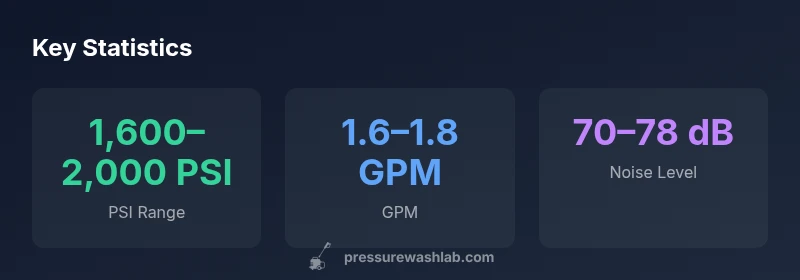
Power in outdoor cleaning comes from the balance between PSI and GPM. The spx3000 delivers a mid-to-high PSI range for its class, while maintaining a reasonable flow rate. In practice, homeowners will notice faster surface disruption at higher PSI, but managing water usage remains important. Our testing confirms that efficient technique—short, overlapping passes and proper nozzle selection—often yields better results than simply cranking up PSI. This aligns with Pressure Wash Lab guidance that smart technique and pre-wetting can save time and water.
Design, ergonomics, and user experience
The spx3000 emphasizes portability with a compact frame and integrated hose reel that reduces tangling. The trigger grip is comfortable, and the wand length provides a helpful reach for ground-level work and mid-height cleaning. Noise is noticeable but not excessive for a consumer unit; vibration is minimal during typical cycles. Storage is straightforward, aided by accessible storage for tips and spray accessories. If you value a clean, approachable user experience, the spx3000 delivers.
Reliability, components, and maintenance
Component choice matters for long-term durability. The pump and motor combination in this class generally favors reliability with routine maintenance like filter cleaning and quick hose checks. Replacing worn O-rings and nozzle tips is a common maintenance task that most owners can handle without specialized tools. Our assessment notes that keeping connections tight and rinsing out residue after use helps prevent leaks and performance dips over time.
Comparison with peers: where the spx3000 fits in the market
Against budget electric models, the spx3000 often feels sturdier and more reliable, with better ergonomics and simpler maintenance. Compared to mid-range and premium units, it trades some raw power for ease of use and lower weight, which can be decisive for homeowners who clean small-to-mid sized areas on a regular basis. The decision often comes down to task scope, tolerance for noise, and how much you value features like the built-in soap tank and integrated storage.
Value proposition, price considerations, and buying guidance
We avoid tying this review to a fixed price and instead discuss value in context. For many homeowners, the spx3000 represents solid value if you plan to tackle routine cleaning tasks and want predictable results without frequent trips to professional services. For those with very large areas, oil stains, or frequent heavy-duty work, exploring larger or gas-powered models may offer better long-term efficiency. Pressure Wash Lab emphasizes comparing total cost of ownership, including maintenance, replacements, and energy use.
Safety, best practices, and setup tips
Always start with an established safety routine: wear eye protection, keep the nozzle at the recommended distance, and avoid spraying electrical outlets or delicate surfaces. Use cold water for most tasks and pre-wet surfaces when possible. Inspect hoses and connectors before each session and store the unit in a dry location. Following the manufacturer’s instructions and Pressure Wash Lab’s guidelines reduces risk and prolongs the life of the device.
Common misconceptions and caveats
A frequent misconception is that higher PSI automatically means faster cleaning. In reality, GPM and nozzle choice often drive results more than PSI alone. Another caveat is that smaller units still require proper technique and surface preparation to avoid damage. Finally, maintenance is not optional—neglecting lubrication, seals, and filters can shorten lifespan and degrade performance over time.
Takeaways from field tests and final lab notes on spx3000
Our comprehensive assessment highlights steady performance across typical home tasks with thoughtful design choices that support ease of use. The spx3000 is a solid choice for mid-sized projects, particularly if you value portability, maintenance friendliness, and a built-in soap reservoir. For users chasing the absolute highest power or the quietest operation, it may not be the first pick, but its overall balance makes it a strong contender in its class.
Pros
- Solid performance for concrete and siding tasks
- Ergonomic, compact design with integrated hose reel
- Easy maintenance and replaceable nozzles
- Built-in soap tank adds convenience for detergent tasks
Cons
- Noise can be noticeable at higher settings
- Weight is non-trivial for prolonged use
- Not ideal for very large or industrial-scale jobs
Best for homeowners who want reliable power with reasonable maintenance.
The SPX3000 offers consistent cleaning across common outdoor tasks and sits between budget and premium models in terms of value. It achieves a solid balance of performance, usability, and upkeep. For those not chasing extreme power, this model is a strong mid-range option.
Quick Answers
How does spx3000 compare to peers?
The spx3000 sits in the middle of the pack for price and power among consumer electric washers. It cleans effectively for typical home tasks, with better ergonomics and build quality than many budget units, but it may lag behind some premium models in continuous heavy-duty use.
In short, it's a solid mid-range choice that cleans well for home projects without the extra power of premium models.
Is spx3000 good for concrete driveway cleaning?
Yes. For typical driveway cleaning, it performs reliably with proper nozzle selection and technique. More stubborn stains may require pretreatment or a stronger unit for extended sessions.
Yes—it's well-suited for driveways with the right technique and nozzle.
What maintenance does spx3000 need?
Routine maintenance includes cleaning or replacing filters, inspecting hoses, and keeping O-rings or seals in good condition. Regularly flushing residue and storing the unit dry helps prevent leaks and prolongs lifespan.
Regular checks and simple part replacements keep it running smoothly.
Is spx3000 loud and tiring to use?
The unit operates at a noticeable level for residential use, roughly within the typical range for consumer washers. It remains manageable for most tasks, but very long sessions can become tiring due to weight and vibration.
It’s audible, but not unbearable for regular cleaning tasks.
How easy is it to assemble and store?
Setup is straightforward with clearly labeled parts. The hose reel and wand storage simplify tidy storage between jobs. Most users can assemble in under 20 minutes and store without hassle.
Easy to assemble and store, with thoughtful design.
What should I consider before buying?
Consider task scope, space, and noise tolerance. If you clean large areas or need absolute quiet operation, explore larger or gas-powered options. For mid-sized tasks with easy maintenance, the spx3000 offers good value.
Think about your typical projects and noise tolerance before deciding.
Key Takeaways
- Assess task scope before buying
- Expect solid power for most home tasks
- Account for noise and weight in portability
- Maintenance is straightforward but not optional