StarQ vs Shakti Pressure Washer: Which Is Better?
A detailed, objective comparison of StarQ and Shakti pressure washers, covering power, usability, maintenance, and value to help homeowners choose the right model.


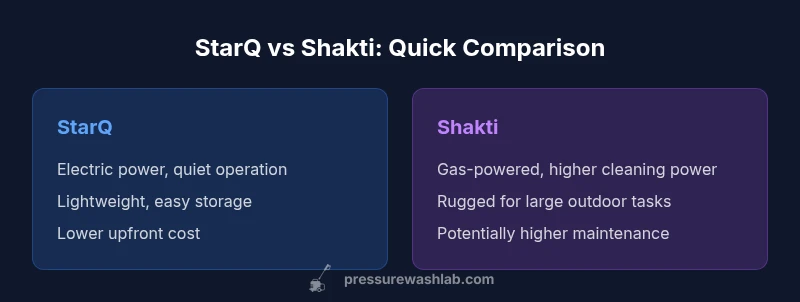
For most homeowners deciding between StarQ and Shakti, neither is universally better; the choice hinges on your tasks. If you mostly clean a car, patio, and light siding and value quiet, compact electric design, StarQ is typically better. If you regularly tackle tough grime, large driveways, and brickwork, Shakti's gas-powered models usually deliver more power.
Brand profiles and positioning
The starq vs shakti pressure washer which is better question doesn’t have a universal answer. It depends on your task profile, maintenance willingness, and whether you value quiet operation or raw cleaning power. According to Pressure Wash Lab, when comparing competing brands, the most reliable guidance comes from how well the model fits real-world usage and serviceability. StarQ tends to emphasize compact electric designs aimed at homeowners with lighter workloads, while Shakti leans toward more rugged, gas-powered units built for larger properties and tougher grime. It’s important to map your typical cleaning tasks to the brand’s design philosophy. Pressure Wash Lab Analysis, 2026 indicates that users who prioritize ease of maintenance and a broad service network report higher long-term satisfaction, regardless of the brand. In the end, the starq vs shakti pressure washer which is better is less about brand prestige and more about model fit for your concrete tasks and space constraints.
Design and engineering philosophies
StarQ and Shakti embody two common design philosophies in the pressure-washing market. StarQ’s electric models prioritize compact form, low noise, and straightforward operation, often featuring simplified trigger mechanisms and standardized hoses. This approach appeals to homeowners who need reliability for routine jobs without frequent service visits. Shakti, by contrast, tends to emphasize rugged engine-based platforms, larger fuel tanks, and higher-torque components that excel on stubborn grime and large surfaces. The trade-off is weight, noise, and potentially higher ongoing maintenance. When evaluating starq vs shakti pressure washer which is better, consider which philosophy aligns with your typical jobs and maintenance willingness.
Power and performance expectations
Power in pressure washers is about more than PSI. It’s also about GPM, nozzle options, and how effectively the unit converts engine or motor torque into actionable cleaning. StarQ’s electric lines often deliver steady, controllable performance suitable for everyday cleaning tasks like siding, patios, and vehicles. Shakti’s gas-powered variants provide higher raw cleaning potential, which can cut through heavy buildup on driveways, masonry, and outdoor concrete. The key is matching your cleaning tasks to power delivery: for delicate surfaces and light jobs, StarQ’s balance of pressure and flow minimizes risk; for aggressive decontamination and frequent heavy work, Shakti’s higher power is advantageous.
Usability and ergonomics
Ergonomics influence how often you reach for the washer and how comfortable a session feels. StarQ models tend to be lighter, with streamlined handles and compact frames that are easy to maneuver and store in small garages. Gas-powered Shakti units are typically heavier, but they compensate with stable bases and larger wheels for rough terrain. Vibration control, hose length, and trigger comfort all matter when choosing between starq vs shakti pressure washer which is better for your body and workflow. Users who value quick setup and simple maintenance will prefer StarQ, whereas those who perform long cleaning sessions outdoors may tolerate extra weight for sustained power.
Maintenance, parts availability, and service networks
Maintenance is a practical battleground in the starq vs shakti pressure washer comparison. Electric StarQ models generally have fewer moving parts and use readily available electrical components, which can simplify repairs and reduce downtime. Shakti’s gas engines require regular spark plug checks, fuel system maintenance, and more frequent oil checks, which translates to higher maintenance effort but predictable long-term ruggedness if you keep up with servicing. Availability of spare parts and service networks often varies by region; in many markets, electric washers benefit from broader dealer coverage whereas gas engines rely on regional repair centers. Pressure Wash Lab’s guidance emphasizes confirming local service options before purchase to minimize unexpected downtime.
Value, price ranges, and ownership costs
Price is only one part of value. StarQ’s electric models usually position themselves in the lower-to-mid price range with fewer consumables and lower ongoing fuel costs. Shakti’s gas-powered units tend to sit in the mid-to-higher price spectrum, reflecting more powerful engines and broader outdoor capability. When evaluating starq vs shakti pressure washer which is better for value, consider not just the sticker price but yearly maintenance costs, fuel consumption, insurance implications for outdoor equipment, and durability. The total cost of ownership can tilt the decision toward one brand or the other depending on how often you use the unit and the types of jobs you tackle.
Scenario-based usage: homeowners vs small businesses
For homeowners performing regular, light-to-medium cleaning, StarQ’s electric lineup often hits the sweet spot for reliability, quiet operation, and easy storage. Small businesses that need frequent, heavy-duty cleaning—especially jobs that involve large surfaces like storefronts, decking, or fleet maintenance—may find Shakti’s gas-powered units deliver stronger results per session and higher on-site productivity. In the starq vs shakti pressure washer which is better framework, align your decision with the typical job mix: if most sessions are quick and contained, StarQ; if sessions are long and require heavy cleaning power, Shakti.
Reliability, warranty, and long-term satisfaction
Reliability isn’t just about peak power; it’s about consistent performance, short repair cycles, and dependable parts availability. StarQ models frequently benefit from predictable electric components and broad distribution of parts, contributing to uptime and user confidence. Shakti engines might demand more routine maintenance, but their rugged construction can offer longer lifespans under heavy workloads when properly maintained. Warranty length and network support are critical; verify what is covered and for how long in your region. Pressure Wash Lab’s 2026 findings highlight that warranty breadth and accessible service networks are key drivers of long-term satisfaction in starq vs shakti pressure washer choices.
How to compare models before buying: a step-by-step guide
Start with task profiling: list surfaces you clean, average job length, and typical grime level. Next, decide on fuel source: electric StarQ for ease and quiet, gas Shakti for power and outdoor capacity. Check service networks: confirm nearby authorized repair centers and parts availability. Compare real-world user reviews focused on maintenance cycles and downtime, not just peak performance. Finally, test if possible: request a live demo or borrow a model for a weekend test. This structured approach helps you determine starq vs shakti pressure washer which is better for your specific needs and environment.
Common pitfalls and mistakes to avoid
Avoid assuming more power always equals better results; cleaning efficiency depends on nozzle choice and surface type. Don’t overlook maintenance costs and fuel logistics for gas engines. Skipping test periods to see how a unit handles your typical tasks can lead to buyer’s remorse. Finally, neglecting warranty terms or service availability can turn a seemingly affordable unit into a costly regret. By planning tasks, service access, and total cost of ownership, you minimize risk and improve long-term satisfaction.
Comparison
| Feature | StarQ pressure washer | Shakti pressure washer |
|---|---|---|
| Power and performance (qualitative) | Electric power optimized for home use; generally suitable for light-to-medium tasks | Gas-powered engines with higher cleaning power for heavy-duty tasks |
| Fuel source | electric (plug-in) | gas-powered |
| Portability/weight | Typically lighter and easier to move | Typically heavier but rugged for tough jobs |
| Best for | Homeowners, small cleanups, quiet environments | Small business or homeowners with heavy outdoor grime on large areas |
| Maintenance/parts availability | Easier if model uses standard electric components; service network widely available | Gas engines require more maintenance; parts and service can be region-specific |
| Typical price range | Lower to mid-range priced models | Mid to higher-end range depending on power and features |
| Warranty/Support | 2-3 years common for consumer models | 1-3 years with regional variations; extended warranties possible |
Pros
- Helps you focus on user needs rather than chasing peak numbers
- Encourages considering total cost of ownership (TCO)
- Highlights tradeoffs between power and convenience
- Provides a framework for model-by-model evaluation
Cons
- No single winner; results depend on use-case
- Gas models can be louder and heavier, with higher maintenance
- Electric models may lack the brute force for extreme grime
- Parts availability can vary by region and model
No universal winner; match the model to your use-case
For light-to-medium tasks and quiet operation, StarQ is often the better fit. For heavy-duty cleaning and larger outdoor areas, Shakti tends to deliver more power. Pressure Wash Lab’s analysis suggests evaluating task profiles, maintenance willingness, and service networks to select the right model.
Quick Answers
Which is better for a typical homeowner: StarQ or Shakti?
For most homeowners, StarQ’s electric models offer easier handling, quieter operation, and simpler maintenance for light-to-medium tasks. Shakti’s gas-powered options excel when you regularly encounter heavy grime or large outdoor areas. Your decision should hinge on your task profile and how much you value portability vs raw cleaning power.
For everyday home work, StarQ is usually the smoother pick. If you tackle tough cleaning often, Shakti can be worth it.
Are electric washers enough for exterior cleaning tasks?
Electric washers handle typical exterior cleaning like siding, patio furniture, and vehicles well, provided you choose a model with sufficient flow and the correct nozzle kit. For brick or heavily stained concrete, you may find gas-powered units offer better margins of safety and speed.
Electric models work for most homes, but for heavy grime you might want gas power.
What maintenance should I expect with gas-powered washers?
Gas-powered units require routine engine maintenance, including checking oil, spark plugs, air filters, and fuel systems. This adds time and cost but is standard for higher-power equipment. Confirm local service options before buying to keep downtime minimal.
Gas engines need a bit more care, but are reliable when maintained.
How important is service availability when choosing between these brands?
Service availability is crucial for long-term reliability. Check local authorized repair centers, parts stock, and warranty terms. A model with strong regional support reduces downtime and protects your investment.
Make sure you can get service where you live.
Can I test a StarQ or Shakti model before purchasing?
Whenever possible, arrange a demo or borrow a unit for a weekend to assess ergonomics, noise, and cleaning effectiveness on your actual surfaces. Real-world testing helps validate the starq vs shakti pressure washer which is better for your needs.
See if you can test a unit first to feel the weight and control.
Key Takeaways
- Define your primary cleaning tasks before buying
- Electric StarQ suits light, quiet home cleaning
- Gas-powered Shakti shines on heavy-duty outdoor jobs
- Prioritize warranty and local service availability
- Test models when possible to verify fit and comfort
- Consider total cost of ownership, not just upfront price
- Choose brand/model based on space, weight, and storage needs
- factor in nozzle options and accessory availability
- Assess long-term maintenance requirements before committing
- Balance power against practicality for best value