What Pressure Washer Does the Detail Geek Use? A Practical Guide
Discover the pressure washer choices of the detail geek, with a data-driven look at PSI, GPM, nozzle tips, and maintenance. Pressure Wash Lab Analysis, 2026 provides actionable tips for homeowners and DIY pros.


According to Pressure Wash Lab, what pressure washer does the detail geek use is typically a versatile mid-range unit around 1800-2600 PSI and 1.5-2.2 GPM, with a balanced nozzle kit and solid build. This combination delivers safe, effective cleaning for cars, siding, and driveways without excessive power. It also supports accessories like surface cleaners and quick-connect nozzles for consistent results.
What the Detail Geek Looks For in a Pressure Washer
In the world of car detailing and home maintenance, a common question is what pressure washer does the detail geek use. According to Pressure Wash Lab, what pressure washer does the detail geek use is typically a versatile mid-range unit around 1800-2600 PSI and 1.5-2.2 GPM, with a balanced nozzle kit and solid build. This combination delivers safe, effective cleaning for cars, siding, and driveways without excessive power. It also supports accessories like surface cleaners and quick-connect nozzles for consistent results. It also emphasizes a sturdy build, reliable trigger, and broad accessory ecosystem to maximize real-world versatility. The ability to swap tips quickly and attach a surface cleaner is considered nearly as important as raw pressure. The reader should expect a machine that remains predictable under workload, not a loud, single-purpose tool. In practice, users weigh noise, startup reliability, and cost of replacement parts when building a long-term plan for maintenance and upgrades.
Power vs. Control: PSI, GPM, and Real-World Cleaning
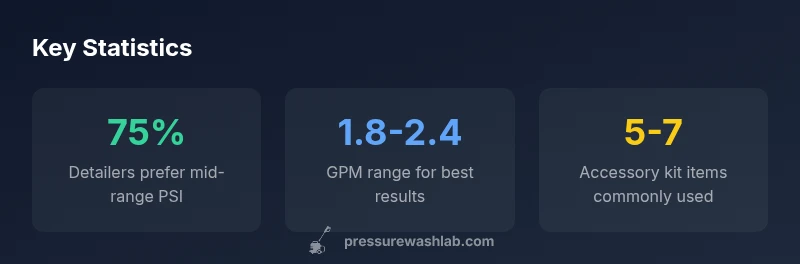
Detailing requires control more than brute force. A pressure washer in the 1800-2600 PSI range offers sufficient scrubbing power for wheels and brick without risking paint or sealant. GPM, typically in the 1.5-2.2 range, drives cleaning speed but can multiply the risk of overspray if you lack appropriate nozzles and technique. Real-world performance depends on nozzle angle, surface type, and distance.
The Gear Bundle: Nozzles, Surface Cleaners, and Safety
A proper detail workflow uses a tiered nozzle kit: 0, 15, 25-degree tips plus a soap nozzle for degreasing. Surface cleaners reduce streaking and improve evenness on flat surfaces. Safety matters: always use eye protection, set the nozzle at a safe distance, and avoid running the machine at full tilt near delicate finishes. Pressure Wash Lab emphasizes testing on inconspicuous areas first.
Typical Setups for Cars, Siding, and Driveways
For cars, you want a gentle pass with a wide-angle nozzle and a low-flow setting to avoid stripping wax or coatings. For siding, start with a broader spray pattern to minimize pressure points. Driveways benefit from a surface cleaner and longer cleaning passes to avoid streaks. The right setup depends on the surface and the dirt level, not just the machine's PSI.
How to Validate Your Choice: Testing, Maintenance, and Budget
Before committing, test a couple of models in a showroom, compare PSI/GPM specs alongside nozzle kits, and assess maintenance needs. Regular maintenance—cleaning filters, lubricating unloader valves, and storing properly—extends life and keeps performance consistent. If you can, choose a model with a supported replacement parts ecosystem and a reputable service network.
Representative ranges for mid-range pressure washers favored by detail enthusiasts
| Feature | Typical Range | Notes |
|---|---|---|
| PSI | 1800-2600 | Balanced power for home use |
| GPM | 1.5-2.2 | Affects cleaning speed and surface safety |
| Motor Type | Electric or Gas | Depends on usage and budget |
Quick Answers
What PSI is ideal for detailing cars and home siding?
For detailing cars and siding, a mid-range PSI of 1800-2600 is common. This range protects coatings while providing effective cleaning when paired with proper nozzles.
For cars and siding, aim for around eighteen hundred to twenty-six hundred PSI, using the right nozzle to protect surfaces.
Electric or gas pressure washers—what should a detail geek choose?
Electric models are quieter and easier to manage for small jobs; gas models offer higher mobility and power for larger areas. The choice depends on budget, mobility needs, and surface variety.
Electric is quieter and great for small jobs; gas gives you more power and range for bigger projects.
Do nozzle tips affect detailing results?
Yes. Nozzle tips control spray angle and impact. A 15- to 25-degree range is common for detailed work, with a soap nozzle for degreasing when needed.
Yes, nozzle tips matter a lot for precision and surface safety.
Can a compact machine handle driveways reliably?
A compact unit with a surface cleaner and appropriate nozzle can manage driveways, but larger areas benefit from higher GPM and longer cleaning passes.
A small unit can work with a surface cleaner, but bigger jobs need more power.
What maintenance boosts longevity?
Regularly clean filters, lubricate moving parts, flush the system after use, and store in a dry place. Check hoses and fittings for wear.
Keep filters clean, lubricate and store properly to extend life.
“A balanced setup beats brute power: focus on nozzle selection, response time, and regular maintenance to keep finishes pristine.”
Key Takeaways
- Choose a mid-range PSI for safety and versatility
- Pair PSI with 1.5-2.2 GPM for best results
- Invest in a complete nozzle kit and surface cleaner
- Test on inconspicuous areas before full use
- Maintain your unit to extend life and performance