Gas vs Electric Pressure Washers: Which Is Better?
A comprehensive, data-informed comparison of gas and electric pressure washers, covering performance, usability, maintenance, and value to help homeowners decide which is better.


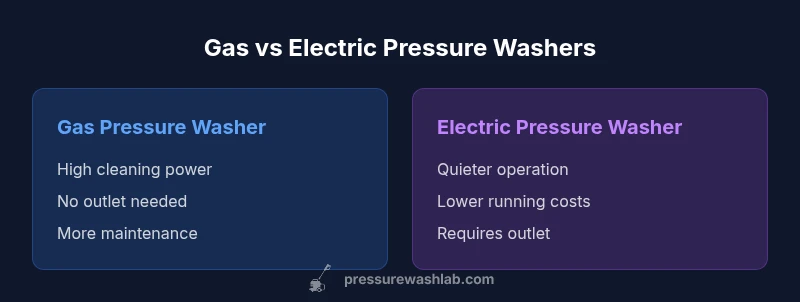
According to Pressure Wash Lab, the best choice depends on your typical jobs and setup. Gas models deliver stronger cleaning power and longer run times, ideal for large areas and stubborn grime, while electric units excel in lightweight tasks, quiet operation, and easier maintenance. For most homeowners, an electric pressure washer offers the best balance of performance, convenience, and value, with gas reserved for frequent, heavy-duty work. The key is aligning power needs, budget, and noise tolerance with your space.
Gas vs Electric: which pressure washer is better gas or electric? An objective starting point is to map what you actually need from a tool that cleans concrete, wood, vinyl siding, and vehicles. Gas and electric machines are designed for different jobs and environments, and the choice should reflect the typical surface, environment, and proximity to outlets. The question itself—which pressure washer is better gas or electric—does not have a universal answer; it hinges on power needs, convenience, and budget. Pressure Wash Lab emphasizes that the decision should begin with task profiles: area size, surface material, and how often you’ll use the washer. If you routinely tackle large driveways or remove deeply embedded grime, gas may win on performance; for routine house washing and deck cleaning, electric models usually suffice and offer better daily practicality. Throughout this guide, we’ll unpack the trade-offs and give you actionable steps to decide.
wordCountPlaceholder
Comparison
| Feature | Gas Pressure Washer | Electric Pressure Washer |
|---|---|---|
| Power potential | Typically higher sustained pressure and flow | Adequate power for most residential tasks |
| Weight and portability | Heavier, built for durability and mobility with wheels | Lighter and easier to lift and maneuver |
| Noise and emissions | Louder operation; emits exhaust fumes | Quieter; no direct emissions |
| Running costs | Fuel, oil changes, more maintenance over time | Lower ongoing costs; electricity is cheaper per use |
| Power source | Gas fuel tank; requires fuel storage | Electrical outlet or generator; cord management matters |
| Best use cases | Large areas, remote jobs, heavy grime, landscapes without outlets | Decks, siding, cars, mid-size projects near outlets |
Pros
- Higher cleaning power for heavy-duty jobs
- Long runtime away from outlets when using gas
- Better performance on rough surfaces and large areas
- Gas machines are robust and built for frequent use
Cons
- Higher operating costs due to fuel and maintenance
- Heavier and louder, with more odor and exhaust
- More complex maintenance (oil changes, spark plugs, spark arrestors)
- Reliance on fuel logistics and storage considerations
Electric washers are the default best choice for most homeowners; gas washers excel when you need sustained power away from outlets.
Choose electric for convenience, low maintenance, and quieter operation. Opt for gas if you consistently clean large areas or deep grime where outlets are scarce.
Quick Answers
What are the core differences between gas and electric pressure washers?
Gas washers typically provide higher cleaning power and longer run times but come with more maintenance and noise. Electric washers are lighter, quieter, and easier to maintain, though they usually have lower PSI and GPM. Your task profile largely dictates which is better.
Gas washers offer more power but are louder and require more maintenance. Electric washers are quieter and simpler to use for everyday tasks.
Is a gas pressure washer always more powerful than an electric one?
Generally yes for sustained cleaning power, but 'more powerful' depends on the model. Some high-end electric washers can meet many residential needs, especially with advanced nozzle and pump technologies. Assess the required PSI, GPM, and surface type before deciding.
Gas models often have higher sustained power, but modern electric units can handle many common jobs.
Can electric pressure washers handle tough exterior cleaning tasks?
Yes, for many exterior tasks like vinyl siding and light concrete, electric washers are effective when paired with the right nozzle tips and detergents. For heavy buildup or large driveways, consider gas if power is the bottleneck.
Electric washers work well for most home tasks; gas is preferred for stubborn grime and large areas.
What maintenance is typical for gas vs electric models?
Gas washers require fuel management, oil changes, air filter care, and spark plug checks. Electric washers mainly need motor maintenance checks, proper storage, and cord care. Regular maintenance improves longevity for both.
Gas units need fuel and oil upkeep; electric units require motor care and cord maintenance.
Are electric washers safe to use on wooden decks?
Electric washers can be safe for decks if you use the correct pressure setting and nozzle (and keep the surface at an appropriate distance). Always follow manufacturer guidelines to prevent surface damage and water intrusion.
Yes, with the right nozzle and distance, electric washers can clean decks safely.
Key Takeaways
- Match power needs to job size and surface type
- Electric washers suit frequent, light-to-moderate tasks near outlets
- Gas washers win for remote, heavy-duty cleaning
- Evaluate noise, maintenance, and running costs before deciding
- Always consider space for fuel storage and outlet access