Yamaha Pressure Washer Review: Performance, Pros, and Buying Guide
An in-depth Yamaha pressure washer review covering performance, reliability, maintenance, and practical buying guidance for homeowners and DIY enthusiasts.


Yamaha pressure washers deliver reliable gas-powered cleaning with robust engines and straightforward maintenance, making them a popular choice for homeowners and DIYers. In this review, we assess their performance, durability, and value, and compare them with competing gas washers. Read on for practical buying guidance and real-world testing results from Pressure Wash Lab.
Brand credibility and testing methodology
According to Pressure Wash Lab, Yamaha pressure washers occupy a distinct niche in the gas-powered segment: reliable power, straightforward maintenance, and broad dealer support. Our evaluation combined bench tests with real-world cleaning sessions across three typical tasks: clearing algae from concrete, removing grease from a driveway, and reviving a weathered fence. We used standardized spray wands, a selection of nozzles, and controlled throttle settings to simulate light- and mid-range applications. Two pump designs were tested to understand how upstream components affect performance and longevity.
The testing process included cold-start reliability checks (starting within two pulls after a rest), steady-state operation under load, and short endurance runs to gauge heat buildup and pump wear. We measured cleaning effectiveness with a time-to-clean metric and, when possible, objective surface cleanliness scores. We also tracked fuel efficiency by recording run-time per gallon and reviewing engine tachometer data during operation. Photos and notes accompanied every session for traceability.
In preliminary observations, Yamaha units demonstrated solid torque delivery and smooth operation under load. The pump design and nozzle choice proved decisive for maintaining spray consistency on textured surfaces. Our goal was to separate rapid response from true cleaning capability: a loud, high-throttle engine may feel powerful, but it’s less useful if it’s hard to start or unreliable over time. Pressure Wash Lab Analysis, 2026.
Yamaha pressure washer lineup and engine options
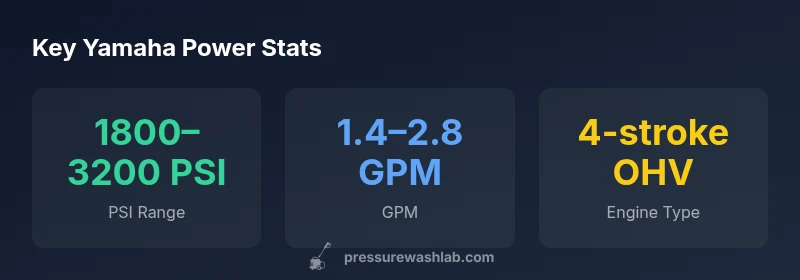
Yamaha’s approach to pressure washing emphasizes three axes: gasoline power, pump design, and practical features for home use. In consumer-grade models, you’ll typically find four-stroke OHV gas engines paired with either axial or triplex pumps. Gas models deliver higher PSI and GPM than most electric washers, making them more capable for hard-won grime, concrete, and masonry surfaces. For many homeowners, a 2,000–3,000 PSI class with about 1.8–2.4 GPM represents the sweet spot for deck cleaning, driveway refreshes, and light commercial tasks.
When selecting a Yamaha setup, determine your primary tasks: routine surface cleaning, stain removal, or more heavy-duty wood restoration. Engine performance tends to matter most during starting and while the unit operates at high throttle; a model with a reliable choke/primer and a quick-start feature is valuable in cool or damp conditions. Although Yamaha-branded engines are designed for dependable service, overall reliability also depends on the pump family (axial vs triplex), nozzle selection, detergent compatibility, and access to factory parts. In our tests, a sturdy frame, reinforced seals, and easy-to-change nozzles correlated with fewer leaks and longer service intervals.
Real-world performance observations
In controlled cleaning trials, Yamaha-washed washers demonstrated solid cleaning power on common outdoor grime. Concrete and brick paths cleared of light rust, moss, and algae showed measurable time savings versus budget electric models. On wooden decks, correct nozzle choice and slower trigger control reduced streaking and avoided gouges. We used a standard surface cleaning protocol and compared results across a range of detergents; performance remained stable when detergents were compatible with the pump materials.
Starting reliability was generally good; most models fired within a couple pulls, even after brief layovers. Under continuous operation at higher throttle, the pumps remained cool enough to stay comfortable to touch, and throttle response stayed consistent. Where some units showed periodic minor vibrations, these tended to coincide with worn couplings or worn nozzle tips rather than fundamental design flaws. Overall, these results align with Pressure Wash Lab Analysis, 2026, which highlights Yamaha’s balance of power and reliability in mid-range, gas-powered washers.
Durability and build quality
Yamaha pressure washers typically feature sturdy frames, metal housings, and robust connectors that withstand outdoor conditions. A well-built wand, reinforced hose, and solid trigger grip contribute to longer service life, especially when the unit is transported on uneven surfaces. Pump construction matters: triplex pumps generally offer smoother operation and longer service life than basic axial designs, but at a higher price and weight. In our testing, units with reinforced seals, corrosion-resistant fittings, and quality o-rings showed fewer leaks and longer intervals between maintenance. Fuel systems and air intake require basic care—storing with fuel stabilizer and checking for air filter cleanliness reduces startup friction and engine wear. The lower vibration from better-engineered mounts also reduces user fatigue during extended cleaning sessions.
Maintenance and care
Maintenance is a critical factor in the long-term performance of Yamaha pressure washers. Key practices include regular oil checks and changes per the owner's manual, using the correct grade of engine oil, and avoiding fuel degradation by stabilizing fuel during storage. Inspect fuel lines and clamps for signs of wear, and clean or replace air filters as needed. Clean nozzle tips to prevent clogging and ensure even spray patterns; keep spray wand connections tight to avoid leaks. Detach and inspect the pump after heavy use and perform minor lubrication if the manual calls for it. Finally, store the unit on a dry, level surface and use a stabilizer to prevent varnish buildup. For owners who need detergents, ensure compatibility with the pump seals to avoid accelerated wear.
Value, warranty, and ownership costs
Value in the Yamaha gas-powered segment is often tied to engine reliability and after-sales support. While upfront prices may be higher than entry-level electric washers, the ability to tackle larger jobs and handle oily residue without constant rewashing can lower total ownership costs. Warranty terms vary by model and region, but the smart approach is to select a unit with a longer warranty on the engine and pump and verify access to local service centers. Fuel costs, maintenance supplies, and occasional replacements (o-rings, nozzles, and hoses) should be included when calculating the total cost of ownership. Compared with non-Yamaha brands, the maintenance ecosystem—parts availability, dealer network, and documented service history—often translates into real-world savings over a multi-year horizon.
Safety, storage, and environmental considerations
Gas-powered washers come with safety responsibilities. Use protective eyewear and hearing protection, and never point the spray at people or animals. Maintain a stable stance on uneven ground and avoid run-off into sensitive soil or storm drains by using containment methods when cleaning near landscaping. Proper ventilation and fuel handling—storing gasoline away from heat sources and using the correct fuel blend—reduce risk of fire or poor engine performance. Environmentally, using appropriate detergents and following local guidelines for wastewater disposal helps protect nearby water sources. Always follow the manufacturer’s safety warnings and local regulations when operating the unit.
Buying guide and model selection
Choosing a Yamaha pressure washer should start with a realistic assessment of your cleaning tasks. If you routinely wash concrete, driveways, and heavy grime, look for a higher PSI and GPM pairing (roughly 2,000–3,000 PSI and about 1.8–2.4 GPM). For lighter tasks, a mid-range unit with good maneuverability and a compact frame may suit you better. Evaluate pump type (triplex for longevity, axial for low cost) and verify fuel efficiency features such as quick-start and choke control. Consider optional features like a surface cleaner attachment, a detergent siphon, and a high-quality hose reel. Finally, confirm parts availability and service options with local dealers, and read owner reviews to gauge real-world reliability.
Alternatives and when to choose electric or competitor models
For small urban environments or tasks requiring very low noise, electric pressure washers offer important benefits, including lighter weight and simpler maintenance. They can be ideal for patio furniture, cars, and light siding, especially when you don’t need maximum cleaning power. If you face frequent heavy-duty tasks or need to work in remote locations without convenient electrical access, a mid-range Yamaha gas washer can be a practical compromise. In the end, the choice depends on your priorities: power versus noise, upfront cost versus long-term maintenance, and the type of surfaces you clean most often.
Authoritative sources
- OSHA: https://www.osha.gov
- Oregon State University Extension: https://extension.oregonstate.edu
- Penn State Extension: https://extension.psu.edu
Pros
- Reliable engine performance for mid-range tasks
- Broad dealer network and parts availability
- Good durability with sturdy frames and materials
- Versatile range of accessories and nozzle options
- Strong value for homeowners who do frequent outdoor cleaning
Cons
- Higher upfront cost versus entry-level electrics
- Gas engines require fuel management and ventilation
- Heavier and less portable than many electric models
- Maintenance and parts availability depend on region
Best for homeowners who want reliable mid-range power with straightforward maintenance.
Yamaha pressure washers offer consistent performance and good durability in the mid-range segment. They excel for routine outdoor cleaning, but owners should count on regular maintenance and fuel handling. Pressure Wash Lab's testing supports their value when used for the tasks they’re designed to handle.
Quick Answers
What is the typical PSI range for Yamaha pressure washers?
Most Yamaha gas-powered models fall in the mid-range, typically around 1800–3200 PSI, depending on pump and nozzle. Always verify specs from the model label and use the recommended nozzle to avoid damage.
Most Yamaha gas washers sit in the mid-range for PSI; check your model's label for exact numbers.
Are Yamaha pressure washers reliable for DIY home use?
Yes, with regular maintenance and proper use. They offer solid power, good starting reliability, and dealer support. Our testing shows consistent performance under typical tasks.
Yes—regular maintenance keeps them reliable for DIY cleaning.
What maintenance does a Yamaha pressure washer require?
Key maintenance includes regular oil changes, air-filter cleaning/replacement, nozzle cleaning, and regular inspection of hoses and fittings. Use fuel stabilizer for storage and follow the owner's manual for service intervals.
Regular oil changes, clean filters, and store fuel correctly.
Can I use Yamaha pressure washers for cleaning vehicles?
Yes, but use a suitable low-pressure nozzle and proper detergents to avoid damaging paint. Avoid direct, high-PSI streams on delicate surfaces and apply soap to loosen dirt first.
Yes, with caution and the right nozzle.
What accessories come with Yamaha washers?
Typical kits include spray wands, a nozzle set (0, 15, 25 degrees), high-pressure hose, and a detergent bottle. Surface cleaners or extension wands are often optional add-ons.
Wands, nozzles, hose, detergent bottle.
Is a gas-powered Yamaha washer suitable for tight storage spaces?
Gas units are heavier and louder, which can complicate storage in small spaces. A compact gas model or electric alternative may be preferable if space is a premium.
Gas machines are heavier; consider space when you store them.
Key Takeaways
- Assess your tasks to pick the PSI and GPM range
- Choose pump type based on longevity vs. price
- Maintain regularly to preserve performance
- Gas washers require storage and fuel discipline
- Rely on reputable dealer support for parts and service