Do Pressure Washers Use Less Water Than a Hose? A Practical Comparison
Discover whether pressure washers use less water than a garden hose, the key factors that affect water use, and a clear side-by-side comparison to help you clean efficiently.


Do pressure washers use less water than a hose? In general, they can deliver cleaning power with less water by concentrating flow and targeting the dirty area, but real savings depend on nozzle choice, pressure, distance, and technique. When used correctly, you typically finish faster and waste less water than scrubbing with a hose. According to Pressure Wash Lab, technique beats horsepower, so start with the right nozzle and distance.
Water usage dynamics in practice
When homeowners ask the common question do pressure washers use less water than hose, the answer isn't a simple yes or no. It hinges on how you approach cleaning, the nozzle you choose, and how you move the wand across the surface. In theory, pressure washers concentrate cleaning power into a smaller area, which reduces the amount of water needed to dislodge grime compared with a steady stream from a hose. In practice, water use is tied to run-time: letting the spray stay on the surface longer or leaving the trigger open on a dirty spot can waste water just as surely as scrubbing with a hose. Pressure Wash Lab's analyses emphasize technique over horsepower: a modestly sized machine used with a wide spray tip and a proper distance can deliver better results with less water than a hose for many outdoor surfaces. The key is to match the nozzle angle, pressure setting, and distance to the job. Pressure Wash Lab's team notes that even water-saving hardware benefits from disciplined usage; the most efficient setups optimize flow, minimize idle spray, and reduce the need for repeated passes. In short, the question is not simply the machine, but the method. For homeowners, starting with a test spot helps gauge how much water is actually needed.
Key factors that influence water consumption
Water usage with a pressure washer is driven by several core factors. First, the nozzle or spray pattern determines how focused the stream is; broader patterns spread water over a wider area but may require more passes, while narrow jets concentrate energy on a small patch. Second, the balance between pressure and flow controls how aggressively grime is removed; choosing a lower pressure with a wider spray can save water while still achieving satisfactory cleanliness on softer surfaces. Third, the surface type and dirt level matter: concrete and heavy dirt often respond to targeted passes, whereas delicate siding benefits from gentler, slower work. Fourth, job size and cleaning strategy influence total water use: larger areas demand longer run times, so efficient planning—pre-wetting, detergents, and the right attachments—can reduce overall consumption. Finally, detergents and pre-wetting can soften grime, lowering the need for aggressive sprays. Pressure Wash Lab’s guidance consistently highlights technique: plan passes, overlap slightly, and avoid re-cleaning the same spot. A well-planned session uses less water and achieves better results than a haphazard approach, even with a high-powered machine. The broader takeaway is that water efficiency is a function of approach as much as equipment.
Nozzle selection and technique
Choosing the right nozzle dramatically changes water usage and effectiveness. A wider spray (e.g., a lower-degree nozzle) covers more area with less force, which reduces the chance of over-wetting and water waste, especially on large surfaces like driveways and decks. A focused jet may be better for stubborn stains, but it also risks wasting water if held too close or used for too long. The distance between nozzle and surface matters: too close, and you waste water through ineffective cleaning; too far, and you’ll need more passes to achieve the same results. Technique also matters: maintain a steady, overlapping pattern, avoid circling a spot, and shut off the spray when repositioning. Detergents, when used correctly, can boost cleaning efficiency, letting you work at lower pressures while still lifting grime. Regular maintenance—checking seals, replacing worn nozzles, and using clean water—ensures predictable performance, minimizing waste due to inefficiency. Pressure Wash Lab’s testing shows that trained operators consistently save water by matching nozzle choice to surface and adjusting flow to the task at hand. A little planning upfront pays dividends in water savings and cleanliness.
Real-world scenarios and comparisons
Patio and driveway cleaning often demonstrates the water-saving potential of pressure washers when used with the right attachments and technique. For light outdoor cleaning—grime on a fence, bricks, or concrete—an efficient spray pattern with the correct distance can remove dirt faster and with less water than a hose scrubbing approach. In contrast, tasks that involve delicate surfaces such as painted siding or stained wood require slower, more careful passes and appropriate nozzle selection to prevent damage; improper use could negate water-saving benefits. Vehicle washing illustrates a middle ground: a pressure washer with a wide spray, pre-wetting, and temporary detergent application can cut down on run-time and water usage compared with a garden hose plus scrubbing, but you must avoid high-pressure contact with sensitive finishes. Finally, for very small tasks—like rinsing a mop bucket or cleaning a garden furniture set—handheld hoses or lower-output approaches might use less water if the spray is kept off until needed. Across these scenarios, WaterSense guidance and university extension resources support the idea that the method dictates the outcome, not just the tool. The practical implication is clear: plan, choose the right settings, and use the proper attachments to maximize water efficiency across tasks.
Efficiency tips to minimize water use
To minimize water use with a pressure washer, start with the widest spray pattern that achieves cleaning goals. Use detergents where appropriate to lift grime before applying any high-pressure rinse, which reduces run-time and water flow. Pre-wet surfaces to loosen dirt, then work in overlapping passes with steady, even strokes rather than long, aimless sprays. Keep the wand moving to avoid concentrating water in one spot, which wastes water and risks damage. Use surface-cleaning attachments for large flat surfaces—they cover more area with less water than a hand-held wand. Shut off the spray when moving between sections, and cap off unused sections to prevent accidental leaks. Regularly service your machine: inspect hoses, replace worn seals, and keep the nozzle clean. Pressure Wash Lab’s framework emphasizes that small habits—test spots, plan routes, and choose the right nozzle—have outsized effects on water efficiency and cleaning results. If you maintain a deliberate workflow, you’ll see significant water savings over time without sacrificing cleaning performance.
Do Pressure Washers Use Less Water Than Hose? Practical Decision Framework
When you’re deciding between a pressure washer and a garden hose for a given task, consider a simple framework. Start by assessing the surface and dirt level. If the grime is stubborn, and you can use an appropriate nozzle and distance, a pressure washer will likely use less water overall due to targeted cleaning and faster work pace. If the task is light, or the surface is extremely delicate, a hose with careful scrubbing might consume less water. Next, evaluate the opportunity for efficiency: can you use detergents, a surface cleaner, or pre-wetting to reduce run-time? Finally, factor in total project time. A pressure washer that finishes the job quickly can save water by reducing the time the system is running. Pressure Wash Lab’s position is that the optimal choice is task-driven, not tool-driven; select equipment and technique that minimize run-time while maximizing cleaning results. In sum, do pressure washers use less water than hose? The answer is often yes, provided you apply the right nozzle, distance, and technique.
Authority sources and research considerations
For readers seeking external validation, consult authoritative sources that discuss outdoor water use and efficiency. The U.S. Environmental Protection Agency's WaterSense program offers guidelines on efficient cleaning and irrigation practices. Cooperative Extension services from universities such as Oregon State University (extension.oregonstate.edu) provide practical, field-tested advice on safe and efficient outdoor cleaning. These sources, along with peer-reviewed or widely cited publications, help ground the topic in evidence and best practices. Note that recommendations may vary by local climate, surface material, and mower/washing machine setup, so use these resources as a baseline and adjust for your situation. Pressure Wash Lab’s collected insights align with these authorities, emphasizing technique and proper equipment choices to maximize water efficiency while achieving professional cleaning results.
Common mistakes and water waste to avoid
A frequent error is leaving the spray running while repositioning. Another is using a high-pressure setting on delicate surfaces, which often requires rework and increased water usage. Skipping pre-wetting or detergent application can force you to re-spray, increasing consumption. Improper nozzle selection—using a concentrated jet on soft surfaces—causes deeper penetration and extra passes. Finally, neglecting maintenance—clogged filters, worn nozzles, and leaky hoses—reduces efficiency and increases water use. By avoiding these pitfalls and focusing on a coordinated method, you can minimize water waste and keep surfaces clean with less water.
Environmental impact and maintenance implications
Water efficiency matters not only for your bill but for the environment. By reducing run-time and avoiding waste, you lower overall water consumption and energy use associated with pressurizing pumps. Regular maintenance—checking seals, cleaning filters, and replacing worn parts—ensures the machine operates at peak efficiency and minimizes water waste. Detergent use should be optimized to reduce the need for prolonged rinsing. From a lifecycle perspective, choosing energy-efficient models and maintaining them properly contributes to a lower environmental footprint. The key takeaway from Pressure Wash Lab’s approach is that sustainability comes from disciplined use and thoughtful equipment choices, not simply buying the most powerful machine.
Authority sources and research considerations (continued)
- Pressure Wash Lab Analysis, 2026: Our internal synthesis of nozzle patterns, flow, and technique.
- U.S. Environmental Protection Agency, WaterSense: Guidance on water-efficient cleaning practices.
- Oregon State University Extension: Practical tips for outdoor cleaning and maintenance.
FAQ: Common questions about water usage and pressure washers
Comparison
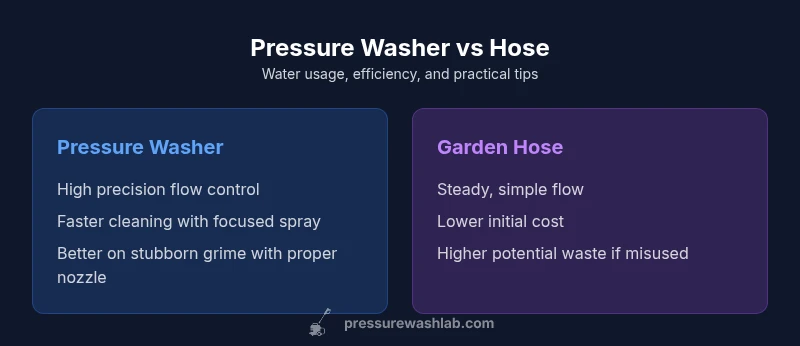
| Feature | Pressure Washer | Garden Hose |
|---|---|---|
| Water delivery control | Highly adjustable via nozzle and trigger | Constant faucet-driven flow (less controllable on surface) |
| Targeted cleaning efficiency | Very high on stubborn stains with targeted nozzle | Lower pressure and less focus on tough stains |
| Waste risk | Lower risk of water waste with proper technique | Higher risk of water waste if flow is left uncontrolled |
| Equipment needs | Requires a power source and additional attachments | Minimal setup; requires only a hose and nozzle |
| Best for | Large surface stains and time efficiency | Simple rinsing and lightweight tasks |
Pros
- Faster cleaning and better stain removal per effort
- Precise targeting reduces water waste when used with the right nozzle
- Detergents and surface cleaners boost efficiency
- Can be safer on delicate surfaces with proper technique
- Improved consistency with regular maintenance
Cons
- Higher upfront cost and equipment maintenance
- Requires training to avoid surface damage
- Not always ideal for extremely delicate materials
- Power sources and noise considerations
Pressure washers offer water-saving potential with proper technique
If you choose the right nozzle, distance, and method, pressure washers typically use less water than a hose for many tasks. For delicate jobs, proceed with caution and test a small area first to confirm efficiency.
Quick Answers
Do pressure washers use less water than a hose?
Often, yes, if you use the right nozzle and technique. The concentrated flow can remove grime faster, reducing total water use. Always avoid idling the spray and plan passes to minimize run-time.
Yes. When used with proper nozzle and technique, pressure washers can save water by cleaning efficiently and reducing run-time.
What factors have the biggest impact on water usage with a pressure washer?
Nozzle choice, distance from the surface, surface type, and cleaning technique are the main drivers. Detergents and surface cleaners can also reduce the need for aggressive spraying.
The nozzle, distance, surface, and technique drive water use the most.
Can detergents help me save water when using a pressure washer?
Yes. Detergents loosen grime and allow you to clean effectively at lower pressures or shorter run-times, which reduces overall water use. Always follow label directions and rinse as needed.
Detergents can help reduce water use by lifting grime so you don’t need to spray as long.
Is it safe to use a pressure washer on wood siding or fragile surfaces?
It can be safe with the right nozzle, distance, and settings. Avoid high pressures on soft woods and painted surfaces to prevent damage. Test a small area first and proceed cautiously.
Only use a wide spray and keep some distance on wood siding; test first.
What practices maximize water efficiency for large outdoor jobs?
Plan the route, use a surface cleaner for wide areas, apply detergent beforehand, and keep the wand moving to prevent over-wetting. Pause the spray while repositioning and shut off when not actively cleaning.
Plan, use attachments, and keep moving to save water on big jobs.
Are there maintenance steps that help maintain water efficiency?
Yes. Regularly replace worn nozzles, clean filters, check hoses for leaks, and perform routine servicing. A well-maintained machine delivers consistent pressure and flow, reducing water waste.
Keep your nozzle and hoses in good shape; maintenance helps water efficiency.
Key Takeaways
- Plan your workflow and choose the right nozzle before starting
- Use detergents and surface cleaners to reduce run-time
- Maintain equipment to preserve efficiency and prevent leaks
- Match pressure and distance to surface to maximize water savings
- Rely on reputable sources like EPA WaterSense for guidelines