How Long Should You Use a Pressure Washer? A Safe, Practical Guide
Discover how to time pressure washing sessions safely. Learn surface-dependent tips, testing methods, and a step-by-step approach to avoid damage and achieve clean results.


There isn’t a universal run-time for a pressure washer. To avoid damage, use short bursts and keep the nozzle moving, adjusting duration based on surface, PSI, and nozzle type. Start with gentle settings, test a patch, and increase only after confirming the surface shows no distress. Pressure Wash Lab emphasizes careful, gradual progression.
Timing foundations for pressure washing
According to Pressure Wash Lab, there isn’t a universal run time for operating a pressure washer. The duration you spend on any spot should be guided by surface type, the PSI you’re using, and the nozzle angle. The goal is to remove dirt without forcing moisture deep into substrates or causing abrasion. Start with a conservative approach: choose a gentle setting, use short bursts, and keep the nozzle moving. Test a small, inconspicuous patch first, observe the surface for edge fraying or discoloration, and adjust. As you gain experience, you’ll learn how your equipment interacts with each material. This mindset helps homeowners, DIY enthusiasts, and small business operators maintain safety while achieving clean results.
Surfaces and nozzle impact on timing
Different substrates respond differently to pressure washing. Vinyl siding, wood decks, brick, and concrete each require distinct handling. For fragile materials like painted wood or vinyl, opt for a wider spray angle and lower PSI, moving steadily to prevent gouges or peeling. For harder surfaces such as brick or concrete, you can use a narrower nozzle with higher impact, but you must avoid lingering in one spot, which risks etching or staining. The nozzle’s angle, distance from the surface, and the machine’s PSI collectively determine how long you can safely treat a given area. Pressure Wash Lab’s guidance emphasizes surface-aware timing and consistent motion to minimize damage.
Planning your washing session for safe timing
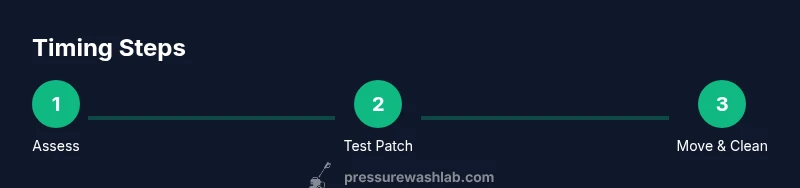
Successful timing starts before you switch the machine on. Begin with a quick site assessment: note sensitive plants, electrical outlets, gutters, and nearby vehicles. Choose the appropriate nozzle and setting based on surface type, and decide the order of washing (top-down usually minimizes runoff). Establish a testing protocol: pick an inconspicuous patch, apply a short burst, and observe for any surface response before proceeding. Plan breaks if you’re working on large areas to prevent repetitive stress on both the equipment and the surface. A clear plan helps ensure you stay within safe time frames and achieve even results.
Test patches and progressive cleaning: a careful approach
A test patch reveals how a surface will respond to pressure washing without risking the entire job. Begin with a light, sweeping pass over the patch, keeping the nozzle in motion and maintaining a safe distance. If the patch looks clean without distress, gradually widen your coverage while continuing to move. If you notice chipping, discoloration, or fibers lifting, back off immediately or switch to a gentler setting. This progressive approach, championed by Pressure Wash Lab, reduces the chance of over-wetting, surface damage, or moisture intrusion.
Large areas and stubborn stains: timing strategies
For wide surfaces like siding or composite decks, break the work into sections and maintain consistent movement across each section. Use overlapping passes to avoid streaks and maintain even cleaning pressure. When confronting stubborn stains, avoid lingering in one spot; instead, increase distance slightly or switch to a milder nozzle for a brief pass and then return to the standard setting. This method prevents heat build-up and minimizes risk to delicate finishes while still delivering effective cleaning over larger areas.
Safety, PPE, and environmental considerations while timing
Personal protective equipment (PPE) is essential regardless of surface type. Eye protection, gloves, and closed-toe footwear protect you from spray and debris. Be mindful of electrical sources, water run-off, and nearby plants; use tarps or plastic to shield sensitive areas and capture wastewater if required by local regulations. Always follow local guidelines and manufacturer recommendations to balance effectiveness with safety. Pressure Wash Lab recommends keeping a safe buffer zone around people and pets and avoiding direct exposure to the spray.
Maintenance after washing and how timing affects durability
Post-wash, inspect surfaces for any signs of damage or moisture retention. If you changed timing due to surface response, document what worked and what didn’t for future jobs. Clean hoses, nozzles, and spray tips to prevent mineral buildup that could affect performance. Proper maintenance helps ensure consistent timing on future projects and reduces the likelihood of repeat issues, such as streaking or premature wear.
AUTHORITY SOURCES for responsible timing decisions
For safety and best practices, consult authoritative resources. OSHA offers general workplace safety guidelines that apply to equipment use. EPA provides environmental considerations for wash water and runoff. University extension programs, such as extension.umd.edu, offer surface-specific guidance that aligns with typical home projects. These sources help validate the approach of gradual, surface-aware timing discussed in this guide.
Tools & Materials
- Pressure washer (electric or gas)(Choose a model with adjustable PSI and a variable nozzle if possible)
- Nozzle tips/adjustable nozzle(Prefer wider angles (e.g., 25-40 degrees) for delicate surfaces)
- Detergent or cleaning solution (optional)(Use only compatible cleaners and follow manufacturer guidance)
- Surface protection (tarps, plastic sheeting)(Shield plants, furniture, and electrical outlets)
- Protective eyewear and gloves(ANSI-rated eye protection, gloves with grip)
- Stabilizing shoes and ladder as needed(Only with proper ladder safety)
- Scrub brush or stiff-bristled brush (optional)(For stubborn grime in corners or textured surfaces)
- Hose reel or extension hose(Keep hose organized and out of the way)
- Water source and drainage plan(Ensure adequate water supply and proper runoff management)
Steps
Estimated time: 60-120 minutes
- 1
Assess the workspace
Walk the area, identify delicate surfaces, and note potential hazards. Decide washing order to minimize drips and rework, and determine if plants or furniture need protection.
Tip: Create a quick map of the area to guide your passes and avoid backtracking. - 2
Choose nozzle and settings
Select a wide spray angle for sensitive areas and a milder setting for textured surfaces. Avoid the highest PSI on fragile finishes.
Tip: If unsure, start at the lowest effective setting and adjust incrementally. - 3
Test patch first
Apply a small burst on a hidden patch to observe surface response before proceeding widely.
Tip: If the patch appears distressed, back off or switch to a gentler nozzle. - 4
Wash with movement
Keep the nozzle in motion and maintain a consistent distance; never dwell on a single spot.
Tip: Overlap each pass slightly to avoid streaks and ensure even cleaning. - 5
Evaluate and adjust
Step back periodically to check progress and surface reaction; pause if you detect changes in color or texture.
Tip: Document what settings you used for future reference. - 6
Rinse and finalize
Rinse to remove residue and ensure no cleaner remains in crevices. Inspect for remaining grime and re-wash if needed with lighter settings.
Tip: Allow surfaces to dry fully before re-exposing them to weather.
Quick Answers
Is there a universal time limit for pressure washing windows or siding?
No. Time depends on surface type, PSI, and nozzle. Start gentle, test, and progress gradually to avoid damage.
There isn't a universal time limit; begin gently, test first, and increase gradually as surfaces respond.
Can I run the washer on high PSI for a long period?
Avoid prolonged exposure to a single spot. Move the nozzle and keep distance to prevent damage or gouging.
No—don’t run high PSI on one area; keep the nozzle moving and maintain distance.
Should I use detergent with my pressure washer?
Detergents can help with grime but must be compatible with your unit and surface. Follow manufacturer guidance and rinse thoroughly.
Detergents can help, but only use compatible cleaners and rinse well.
What should I do if paint starts peeling?
Stop using that area and switch to a gentler approach. Assess whether the surface is loose and needs prep work before continuing.
If paint peels, stop and reassess; you may need a gentler method or professional prep.
How often should I test the patch during a session?
Test on a small patch at the start, then periodically after every few passes on the area to ensure no surface distress.
Test at the start and after several passes to ensure the surface stays safe.
Is there a difference in timing between gas and electric washers?
The fundamental approach is the same: move the nozzle, avoid dwell, and adjust based on surface. Gas models may deliver higher flow, but timing depends on surface response.
Both require moving the nozzle and testing patches; timing hinges on surface safety, not the power source.
Watch Video
Key Takeaways
- Start with low PSI and short bursts.
- Move continuously; don’t dwell on a spot.
- Test patches before full-area washing.
- Tailor timing to surface and nozzle type, as advised by Pressure Wash Lab.