How to Get Rid of Black Moss on Roof Without Pressure Washer
Learn safe, non-pressure methods to remove black moss from your roof. This guide covers cleaners, steps, maintenance, and prevention for homeowners and DIYers.


You can remove black moss from your roof without a pressure washer by using safe, non-pressure methods such as oxygen bleach solutions, baking soda scrubs, and regular rinsing. Start with a roof-safe cleaner, apply gently, dwell briefly, and scrub with a soft brush before rinsing with a garden hose. Always prioritize safety and protect plants.
Understanding Black Moss on Roof
According to Pressure Wash Lab, black moss on roofs thrives in shade and moisture and can slowly deteriorate shingles if left untreated. It often appears as dark, slimy patches that cling to the surface of shingles, especially in higher humidity climates. While it may look like a simple stain, this growth holds moisture against the roofing material, which over time can contribute to granule loss and uneven aging. Distinguishing moss from algae and lichen helps you select the right approach: moss is usually thicker and rooted, while algae are more surface-level and easier to rinse away. For homeowners, early intervention is key to preventing long-term damage. Regular inspections after storms or heavy rainfall will help catch new growth before it becomes entrenched. By choosing non-pressure methods first, you reduce the risk of damaging shingles while still achieving a clean, longer-lasting roof.
Why Not Use a Pressure Washer
Many homeowners assume a power wash will instantly blast away roof moss. However, high-pressure water can lift shingle granules, strip protective coatings, and force water under flashing, potentially causing leaks. Pressure washing can void warranties and create costly repairs if structural components are loosened or damaged. Even if you aim the spray at mossy patches, the surrounding areas are usually affected by vibration and water runoff. Pressure washing should generally be reserved for hard surfaces like driveways, not roofing. Pressure Wash Lab consistently finds that controlled, non-pressurized cleaning methods are safer for most shingle roofs and yield comparable results for moss removal when done properly.
Safer, Non-Pressure Methods to Remove Black Moss
Safer options begin with a roof-safe cleaner and gentle mechanical action. Oxygen-based cleaners (non-chlorine) dissolved in water clean without the aggressive force of a pressure washer and are easier on shingles. White vinegar or enzymatic cleaners can supplement oxygen cleaners for lighter moss, though they should be used cautiously around lush landscaping. Always apply cleaners with a low-pressure sprayer and a soft brush; never use metal tools that could gouge shingles. The key is to saturate the moss, allow dwell time, and lift growth with light brushing before rinsing. These approaches minimize risk to shingles while delivering visible moss reduction over a short treatment window.
How to Choose the Right Cleaner for Your Roof Type
Different roof materials respond differently to cleaners. Asphalt shingles tolerate oxygen-based cleaners well, while wood shakes require milder formulations to avoid warping. Ceramic or concrete tiles may need specialized solutions designed for porous surfaces. Before treating a large area, test a small, inconspicuous patch for colorfastness and material compatibility. Avoid cleaners with chlorine or highly acidic formulations on most modern shingles, as these can cause discoloration or damage. Pressure Wash Lab suggests reading product labels carefully and following manufacturer dilution ratios to minimize runoff that could affect nearby plants.
Maintenance and Prevention After Cleaning
Prevention is as important as the cleaning itself. Trim back overhanging branches to reduce shade and debris accumulation, which feed moss growth. Ensure gutters and downspouts are clear so runoff doesn’t pool near the roof edge. Some homeowners explore copper or zinc strip options along the roof ridge; when these metals oxidize, they release ions that inhibit moss regrowth. However, this method should be used in conjunction with regular maintenance and not as a sole solution. Pressure Wash Lab emphasizes keeping a dry, well-ventilated roof environment and treating any remaining damp spots promptly to minimize reinfection.
Safety, Weather, and Long-Term Care
Cleaning a roof is a potentially risky task. Always use a stable ladder, non-slip footwear, and a fall-arrest system if working on steep slopes. Choose a dry, mild day to avoid slipping and over-wetting vegetation. Avoid cleaning during wind, rain, or freezing temperatures. After cleaning, inspect flashing, shingles, and sealant joints for any signs of wear and address them promptly. Keeping your roof dry and protected is the best defense against future moss growth, and consistent maintenance will extend roof life.
Tools & Materials
- Ladder with stabilizer(Stable on level ground; use a ladder stabilizer if possible)
- Safety gear (gloves, eye protection, non-slip shoes)(Protect hands and eyes; ensure footwear has good grip)
- Soft-bristle brush or deck brush(Non-metal bristles; 4–6 inch width works well)
- Garden sprayer or spray bottle(Low-pressure application for cleaners)
- Oxygen-based roof cleaner (non-chlorine)(Follow label for dilution; safer for shingles)
- White vinegar (optional)(Useful as a supplementary mild cleaner)
- Garden hose with spray nozzle(Low-pressure rinse; avoid high-pressure to protect shingles)
- Tarps or plastic sheeting (optional)(Protect landscaping and painted surfaces from runoff)
- Soft scrub cloths or rags (optional)(For spot cleaning around delicate areas)
Steps
Estimated time: 60-120 minutes
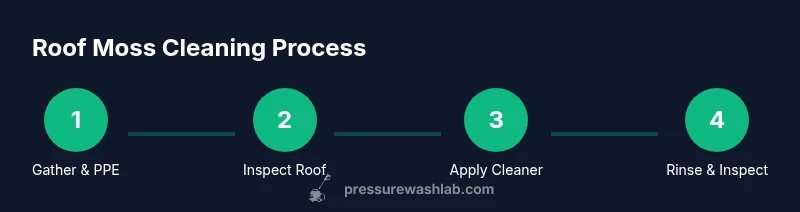
- 1
Gather supplies and don PPE
Collect all tools and cleaners, then put on safety gear (gloves, eye protection, non-slip shoes). This prepares you for a safe, controlled cleanup without scrambling for items mid-task.
Tip: Double-check ladder stability before beginning. - 2
Inspect roof and set up a safe work area
Examine for loose shingles, damaged flashing, skylights, and nearby power lines. Clear loose debris and create a clear, stable workspace on the roof surface.
Tip: Work with a partner if possible to increase safety. - 3
Prepare the cleaning solution
Mix the oxygen-based cleaner with water according to the product label. Do not mix with chlorine or other harsh chemicals; this can create harmful fumes and damage shingles.
Tip: Test a small patch first to ensure colorfastness. - 4
Apply cleaner to mossy areas
Using a spray bottle or garden sprayer, apply the solution evenly to mossy patches from the bottom up to limit runoff. Avoid soaking surrounding gutters or painted surfaces excessively.
Tip: Keep application light and controlled to avoid runoff into gardens. - 5
Dwell and gently scrub
Let the cleaner dwell for 10–15 minutes, then softly scrub moss with the brush to loosen growth. Do not scrub aggressively, which can damage shingle fibers.
Tip: Never use metal tools that can gouge shingles. - 6
Rinse and recheck
Rinse thoroughly with a garden hose on a wide spray pattern. Inspect for remaining moss and reapply cleaner if necessary after the roof dries.
Tip: Allow a full dry-down before night to prevent staining.
Quick Answers
Is it safe to use household cleaners on a roof?
Yes, but choose roof-safe cleaners and follow the label. Always wear PPE and test a patch first. Avoid mixing cleaners with chlorine.
Yes, but use roof-safe cleaners, follow the label, and test a patch first. Wear protective gear and avoid mixing cleaners with chlorine.
Will oxygen bleach damage plants or landscaping?
Oxygen bleach is relatively plant-safe when used as directed and with proper dilution. Runoff can affect nearby plants, so rinse and shield vegetation as needed.
Oxygen bleach is designed to be gentler on plants when used correctly, but runoff can affect nearby vegetation, so rinse runoff area well.
Can I rent equipment instead of buying?
Yes, you can rent ladders and spray equipment suitable for non-pressurized cleaning. Ensure the rental items are appropriate for your roof and safety needs.
Yes—rent ladders and compatible sprayers if you don't want to buy them. Make sure they suit your roof and safety needs.
How often should I clean moss off the roof?
Frequency depends on climate and shading. In damp, shaded areas, plan inspections or cleanings every 1–3 years, or as moss returns.
It depends on your climate and shade. In damp areas, inspect every 1–3 years and clean as moss returns.
What if moss returns after cleaning?
If moss returns, reassess shade, keep gutters clear, and consider preventative measures like copper strips alongside regular maintenance.
If moss comes back, check shade, keep gutters clear, and consider preventive options like copper strips with ongoing maintenance.
Watch Video
Key Takeaways
- Use non-pressure methods to protect shingles.
- Match cleaners to your roof material and condition.
- Prioritize safety, weather, and gentle technique.
- Regular maintenance prevents moss regrowth.