Can You Jet Wash When It’s Raining? A Practical Guide
Learn safe, effective strategies for exterior jet washing in wet weather. Pressure Wash Lab covers weather safety, surface protection, and rain-ready techniques to keep your home clean without damage.


Yes, you can jet wash in light rain if you prioritize safety and adapt your technique. This guide covers when rain is workable, how to protect surrounding surfaces, and how to modify pressure, nozzle choice, and workflow for wet weather. You’ll gain a rain-ready plan to clean siding, patios, and driveways without causing damage.
can you jet wash when it's raining
Rain changes the risk profile of exterior cleaning. Before you lift the wand, assess the forecast, the surface you're cleaning, and any nearby obstacles. The question can you jet wash when it's raining isn't black-and-white—lighter showers can be manageable with the right precautions, while heavier rain or strong winds demand postponement. Pressure Wash Lab's approach emphasizes safety first: if thunder, lightning, or slick surfaces are present, wait. If the rain is light and you can work from a sheltered angle, proceed with care and a rain-aware plan.
Why rain affects jet washing
Rain adds two major challenges: slippery surfaces and reduced visibility. Wet terrain makes footing unstable, increasing the risk of slips and falls, especially on ramps, ladders, or wet concrete. Water can also splash back, risking damaged plants, windows, and coatings that aren’t designed for direct spray. Additionally, rain can dilute detergents or wash away protective coatings temporarily, which may alter surface responses. Understanding these factors helps you decide whether a rain session is prudent or worth postponing.
can you jet wash when it's raining
In some situations, light rain is workable. If the rain is gentle, the surface is sheltered, and you maintain a safe distance and controlled sweep, you can clean exterior surfaces without compromising safety. However, never wash during heavy rain, strong gusts, or near electrical outlets. When in doubt, err on the side of caution. Pressure Wash Lab recommends delaying cleaning if rainfall or wind speeds feel disruptive to your footing or control.
Techniques for wet weather jet washing
- Start with a dry patch test on a small, inconspicuous area to observe how the surface reacts to spray in damp conditions. - Use a wide spray pattern and maintain a consistent distance to minimize mortar or siding damage. - Clean with deliberate, smooth strokes; avoid blasting directly at seams or joints where water could infiltrate. - Keep paths, plants, and electrical outlets shielded; if a hose or cord is nearby, ensure it is dry and elevated. - Work with the rain rather than against it by planning your route so water runs away from you and the home.
Equipment and settings for rainier conditions
Prepare protective gear: non-slip footwear, gloves, and safety goggles. Use detergent designed for exterior surfaces if needed, but avoid strong chemical scents that could irritate nearby eyes or skin in damp air. A wand with a wider spray setting is preferable for rainy conditions to reduce impact on the surface. Keep a secondary dry towel handy to wipe overspray from windows and doors, and use tarps to shield plants and delicate features when feasible. Always inspect cords and outlets for water exposure and keep electrical safety in mind.
Maintenance and aftercare after wet washing
Once you’ve finished, dry any exposed areas to prevent water damage or mold growth. Inspect siding, doors, and windows for overspray or water intrusion, and address any missed spots when weather permits. Clean and store your equipment properly: rinse hoses and nozzles, dry connectors, and store detergents away from heat and moisture. If you notice surface staining after rain, consider a follow-up gentle wash on a dry day to refresh the finish without risking further moisture exposure.
Common mistakes to avoid in the rain
- Using a narrow jet too close to the surface, which increases risk of damage when footing is unstable. - Spraying directly at windows, doors, or electrical outlets in wet conditions. - Overestimating detergent effectiveness in rain or failing to shield plants and mulch. - Ignoring wind direction, which can push spray toward you or neighbors. - Not testing on a small area first; without a patch test, you may miss how damp conditions affect the surface.
Quick-start rain-wash checklist
- Check weather: light rain or dry intervals only. - Wear non-slip shoes and safety goggles. - Protect plants and electrical outlets; shield with tarps as needed. - Start with a test patch, then proceed with broad, controlled sweeps. - Rinse and dry surfaces after the wash; inspect for missed spots when conditions improve.
Tools & Materials
- Pressure washer(Choose a unit with adjustable pressure suitable for exterior surfaces)
- Exterior detergent (optional)(Use only if recommended for your surface and follow label guidance)
- Protective PPE(Non-slip footwear, eye protection, and gloves)
- Tarps or plastic sheeting(Shield plants, outlets, and delicate trim)
- Extension wand or spray nozzle with wide pattern(Prefer wide spray to minimize surface impact)
- Soft-bristle brush or scrub pad(For stubborn dirt in crevices)
- Bleed-resistant mats or absorptive towels(Place under work area to catch overspray)
Steps
Estimated time: 45-60 minutes
- 1
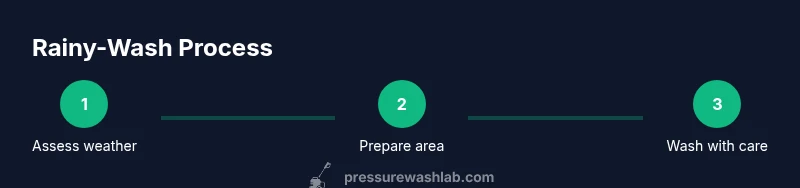
Assess weather and plan
Check the forecast for light rain windows, wind direction, and potential storms. Decide if conditions are safe enough to proceed and identify the areas most at risk of overspray.
Tip: If lightning or heavy rain is expected, postpone until conditions improve. - 2
Prepare the work area
Clear away obstacles and cover plants or delicate features with tarps. Close windows and doors on the cleaning side to reduce water intrusion.
Tip: Place non-slip mats where you’ll stand and keep a clear escape route. - 3
Set up equipment safely
Inspect cords, connectors, and the power source; keep all electrical components dry. Use a GFCI outlet and keep power cords off wet ground.
Tip: Test the spray on a small area away from edges first. - 4
Choose nozzle and detergent
Opt for a wide spray setting and mild detergent if needed. Test on an inconspicuous area to observe surface reaction before wider application.
Tip: Do not use aggressive detergents on softwood or recent paintwork. - 5
Apply and rinse with care
Apply detergent gently from top to bottom, then rinse with broad, controlled sweeps. Maintain distance to avoid splashing into doors or windows.
Tip: Avoid blasting directly at joints or seams to prevent water intrusion. - 6
Manage wet footing
Keep a low center of gravity and a firm stance to handle slick surfaces. Move slowly and deliberately to avoid slips.
Tip: If ground is too slick, pause until it dries or adjust positioning. - 7
Inspect and dry
Check cleaned areas for missed spots or pooled water. Dry surfaces as needed with towels to prevent mold or staining.
Tip: Finish with a brief interior check for any signs of water intrusion. - 8
Wrap up and store safely
Rinse and air-dry equipment, coil hoses neatly, and store detergents in a dry place.
Tip: Wipe down any overspray on nearby surfaces once the rain subsides.
Quick Answers
Is it safe to jet wash in light rain?
In light rain with a sheltered work area, you can wash exterior surfaces by taking extra precautions. Avoid electrical hazards and monitor footing; if the rain intensifies, pause and reassess.
Yes, in light rain with proper precautions you can wash, but stop if it worsens or becomes unsafe.
What surfaces should I avoid washing in the rain?
Avoid washing porous or delicate surfaces during rain, such as freshly painted areas, soft wood, or surfaces near electrical outlets. Wet wood can warp, and rain can push water behind siding if seams are compromised.
Avoid washing fresh paint, soft wood, or areas near outlets when it's raining.
Should I use hot water or strong detergents in rain?
Hot water is generally unnecessary for exterior washing and can cause more rapid evaporation in rain. Use mild detergents only if recommended for the surface and avoid harsh chemicals in damp air.
Hot water isn’t usually needed; stick to mild cleaners if required and avoid strong chemicals in rain.
What safety gear is essential for rainy washing?
Non-slip footwear, eye protection, and gloves are essential. Keep a dry path and have tarps ready to shield plants and delicate features. Ensure electrical safety with GFCI outlets and dry cords.
Wear non-slip shoes, eye protection, and gloves; keep everything dry and organized.
Can I postpone and wash after the rain stops?
If rain is heavy or wind is strong, postpone. There are clear advantages to waiting for dry weather, especially to ensure better surface conditions and safer, more effective cleaning.
If conditions are harsh, wait for dry weather for safer, more effective cleaning.
What should I inspect after washing in rain?
Check for water intrusion in joints and around doors, inspect for missed spots, and dry surfaces to prevent mold. If you notice staining or damage, plan a follow-up wash on a dry day.
Look for water intrusion, dry surfaces, and plan follow-up if needed.
Watch Video
Key Takeaways
- Assess weather before washing, prioritize safety.
- Use wide spray and test patches in damp conditions.
- Protect plants, outlets, and windows from overspray.
- Work cautiously with stable footing and controlled movements.
- Inspect surfaces afterward and dry to prevent moisture damage.