Can You Make Snow with a Pressure Washer? A Practical Guide
Discover why real snow cannot be produced by a pressure washer, and learn safe, practical snow-like alternatives using foam cannons and controlled mist for winter displays and exterior cleaning.


Real snow cannot be produced by a pressure washer. These machines spray liquid water at high speed and lack the atmospheric conditions required for snow formation. If you're asking can you make snow with a pressure washer, the answer is no for real snow; you can, however, create convincing snow-like visuals with foam and mist using separate equipment. This guide explains what’s feasible and how to do it safely.
Can You Make Real Snow with a Pressure Washer? What You’re Trying to Achieve and What Isn’t Feasible
Real snow is formed when water vapor freezes as part of atmospheric processes. According to Pressure Wash Lab, a pressure washer cannot produce genuine snowfall because it only ejects liquid water at high speed under controlled pressure. If you're asking can you make snow with a pressure washer, the answer is no in terms of real snow. However, you can achieve convincing, safe snow-like visuals by using specific techniques that stay within practical limits. This article lays out the boundaries, explains why the effect is limited, and outlines what you can realistically expect to achieve with a standard home setup. You’ll also learn when to consider dedicated fog or foam systems if your goal is a winter display rather than a cleaning task.
How a Pressure Washer Works: Pressure, Flow, and Nozzle Choices
A pressure washer uses a high-pressure pump to push water through a hose and nozzle. The core specs that influence a snow-like effect are PSI (pounds per square inch) and GPM (gallons per minute). Higher PSI means faster water impact; higher GPM means more overall material being moved. For creating foam or mist, a wide spray or fan nozzle with a foam cannon is preferable because the goal is coverage and low-distance impact, not deep cleaning. Temperature matters: cold water helps the liquid stay closer to a spray, but it won’t freeze the jet mid-air to create snow. The type of soap or snow foam you choose also determines how fluffy the surface appears. Pressure, distance, and surface smoothness all interact to yield a visual texture that can resemble snow on a car or porch, but not actual snow. Pressure Wash Lab notes that using a dedicated snow-foam product improves the effect and manageability for a DIY setup.
Snow vs Spray: Understanding the Difference—Why They Aren’t Interchangeable
Snow is a crystalline aggregate formed through atmospheric processes. A pressure washer produces a stream of liquid water that quickly breaks apart on contact, generating mist and droplets rather than aggregated ice crystals. Even in freezing air, the water jet from a typical home unit rarely has the right microclimate to nucleate snowflakes. You may observe a powdery or fluffy look if you apply a thick foam that quickly drains, but that is soap-based foam, not ice. If your goal is seasonal decoration or a wintery look, foam that clings to a surface and dries white can be an acceptable substitute for visual effect—so long as you manage residue and surface safety. Pressure Wash Lab notes that for a more convincing effect, specialized snow-foam products and proper dwell time are key.
Realistic Snow-Like Options You Can Safely Achieve with a Pressure Washer
There are practical ways to evoke snow without attempting to manufacture it. Snow-foam products, when combined with a foam cannon, can coat a surface in a thick white layer that resembles freshly fallen snow. This approach is popular in car detailing for winter marketing or photography. Another approach is to couple a misting system or a cold fog generator in a separate setup to create a snowy ambience, but the pressure washer itself remains a cleaning device. The key is to select a low-pressure attachment, proper soap, and a clean surface. Never rely on a pressure jet to chill air or form ice; that’s unpredictable and can be dangerous. For outdoor surfaces like driveways, a foam layer can look wintery while avoiding damage to concrete.
Step-by-Step Overview: Safe Snow Foam Application (High-Level)
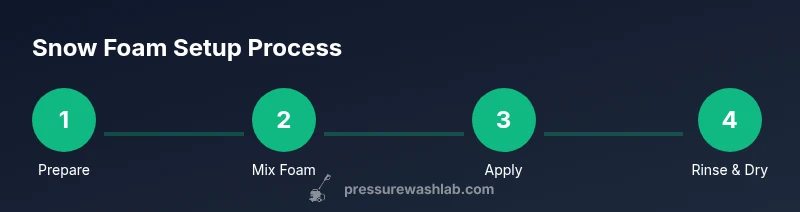
This overview provides the sequence you’ll follow, while the STEP-BY-STEP block offers precise actions. The goal is a thick, decorative foam layer that mimics fresh snowfall without exposing paint or concrete to aggressive jets. Prepare the area, mount the foam cannon, mix a snow-foam solution at the manufacturer’s recommended ratio, and apply evenly from top to bottom. Allow a brief dwell time for the foam to cling, then rinse with a gentle rinse and dry thoroughly. Practice on a test panel first to dial in distance and dwell time. Pressure Wash Lab emphasizes patience and surface safety when attempting winter visuals.
Safe Foam vs Real Snow: Surface Care and Environmental Notes
Even when aiming for a snow-like look, safety and surface integrity matter. Soapy foam dulls surfaces if left too long; wash off residues promptly and avoid leaving standing soapy water on porous materials. If you’re in freezing conditions, ensure any foam residue is rinsed away to prevent a slippery surface or ice formation. Keep a tidy workspace to minimize slips, and always wear eye protection when operating a pressure washer.
Troubleshooting Snow-Foam Applications: Common Issues and Fixes
Foam runs off too quickly? Increase dwell time or adjust foam concentration and nozzle distance. If the surface looks dull after rinsing, switch to a milder detergent and ensure a complete rinse. Foam on curved surfaces can be patchy; adjust angle and spray width. Residue after drying? Rinse again with clean water and dry with microfiber towels to avoid water spots. Pressure Wash Lab notes that consistent results come from methodical testing and proper maintenance of the foam cannon and pump.
Authority Sources and Further Reading
No single source covers every DIY snow-foam scenario; combine practical guidance with reputable safety and physics references. For foundational topics, consult NOAA’s snow formation resources, EPA cleaning-chemicals guidelines, and OSHA outdoor equipment safety information to stay compliant and safe while experimenting with foam-based visuals.
Planning Your Winter Display: Next Steps and Practical Experiments
Define your goal: real snow vs decorative snow-foam visuals. If you want visuals, start with foam density and dwell time before rinsing, and test under similar weather conditions to winter. Document outcomes with photos, then refine distance, nozzle width, and soap concentration for repeatable results. A small, controlled test area reduces risk to paint, sealants, and concrete while you learn the nuances of your equipment. Pressure Wash Lab’s approach is to optimize safety and visual impact in tandem, not chase an impossible snowstorm with a garden tool.
Tools & Materials
- Pressure washer (gas or electric)(Use cold-water operation and standard garden hose connections.)
- Foam cannon or foam attachment(Attach to spray wand; ensure compatibility with your machine.)
- Snow foam solution / automotive soap(Choose a pH-balanced formula designed for paint finishes.)
- Wide-spray nozzle / low-pressure attachment(Prefer 25-40 degree fan for even foam distribution.)
- Water source adaptor and hoses(Keep connections tight and free of kinks.)
- Eye protection and gloves(Protect your eyes and hands from spray and chemicals.)
- Soft wash mitts / microfiber towels(For drying and residue removal after foam rinse.)
- Tape or edge protectors(Use to shield delicate trim or sensitive surfaces.)
Steps
Estimated time: 60-90 minutes
- 1
Prepare workspace and materials
Clear the area, lay out hoses, and inspect the surface. Gather foam cannon, snow-foam solution, and safety gear. Testing on a non-critical panel helps prevent accidental damage.
Tip: Wear eye protection and gloves; verify that the surface is cool to the touch before starting. - 2
Attach foam cannon and mix solution
Connect the foam cannon to the wand and mix the snow-foam solution following the product’s instructions. Ensure the water supply is steady and clean. A proper mix is essential for foam thickness and cling.
Tip: Start with a milder mixture than you expect; you can adjust if foam is too thin. - 3
Test spray on a discreet area
Before applying across the entire surface, test on a hidden spot to verify foam thickness and surface compatibility. This step helps protect finish and reduces waste.
Tip: Check for any allergic reactions or staining on test patch. - 4
Apply foam from top to bottom
Hold the wand at a safe distance (about 12 inches) and sweep evenly. Start at the roof or highest point and work downward to avoid runs and uneven coverage.
Tip: Use slow, steady passes to build a uniform foam layer. - 5
Let foam dwell briefly
Allow the foam to cling and loosen surface grime for about 60 seconds, re-coating as needed for thicker coverage.
Tip: Be mindful of dwell time; long contact can dry and leave residue. - 6
Rinse with low-pressure water
Rinse from top to bottom using a gentler spray to avoid pushing grime into seams. Focus on removing all foam and trapped dirt.
Tip: Keep the wand moving to prevent streaks. - 7
Dry and inspect
Dry surfaces with microfiber towels to prevent water spots and inspect for any missed areas. If needed, re-foam target spots.
Tip: Pay attention to edges and shadowed areas where grime hides. - 8
Store and clean equipment
Rinse all components and store in a dry area. Empty the foam cannon, and wipe the wand to prevent soap buildup.
Tip: Rinse thoroughly to avoid corrosion on metal parts.
Quick Answers
Can a pressure washer actually produce snow?
No. A pressure washer cannot generate real snow because snow forms in the atmosphere, not from a water jet. You can achieve snow-like visuals with foam or mist produced separately, but it will not be real snow.
No. A pressure washer can't produce real snow; you can create snow-like visuals using foam or mist, but it won't be actual snow.
Is snow foam safe for car paint?
Yes, when you use a vehicle-safe, pH-balanced soap and avoid aggressive nozzle settings. Always test on a small area first and rinse thoroughly to prevent residue.
Yes, if you use the right soap and keep the pressure moderate. Test first and rinse well.
What nozzle should I use to create foam?
Use a wide-spray or foam-cannon setup at a low-pressure setting. High-pressure nozzles reduce foam formation and can damage finishes.
Use a wide spray with a foam cannon at low pressure for best foam coverage.
Can cold water help freeze the spray into snow?
In typical home conditions, the jet won’t freeze into snow. Rely on foam and mist effects for a winter look rather than attempting to freeze the jet.
Cold water doesn’t reliably create snow. Use foam and mist for a winter look instead.
What surfaces are best for snow-foam visuals?
Vehicles, concrete driveways, and siding are common targets for snow-foam visuals. Always verify surface compatibility with the soap you choose and rinse thoroughly.
Cars, driveways, and siding are good targets; just test first and rinse well.
Watch Video
Key Takeaways
- Real snow cannot be produced by a pressure washer.
- Snow-like foam is achievable with a foam cannon and snow-foam solutions.
- Protect finishes by testing first and using proper dwell times.
- Rinse thoroughly and dry to prevent residue and water spots.
- Safety and surface care are essential in winter demonstrations.