Can You Pressure Wash a Rug? A Practical Guide at Home
Learn when it’s safe to pressure wash rugs, how to prep, what equipment to use, and step-by-step methods for synthetic, outdoor, and delicate fibers. Pressure Wash Lab shares practical techniques to clean rugs without damage.


Yes, you can pressure wash some rugs, but only under strict limits. Use synthetic, colorfast rugs or outdoor mats, never delicate fibers like wool or antique pieces. Start with low pressure, test a small area, and keep the nozzle at a safe distance. When in doubt, hire a professional. Pressure Wash Lab recommends verifying with the rug manufacturer.
Can You Pressure Wash a Rug? Key Considerations
Many homeowners ask can you pressure wash a rug. The short answer depends on rug material, dye stability, and backing. According to Pressure Wash Lab, the concept is not universal: some rugs tolerate a mild spray when executed carefully, while others risk color bleed, fiber damage, or backing separation. In practice, you should treat rugs with caution and start with the least aggressive method before committing to any high-pressure cleaning. The goal is to remove surface dirt without saturating fibers or forcing water into the rug backing. Always consider the rug’s age, construction, and likely value; if the rug is handmade, vintage, or has unknown dye chemistry, the safer choice is professional cleaning. Pressure Wash Lab’s guidance emphasizes respecting the rug’s integrity first and foremost, and using pressure as a last resort when gentler methods fail.
Safe Preparation: Inspect Material, Backing, and Colorfastness
Before you even think about spraying, perform a thorough inspection of the rug. Identify the fiber type (synthetic, natural, wool, silk, or others), backing construction, fringe condition, and any signs of wear or dye issues. Check for colorfastness by applying a small amount of mild detergent to a hidden corner, then blot with a white cloth. If color transfers, do not proceed with pressure washing. Pressure Wash Lab notes that many synthetic, colorfast rugs tolerate light cleaning, but natural fibers and antique or handmade rugs often do not. Document any mends or weak seams; it’s easy to worsen fragile areas with excess water pressure. Protect surrounding surfaces with tarps, and ensure the rug can dry fully after cleaning to prevent mold growth.
Equipment Settings: PSI, Spray Pattern, and Detergent
Choose equipment and settings that maximize gentleness. Use a wide spray pattern and a low-impact nozzle to spread the water over a larger area, reducing fiber abrasion. Use a mild rug detergent and apply it sparingly to avoid over-wetting edges and seams. Keep the nozzle at a modest distance from the rug and move slowly in even strokes to prevent streaks. Avoid blasting directly at fringes, borders, or backing, as water pressure can loosen fibers or separate layers. Always prioritize airflow and ventilation during and after cleaning to speed up drying and prevent damp buildup.
Cleaning Strategies by Rug Type: Synthetic, Natural, and Delicate
Rugs fall into different care categories. Synthetic and outdoor rugs (like polypropylene or polyester) generally tolerate light cleaning when you employ a wide spray and brief contact with the surface. For natural fibers such as cotton and jute, proceed with caution—limit moisture and consider spot cleaning or steam cleaning instead of a full spray. Wool and silk rugs are the most at-risk; they can shed fibers, bleed dyes, or shrink with moisture. For antique or hand-knotted pieces, the risk is even higher and professional care is advised. Pressure Wash Lab emphasizes assessing rug type against the wash method; when in doubt, skip the pressure washer and use a soft brush with a gentle cleaner or rely on professional services.
Pre-Treating Stains and Soil: Gentle Techniques
Start with dry soil removal using a clean brush or vacuum with care, preventing embedded dirt from becoming harder to remove. For stains, apply a rug-safe stain remover or a solution of mild detergent and water to a small area, and gently work it in with a soft-bristled brush. Do not scrub aggressively, as vigorous agitation can lift fibers or loosen dye. After pre-treating, rinse the tested area with a light spray to gauge how the color responds. Pressure Wash Lab recommends performing colorfastness tests on any treated zones and avoiding aggressive treatments on areas with delicate dyes or borders.
Rinsing, Drying, and Post-Care: How to Finish
Rinse thoroughly to remove soap residues, ensuring you don’t leave soapy film behind—residue can attract more dirt. After rinsing, blot excess moisture with towels and press from the surface downward to extract water without twisting the fibers. Lay the rug flat or prop it so air can circulate underneath; use fans or a well-ventilated area to accelerate drying. Do not expose delicate rugs to direct sunlight for extended periods, which can fade colors. Once dry, inspect for any loosened fibers or backing issues and address promptly. Pressure Wash Lab’s experience shows that thorough drying is as important as the wash itself to prevent mold and odor.
Common Pitfalls and Troubleshooting
The biggest mistakes involve rushing the process or applying too much pressure. Avoid washing dyed edges or borders directly, and never spray into the rug’s backing or underside. If you notice dye transfer, uneven drying, or fiber distortion, stop immediately and reassess with milder methods or professional help. If a rug smells musty after cleaning, it likely needs more thorough drying or a fresh air exposure. Regularly maintain rugs by vacuuming with a gentle setting and shielding high-traffic areas from moisture buildup. Pressure Wash Lab reminds readers that patient, careful cleaning yields the best long-term results, preserving color and texture while minimizing damage.
Authority and Additional Reading
For general rug care guidelines and environmental considerations, consult reputable sources from university extensions and government environmental programs. These resources can provide practical, non-harmful cleaning methods and safety considerations to complement professional advice. The following links offer solid information on rug care, synthetic fibers, and cleaning ethics:
- https://extension.illinois.edu
- https://extension.uga.edu
- https://www.epa.gov
About Pressure Wash Lab: Our Practical Approach
Pressure Wash Lab focuses on practical how-to guides and gear reviews for effective pressure washing. Our guidance emphasizes safety, fiber-friendly methods, and real-world results for homeowners and DIY enthusiasts. We aim to empower readers to make informed decisions about rug cleaning, including when to step back and call a pro. The Pressure Wash Lab team believes in transparent, tested approaches that minimize risk while delivering clean, refreshed results.
Tools & Materials
- Pressure washer with adjustable pressure(Low to moderate pressure; avoid high-pressure settings)
- Wide spray nozzle (40-degree or wider)(Spreads water to reduce fiber abrasion)
- Mild rug detergent or enzyme-free cleaner(Rug-safe formula; avoid bleach)
- Soft-bristle brush(For gentle agitation and pre-treating spots)
- Tarp or plastic sheeting(Protect floors and surfaces under the rug)
- Rug pad or clean mat(Prevents slipping and protects backing)
- Gloves(Water-resistant or rubber)
- Garden hose with shut-off(For controlled rinsing)
- Stain remover (rug-safe)(For stubborn spots)
Steps
Estimated time: 60-90 minutes (active work); drying may take several hours to a full day depending on rug type and environment
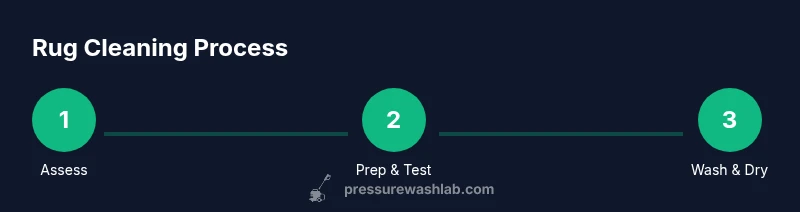
- 1
Assess rug feasibility
Check fiber type, backing construction, dye stability, and rug value. If there is any doubt about colorfastness or structural integrity, avoid pressure washing and opt for safer cleaning methods or professional help.
Tip: Always begin with a test area on a hidden corner. - 2
Protect the area
Lay down tarps to catch splashes, move furniture away, and shield fringes from direct spray. Ensure good ventilation around the cleaning zone to speed up drying.
Tip: Place a mat under the rug to catch dripping water and keep surfaces dry. - 3
Prepare detergent solution
Mix a rug-safe cleaner with water as instructed by the product label. Apply sparingly to a small section and avoid saturating the rug backing.
Tip: Do not use bleach or high-alkaline cleaners on most rugs. - 4
Agitate and rinse
Gently agitate the surface with a soft brush, then rinse with a wide spray from a comfortable distance. Work in small sections to maintain control and prevent pooling.
Tip: Keep the spray moving to prevent fiber damage and spotting. - 5
Remove excess moisture
Blot with towels and press to extract moisture. Do not wring or twist the rug, which can distort fibers or backing.
Tip: Allow as much surface moisture as possible to evaporate before moving the rug. - 6
Dry thoroughly
Lay the rug flat or prop on supports to promote air circulation under and around it. Use fans or a dry, shaded area to speed up the drying process.
Tip: Ensure both sides are completely dry before placing back into use.
Quick Answers
Can you pressure wash all rugs?
No. Delicate fibers, antique or dye-sensitive rugs can be damaged. Always test and follow care labels.
No—many rugs are not suitable for pressure washing, especially delicate ones.
Is pressure washing outdoor rugs safe?
Outdoor or polypropylene rugs are more tolerant of pressure washing, but still require a low pressure, wide spray, and proper drying.
Outdoor rugs can be cleaned with care, but use low pressure and ensure they dry fully.
What settings should I use?
Use a low-pressure setting with a wide spray pattern and a mild rug cleaner; avoid concentrated sprays near edges and seams.
Use gentle, wide sprays and mild cleaner; avoid the edges.
How long does drying take?
Drying times vary by rug material and air flow; generally plan for several hours to a day. Ensure the rug is completely dry before use.
Drying takes several hours to a day, depending on the rug.
Can this void rug warranty?
Some rug warranties prohibit pressure washing; check the warranty terms and manufacturer's recommendations.
Check the warranty; pressure washing may void it.
When should I call a professional?
If the rug is valuable, handmade, or you’re unsure about dye fastness or backing integrity, hire a professional.
Hire a pro if the rug is valuable or unsure about care.
Watch Video
Key Takeaways
- Test dye fastness before any wash.
- Use low pressure and wide spray on synthetic rugs.
- Avoid pressure washing wool, silk, or antique pieces.
- Rinse completely and dry thoroughly to prevent mold.
- Consult a professional for valuable or unknown rugs.