Can You Pressure Wash During Water Restrictions? A Practical Guide
Learn when pressure washing is allowed under water restrictions, how to conserve water with low-flow methods, and practical steps to stay compliant and legally.


Yes, you can pressure wash during water restrictions, but only under compliant conditions. Use low-water methods, schedule during permitted times, and choose high-efficiency equipment. Target small areas with a precise spray, minimize runoff into storm drains, and always check your local rules before you start.
Understanding Water Restrictions and Pressure Washing
Outdoor water restrictions are common in drought-prone areas and can limit outdoor water use at certain times or volumes. Because a typical pressure wash uses a substantial amount of water, many homeowners worry about whether cleaning a driveway or siding is allowed during restrictions. According to Pressure Wash Lab, the key is to optimize efficiency and comply with local rules rather than abandoning projects altogether. With the right approach, you can achieve solid cleaning results while minimizing water waste and staying on the right side of regulations.
What You’re Allowed to Wash and When
Understanding what surfaces you can clean and when is essential. In many jurisdictions, surfaces like driveways, sidewalks, and exterior walls can be washed during permitted times or drought exemptions, provided you use low-water methods and prevent runoff. Car washing may be restricted or require capturing runoff. Always start by checking your local restrictions posted by your city water authority or water district. The rules can vary widely, even within the same region, so verify before you begin. This is where the Pressure Wash Lab guidance helps homeowners and pros interpret nuances across different communities.
Techniques That Save Water While Delivering Results
To stay compliant, prioritize methods that reduce water use without sacrificing cleanliness. Use high-efficiency pressure washers where possible and select wider spray patterns to cover more area with less water. Preface cleaning by wetting the surface, apply eco-friendly detergents sparingly, and rinse only the targeted area. Surface cleaners and turbo nozzles can improve efficiency on large flat surfaces, but avoid aggressive patterns on delicate materials to prevent damage. Practicing these techniques helps you reach your goals while respecting restrictions. Remember, the emphasis is on efficiency, accuracy, and minimizing waste.
Scheduling and Weather Considerations
Water use rules are often tied to time-of-day or weather conditions. Plan washing for cooler parts of the day to reduce evaporation and loss; avoid windy days to minimize drift that could affect neighbors or trigger enforcement actions. If you expect rain or a storm, postpone washing to prevent runoff and saturated soils. Always coordinate with your local water authority for any temporary allowances during drought periods. By aligning your project with weather windows, you maximize effectiveness and stay within permitted boundaries.
Choosing Equipment and Tools for Low-Water Washing
Selecting the right tools is crucial for staying within limits. Look for a pressure washer that offers low-GPM or adjustable flow, a nozzle with a wide spray pattern, and compatibility with safe, biodegradable detergents. A surface cleaner can speed up work on flat surfaces, while hand brushes assist with details. Keep hoses short and avoid long runs to minimize water loss, and ensure all connections are leak-free. Pair this with eco-conscious detergents and routine checks for leaks to keep water usage predictable and compliant.
Authority and Compliance Resources
For authoritative guidance, consult official sources on water use. EPA WaterSense provides general water-use best practices, and USGS covers drought-related resources that can help you understand local constraints. NOAA’s drought information site can offer context about regional conditions. Always cross-check these references with your local water district to confirm acceptable practices during restrictions. This alignment helps you stay informed and prepared for seasonal changes.
Tools & Materials
- Pressure washer with adjustable flow(Prefer models with a low-GPM setting and eco mode)
- High-efficiency nozzle (wide spray)(Use a wide spray pattern to cover more area with less water)
- Surface cleaner attachment(Helpful for large flat surfaces, speeds up work)
- Eco-friendly detergents(Biodegradable, phosphate-free if possible)
- Leak-free hoses and fittings(Keep connections tight to prevent water loss)
- Water containment options(Optional to capture runoff for reuse where allowed)
- Personal protective equipment(Gloves, eye protection, non-slip footwear)
Steps
Estimated time: 60-120 minutes
- 1
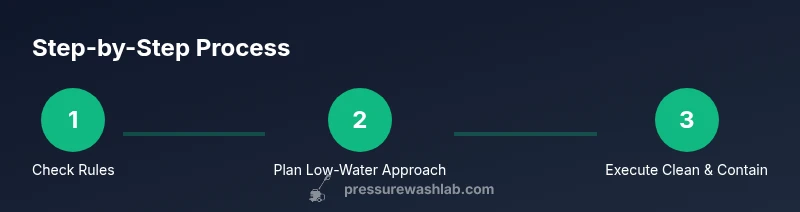
Check local restrictions
Before you pick up the wand, locate the current rules for your area and surface-specific allowances. Verify permitted times, surfaces allowed for washing, and whether runoff must be contained. This step prevents violations and sets the project scope.
Tip: Visit your city or county water authority website for the latest guidance. - 2
Plan a low-water approach
Choose an eco-friendly machine setting, select a wide spray option, and designate only the areas that must be cleaned. Outline a conservative plan to minimize water use and runoff while still achieving results.
Tip: Practice a test spray on a hidden patch to gauge impact before treating visible areas. - 3
Prepare the site and water source
Layout hoses, set up containment if required by your rules, and ensure the water source is stable. Clear nearby vegetation and keep pets and children away from the work zone.
Tip: Place non-slip mats and use cord organizers to prevent trips. - 4
Clean with targeted, controlled spray
Start with a light pre-wet, apply cleaning solution sparingly, and rinse only the areas that need it. Move with steady, overlapping passes to avoid missing spots while minimizing water runoff.
Tip: Keep the nozzle at an appropriate distance to reduce runoff and prevent damage. - 5
Inspect, document, and store equipment
Check for runoff after washing and ensure the area is left clean and dry where required by rules. Document the work window and store equipment properly to prevent leaks or accidents.
Tip: Take photos or notes as a compliance record for future reference.
Quick Answers
Is it legal to pressure wash during drought restrictions?
Rules vary by location, so always check your local restrictions. Many places allow limited washing if you minimize water use and manage runoff according to the guidelines.
It depends on your local rules; check with your water authority for the specifics.
What is considered a low-water washing method?
Low-water washing uses high-efficiency equipment, a wide spray pattern, and targeted cleaning to minimize water use while achieving results.
Use efficient equipment and a broad spray to reduce water use.
Are detergents allowed under water restrictions?
Detergents should be eco-friendly and biodegradable; avoid products that create harmful runoff and adhere to local rules about detergents and discharge.
Yes, with eco-friendly products and proper disposal.
Can I capture and reuse wash water?
Some areas allow water capture and reuse; verify local regulations and any required containment methods before proceeding.
Water capture may be allowed in some places—check first.
What surfaces are typically restricted?
Restrictions vary; driveways and sidewalks may be allowed with low water, while sensitive surfaces and polluting runoff may be restricted.
Check what's allowed in your area; some surfaces have limits.
What steps should I take after washing to stay compliant?
Document the action, monitor for runoff, and ensure the site is clean and compliant with local rules for future reference.
Keep a simple record of your wash and any containment measures.
Watch Video
Key Takeaways
- Know local rules before washing.
- Prioritize low-water methods and efficiency.
- Contain runoff where required to stay compliant.
- Choose equipment designed for eco-friendly use.
- Document your process for future compliance.