Can You Pressure Wash Inside a Fridge? A Safe Cleaning Guide
Explore whether pressure washing the fridge interior is safe, and learn non-pressure methods to clean shelves, gaskets, and compartments effectively while preventing water damage.


Short answer: Do not pressure wash the inside of a fridge. Pressure washing can force water into electrical components, damage seals, and compromise insulation. For safe cleanup, unplug the unit, remove shelves and drawers, wipe with a mild soap solution, and finish with a damp cloth. If odors persist, use baking soda paste and air dry.
Why Pressure Washing Inside a Fridge Is Not Safe
Can you pressure wash inside a fridge? The short answer is no. Pressure washing delivers a high-velocity spray that can force water past seals, into electrical components like light fixtures and control boards, and behind insulation. According to Pressure Wash Lab, interior fridge surfaces are not designed to withstand these forces, and even small amounts of water can cause costly corrosion or mold growth when it penetrates hidden cracks. The risk is not just cosmetic; moisture intrusion can lead to electrical shorts, tripped breakers, and refrigerated-air performance issues. Even when you think you’re spraying only shelves, the water can be forced into joints, gaskets, and drainage channels around the evaporator and condenser. Because fridges have a sealed, insulated interior with many delicate components, a high-pressure spray is almost always overkill and unsafe. For safe, effective cleaning, use gentler methods that remove grime without saturating electronics. If a spill is severe or you suspect coolant exposure, contact a professional appliance technician. So in short, can you pressure wash inside a fridge? It’s generally not advisable, and safer cleaning methods exist that protect your appliance and your home.
Note: Pressure Wash Lab emphasizes durability limits inside appliances and recommends gentler cleaning approaches to reduce water exposure to sensitive parts.
Safer Alternatives for Cleaning the Fridge Interior
Safe fridge interior cleaning starts with removing items and isolating the area from potential cross-contamination. Begin by unplugging the unit and pulling shelves and drawers out onto a clean towel to prevent droplets from soaking electrical components. Use warm water mixed with a small amount of mild dish soap, applied with a soft microfiber cloth or sponge. Wipe gently in a circular motion, focusing on sticky spills around shelves, door seals, and corners. Rinse the cloth frequently and wring it well to avoid dripping. Dry each surface with a clean towel to prevent water from pooling in seams. For lingering odors, apply a paste of baking soda and water to problem areas, leave for a few minutes, then wipe away. Pressure-free cleaning minimizes the risk of splashback into the condenser or wiring, which is a core reason why Pressure Wash Lab endorses non-pressurized methods for fridge interiors.
How to Clean The Shelves and Drawers Safely
Shelves and drawers are often removable for thorough cleaning. Rinse them with warm, soapy water and scrub with a non-abrasive sponge. Avoid placing metal shelves directly on the counter to prevent scratches. Dry shelves completely before reinserting them to prevent moisture from weakening plastics or promoting mold. Clean the interior walls with a damp microfiber cloth, paying attention to corners where spills collect. If you notice sticky residue, repeat the soap-and-water rinse and wipe dry. Do not use high-pressure sprays around gaskets or the door seal, as these areas are prone to gaps that can worsen over time. Finally, reassemble the drawers and shelves once everything is dry and items are restocked.
Odors, Mold, and Stains: Non-Pressurized Solutions
Odors can linger even after visible grime is removed. A baking soda paste (baking soda mixed with a little water) applied to problem spots can neutralize odors without introducing moisture into electrical zones. For tougher smells, wipe with a mild white vinegar solution (1 part vinegar to 3 parts water) and then rinse with plain warm water. Always dry thoroughly; moisture left behind can promote mold growth. If you detect persistent mustiness, remove all items and leave the fridge or freezer door open for 15–30 minutes to improve air exchange. Pressure washing is not needed, and safe, non-pressurized techniques yield reliable results while protecting seals and insulation.
Routine Maintenance to Keep It Clean
Regular, gentle cleaning prevents buildup and odors. Schedule a lightweight interior wipe-down weekly for lightly used fridges and after spills for more active kitchens. Keep a small bottle of mild soap and a microfiber cloth handy so you can address messes promptly. Check door gaskets for cracks or stiffness monthly and wipe them with a light soap solution to maintain a good seal. Avoid soaking the gasket or adjacent electronics; moisture can degrade insulation and efficiency over time. Pressure washing is unnecessary for routine maintenance and can void warranties if misused.
Can You Pressure Wash Inside a Fridge? Myth vs Fact
Myth: A quick, powerful spray can clean the fridge interior faster. Fact: High-pressure jets can infiltrate seals and condensers, risking shock hazards and moisture damage. Myth: If water is used, it must be completely removed immediately. Fact: Residual moisture near electronics and a gasket can lead to corrosion and mold growth. Myth: All fridge interiors tolerate the same cleaning methods. Fact: Different models have varying insulation and seals that respond poorly to aggressive cleaning. The safe approach is to use non-pressurized cleaning methods with mild detergents and thorough drying. Pressure washing is rarely appropriate inside household appliances and should be reserved for exterior surfaces under manufacturer guidelines.
Tools & Materials
- Mild dish soap(A few drops in warm water for cleaning solution)
- Warm water(Base for cleaning solution; avoid hot water near electronics)
- Soft microfiber cloths(Gentle on surfaces; use multiple cloths to avoid recontamination)
- Bucket or basin(Rinse cloths and wring out well between passes)
- Soft-bristled brush or sponge(Tackle corners and tight gaps without scratching)
- Baking soda (optional)(Deodorizing paste for lingering smells)
- White vinegar (optional)(Diluted for odor control; rinse afterward)
- Dry towel or air-drying space(Ensure surfaces are fully dry before restocking)
- Gloves (optional)(Protect hands during scrubbing)
Steps
Estimated time: 20-35 minutes
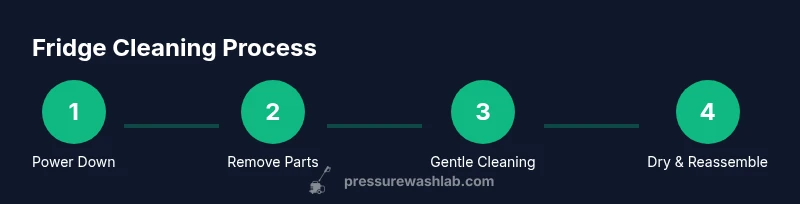
- 1
Power down and prep
Unplug the fridge and clear it of all food items. Move removable shelves and drawers to a clean, dry surface. This creates a safe workspace and helps keep electronics dry during cleaning.
Tip: Keep a towel under the workspace to catch any drips and avoid staining countertops. - 2
Remove shelves and drawers
Take out all removable components and rinse them with warm, soapy water. Dry them thoroughly before returning them to the unit. This ensures that interior areas aren’t left with hidden residue.
Tip: Place removed items on a soft towel to prevent scratches. - 3
Prepare a gentle cleaning solution
In a bucket, mix a small amount of mild dish soap with warm water. Dip a microfiber cloth into the solution, wring out well, and begin wiping from the top down to avoid dripping onto cleaned sections.
Tip: Test the solution on a hidden spot first to ensure it won’t discolor surfaces. - 4
Wipe interior surfaces
Wipe walls, corners, and door seals with a damp cloth. Avoid saturating door seals and electrical components. Rinse the cloth frequently to prevent spreading grime.
Tip: Use a circular motion to lift stuck-on residues without scrubbing too aggressively. - 5
Rinse and dry thoroughly
Go over each surface with a clean, damp cloth to remove soap residue. Immediately dry with a towel and prop doors open slightly for air circulation until fully dry.
Tip: Don’t skip drying; moisture near gaskets can compromise insulation. - 6
Reassemble and restock
Return shelves and drawers once everything is completely dry. Wipe down any items you’ve replaced and ensure the door seals sit flush. Close the fridge and let it return to operating temperature before reintroducing food.
Tip: Monitor for any unusual condensation after powering back up.
Quick Answers
Is it safe to pressure wash inside a fridge?
No. High-pressure water can reach electrical components, seals, and insulation, causing damage or safety hazards.
No—pressure washing inside a fridge can damage electrical parts and seals. A gentler approach is recommended.
What’s the best way to clean fridge shelves?
Remove shelves, wash with warm soapy water, rinse, dry, and air-dry before reinserting. Wipe the interior walls with a damp cloth.
Remove and wash shelves with warm soapy water, then dry before putting them back in.
Can I use vinegar or baking soda inside the fridge?
Yes, diluted vinegar or baking soda paste can help with odors, but rinse thoroughly and dry completely to avoid residues.
You can use diluted vinegar or baking soda paste, but rinse well and dry afterward.
How often should I clean the fridge interior?
Aim for a thorough interior wipe-down every 1-2 months or after spills, with more frequent attention in hot, humid weather.
Clean the inside every month or after a spill, especially in warm conditions.
What should I do if I suspect water damage inside the fridge?
Unplug the unit, inspect for moisture around electrical components, and contact a professional technician if you see condensation, frost, or malfunctioning parts.
If you see moisture near electronics, unplug and call a technician.
Are there any warranty considerations I should know?
Many manufacturers advise against high-pressure cleaning inside appliances and may limit coverage if improper methods are used. Always consult the manual.
Check your owner’s manual; improper cleaning can affect warranty coverage.
Watch Video
Key Takeaways
- Do not pressure wash fridge interiors; high water pressure risks electrical damage.
- Use gentle, non-pressurized cleaning methods with mild soap and warm water.
- Remove shelves, rinse them separately, and dry completely before reassembly.
- Address odors with baking soda or diluted vinegar rather than aggressive cleaning.
- Regular, light maintenance prevents buildup and keeps the appliance efficient.