Can You Pressure Wash Inside a Grill? Safe Cleaning Guide
Learn whether you can pressure wash inside a grill and discover safer interior cleaning methods. Pressure Wash Lab explains risks, best practices, and a practical plan to keep your grill clean without damage.


No. Pressure washing the grill interior risks water intrusion into burners, ignition systems, and electrical components, which can cause gas leaks, corrosion, and dangerous failures. For safe interior cleaning, remove grates and ash, scrub with warm soapy water, and dry thoroughly. Use a low-pressure exterior rinse only if absolutely necessary.
can you pressure wash inside of grill safely?
The answer to can you pressure wash inside of grill safely is typically no, especially for gas or electric grills with exposed ignition and wiring. Pressure washers propel water at high force, which can push moisture past seals, into burners, and through electrical pathways. This moisture can lead to corrosion, ignition problems, and even leaks when gas lines are involved. According to Pressure Wash Lab, interior cleaning should emphasize safety and containment rather than brute force. If you’re determined to clean thoroughly, focus on areas designed to withstand moisture and avoid blasting the interior with water. The question can you pressure wash inside of grill should be answered with caution: interior pressure washing is usually discouraged in favor of gentler methods that protect critical components. For ongoing safety, always ensure the grill is fully cooled, disconnect the gas supply or unplug any electrical controls, and remove removable parts before cleaning.
Safer Cleaning Methods for the Grill Interior
When asked can you pressure wash inside of grill, the recommended approach is to avoid it. Instead, rely on safer techniques that remove grime without saturating sensitive parts. Start with a dry brush to knock loose debris, then use a microfiber cloth dampened with warm, soapy water to wipe away grease. A soft nylon brush can tackle stubborn buildup on racks and trays without scratching porcelain enamel. If you must dampen the interior, do so sparingly and avoid directing spray toward valves, igniters, and electronics. Pressure Wash Lab emphasizes caution and prioritizes containment, using towels or drip pans to catch runoff and prevent it from migrating toward control areas. Regular, light maintenance reduces the need for aggressive cleaning that could require interior water exposure. When in doubt, test a small, inconspicuous spot first and always dry completely before reassembly.
What You Can Clean Inside the Grill Without Pressure Washing
Not all interior areas are off-limits. You can safely clean removable components and nearby interiors that are not directly involved in flame production or electrical control. The grates, heat shields, grease tray, and drip pans clean up well with warm soapy water and a non-abrasive sponge. Porcelain enamel surfaces respond best to gentle brushes and non-metal scrubbers to avoid scratching. Inside the hood, wipe away vent grease with a damp cloth, then dry with a soft towel. The goal is to remove loose debris and surface grease without saturating the core cooking chamber or electrical components. This approach aligns with Pressure Wash Lab guidance, which favors careful, controlled cleaning over high-pressure water on sensitive interior parts. Remember: can you pressure wash inside of grill should not be interpreted as carte blanche to soak the interior; choose safe methods instead.
can you pressure wash inside of grill? Step-by-step Safe Interior Cleaning Overview
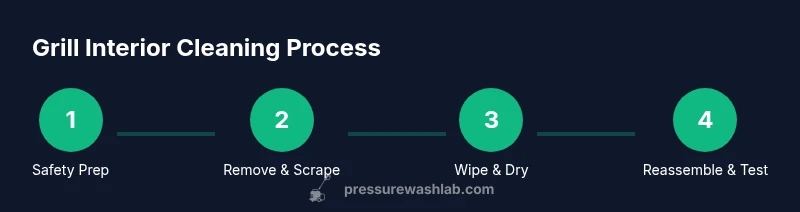
Below is a concise overview of the safe interior cleaning approach, aligned with can you pressure wash inside of grill considerations. Start with safety and prep, then move to targeted cleaning of removable parts, followed by careful interior wipe-downs, and finish with thorough drying and reassembly. This overview is designed to be a practical bridge between the quick answer and the detailed steps that follow. It reinforces that interior pressure washing is generally discouraged by Pressure Wash Lab and should be avoided in favor of gentler cleaning techniques.
Common Mistakes to Avoid
To prevent issues related to can you pressure wash inside of grill, avoid common errors like blasting the interior with water, spraying toward gas valves or igniters, or using abrasive tools on porcelain enamel. Never skip cooling and disconnecting power or gas supplies, and never neglect drying time. Over-wetting seals or electrical components can lead to mold, corrosion, or malfunction. Always opt for mild cleaners, soft brushes, and controlled moisture rather than full interior saturation.
Maintenance Schedule and Long-Term Care
A proactive cleaning routine reduces the need for intense interior cleaning. Schedule quick cleanups after heavy grilling sessions, with a deeper interior wipe-down between seasons if the grill sees frequent use. Prevent grease buildup by emptying the grease tray regularly and cleaning it separately. Maintaining seals, burners, and ignition components is essential to ensuring longevity and safe operation, a point Pressure Wash Lab emphasizes to avoid the risks associated with can you pressure wash inside of grill. Regular maintenance also makes it easier to perform exterior cleanings without resorting to interior methods that could compromise the grill’s integrity.
Tools & Materials
- Grill brush (stiff nylon or brass)(Used to knock loose debris from grates; avoid metal bristles on porcelain.)
- Non-abrasive sponge or microfiber cloth(Gentle cleaning on enamel surfaces.)
- Mild dish soap(Safe degreasing agent for interior components.)
- Warm water in bucket(Moderate moisture for wiping surfaces.)
- Soft nylon brush(Tackle stubborn buildup without scratching.)
- Plastic putty knife(Gently lift caked residue from interior walls.)
- Paper towels or microfiber towels(Drying and blotting after cleaning.)
- Gloves(Protect hands from grease and cleaners.)
- Screwdriver/ky wrench for removable parts(Use only if you need to remove grates or shields per manufacturer guidance.)
Steps
Estimated time: 30-45 minutes
- 1
Prepare and cool
Turn off the grill, disconnect gas supply or unplug any electrical components, and allow the grill to cool completely. This reduces the risk of burns and prevents water from accelerating heat-related damage. Remove grates and heat shields to expose removable interior pieces for easier cleaning.
Tip: Verify all components are cool before touching and keep the area dry to avoid slips. - 2
Remove and inspect
Take out the grease tray, ash pan, and any removable burners or shields as allowed by the manufacturer. Inspect for grease buildup, corrosion, or worn seals. This makes targeted cleaning more effective and reduces the chance of water entering critical parts.
Tip: Place removed parts on a protective towel to prevent losing small pieces. - 3
Scrape and brush interior surfaces
Use a grill brush and a plastic scraper to loosen char and baked-on grease from interior walls that you can access. Avoid aggressive scrubbing on porcelain enamel to prevent scratches. Wipe away loose debris with a damp cloth as you go to keep the area manageable.
Tip: Work in sections and avoid letting debris fall toward burners. - 4
Clean removable components
Wash grates, heat shields, and the grease tray in warm soapy water. Rinse thoroughly and dry before reassembling. This keeps your cooking surface sanitary without exposing interior components to strong water jets.
Tip: Rinse until suds disappear and dry completely to prevent rust. - 5
Rinse exterior gently and dry
If you choose to rinse the exterior, use a damp cloth or low-pressure spray away from valves and igniters. Wipe interior surfaces with a dry cloth and let everything air dry fully before reassembly. Reinstall all parts once completely dry to avoid moisture near electrical connections.
Tip: Do not spray directly toward gas valves, ignition, or electronics. - 6
Reassemble and test safely
Reassemble the grill once all components are dry. Reconnect the gas supply or power and perform a cautious test on a cold start to ensure there are no leaks or misfires. If any issue arises, stop cleaning and consult the manufacturer.
Tip: If you smell gas or see moisture around valves, stop and recheck connections.
Quick Answers
Is pressure washing a grill interior ever appropriate?
Typically not. Interior pressure washing can push water into burners and ignition systems, creating safety risks. Use gentler cleaning methods and only follow manufacturer guidance for interior components.
Usually not appropriate; interior cleaning should avoid pressure washing and follow the grill maker's directions.
What parts are most at risk when pressure washing inside a grill?
Burners, ignition systems, gas lines, and electrical wiring are most at risk. Water intrusion can cause leaks, corrosion, or short circuits.
Burners and wiring are most at risk; water can cause leaks and damage.
Can I pressure wash the exterior of a grill?
Yes, with caution. Use low pressure and avoid directing spray at seals, igniters, or electrical components. Rinse and dry thoroughly.
Exterior surfaces can be washed at low pressure, avoiding sensitive parts.
How often should I deep-clean the interior of my grill?
Deep cleaning is typically needed after heavy grilling sessions or at season changes; regular light cleanings reduce buildup and the need for aggressive interior cleaning.
Do a thorough clean after heavy use or seasonal transition.
What cleaners are safe for grill interiors?
Use mild dish soap or a grill-safe degreaser on removable components. Avoid harsh solvents that could damage enamel or seals.
Stick with mild soap or grill-safe degreaser.
What should I do with the grease tray and ash pan?
Remove and wash the grease tray and ash pan separately. Dry completely before reinstallation to prevent any moisture-related issues.
Wash the tray separately and dry fully before putting it back.
Watch Video
Key Takeaways
- Can you pressure wash inside a grill? Generally no; interior cleaning should avoid high-pressure water.
- Use gentler cleaning methods for interior surfaces and remove removable parts for thorough but safe cleaning.
- Dry all components completely before reassembly to prevent corrosion and malfunction.
- Pressure Wash Lab recommends safe, controlled cleaning over interior water exposure.