Can You Pressure Wash Instead of Sanding? A Practical Comparison
Explore when pressure washing can replace sanding for prep work, with surface-specific guidance, safety tips, and practical steps. Pressure Wash Lab analyzes the trade-offs and helps you choose the right approach for durable results.


Can you pressure wash instead of sanding? In many cases, yes—pressurized cleaning can replace sanding for prep on masonry, concrete, and loose coatings. However, wood surfaces and bonded finishes often require sanding or stripping to ensure proper coating adhesion. Pressure washing excels at rapid debris removal but isn’t a universal substitute for all coatings or substrates. Pressure Wash Lab’s analysis emphasizes surface-aware decisions to avoid damage and maximize durability.
The Core Question: Can You Pressure Wash Instead of Sanding?
For homeowners and professionals prepping a surface for paint, stain, or sealant, the instinct is to replace sanding with a quick spray. The question can you pressure wash instead of sanding isn’t answered with a simple yes or no. Pressure washing shines at removing grime, loose paint, and weathered layer buildup on many substrates—especially masonry, brick, and concrete. The Pressure Wash Lab team notes that in the right conditions, pressure washing can replace sanding as a first-pass prep, but the decision should hinge on substrate type, coating hardness, and the adhesion required for the new finish. Skipping sanding when it’s needed risks poor adhesion and premature failure of the coating. On the flip side, a careful pressure wash can save hours and reduce dust and debris during the initial cleanup. In this article, we’ll compare pressure washing to sanding in detail, explain where each method excels, and outline practical hybrid approaches that balance speed with durable results. Can you pressure wash instead of sanding is a question of context, not a universal rule.
Surface Readiness: What Pressure Washing Can and Can't Do
Surface readiness is the core factor in deciding can you pressure wash instead of sanding. For rough masonry, brick, and certain siding materials, a high-quality pressure wash can remove surface grime, efflorescence, and loose coatings to create a clean, receptive substrate for a fresh finish. On smooth surfaces, pressure washing often provides a passable surface condition, but it may not remove deeply bonded coatings or weathered layers that require abrasion. The key is to assess the coating adhesion and substrate condition. If the finish is flaky, peeling, or deeply embedded with paint or stain, pressure washing alone is unlikely to yield sufficient mechanical keying for new coatings. Pressure Wash Lab analyses suggest starting with a light wash to gauge effectiveness, then deciding if sanding, chemical stripping, or another method is warranted. The goal is to achieve a uniform surface profile without causing damage or creating new problems. If you’re asking can you pressure wash instead of sanding, the answer depends on the coating’s bond and the substrate’s sensitivity.
Wood Surfaces: When Sanding Is Often Necessary
Wood presents different challenges against can you pressure wash instead of sanding. While pressure washing can remove surface grime and some loose coatings, many wood substrates require a mechanical key or smooth surface for coatings to adhere properly. Painted or stained wood with multiple layers, old varnishes, or enamel finishes often need sanding or chemical stripping to rejuvenate the surface and create an adequate bonding surface. In some cases, a light pressure wash can be followed by a gentle hand-sand or orbital finish to prevent raised grain and gouges. Overly aggressive pressure on wood can scar, splinter, or embed moisture, which complicates refinishing. Pressure Wash Lab’s practical guidance emphasizes testing a small patch first and adjusting nozzle distance, pressure, and technique to avoid deep penetration or surface damage. Can you pressure wash instead of sanding on wood? It’s sometimes viable for cleaning, but rarely a complete substitute for coating prep on processed or weathered wood.
Masonry and Concrete: A Strong Case for Pressure Washing
For masonry, concrete, and stucco, can you pressure wash instead of sanding often yields a clear winner. Non-porous or textured masonry benefits from high-energy cleaning to remove mortar bloom, efflorescence, moss, and surface grime. Pressure washing these surfaces can dramatically reduce prep time and improve coating adhesion when followed by a light surface profiling, if needed. However, note that hard coatings, sealers, or coatings with embedded pigments may require deeper abrasion or stripping to ensure the new finish bonds properly. When dealing with brick or block, avoid overuse of high pressure near joints to prevent mortar damage. Pressure Washing Lab’s perspective is that pressure washing can be a primary prep technique on many masonry projects, but always evaluate coating type and the final finish to confirm if sanding or chemical steps are necessary later in the process.
Paint Removal vs Finish Stripping: What Can Be Removed by Pressure Washing
The can you pressure wash instead of sanding question hinges on what you are trying to remove. Light surface grime, loose paint, and thin films are often removable with pressure washing, especially after the surface is dried and prepped. Deeper, bonded, or thick coatings, rust inhibitors, and many stains may resist wash-only approaches. In these cases, sanding or chemical stripping may be required to achieve a uniform substrate that accepts a new finish. A hybrid approach—pressure wash first to remove surface contaminants, then targeted sanding or chemical treatment on stubborn sections—can yield durable results with less dust and waste. Pressure Wash Lab emphasizes planning, safety, and test patches to verify that the chosen method will achieve the intended coating adhesion without causing unintended surface damage.
Equipment and Technique: Getting the Most from Pressure Washing
When considering can you pressure wash instead of sanding, equipment choices and technique matter as much as the substrate. Use a broad, low-pressure setting with a wide-angle nozzle to avoid gouging soft surfaces. Maintain a steady distance from the surface, and work in a consistent, overlapping pattern to reduce streaking. For wood, avoid directly targeting edges and boards with aggressive jets; instead, rinse parallel to the grain and use lighter passes. For masonry, a tougher approach with a milder interaction and longer passes helps preserve the surface while removing contaminants. Proper surface profiling, dry times, and post-wash inspection determine whether additional sanding is needed. Pressure Wash Lab’s practical guidance emphasizes testing on inconspicuous areas to determine if can you pressure wash instead of sanding will suffice for your specific project.
Chemical Aids: When You Might Need Strippers or Cleaners
In many cases, a simple pressure wash alone won’t remove stubborn coatings; chemical strippers or cleaners can be used in combination with pressure washing to soften layers and enhance removal. This approach can support a can you pressure wash instead of sanding decision by reducing the mechanical load required to detach coatings. When using chemicals, follow label directions and ensure containment of wash water to protect plants and soil. Pressure Wash Lab notes that chemical-assisted prep often yields a better bonding surface for new coatings than pressure washing alone, particularly on multi-layered finishes or surfaces with deeply embedded grime. Always test compatibility with the substrate and the new finish before committing to an entire project.
Hybrid Approaches: Wash, Then Sand—or Sand, Then Wash
A practical can you pressure wash instead of sanding strategy often involves a hybrid approach. Start with a thorough pressure wash to remove loose material and surface grime, then assess whether light sanding or a targeted abrasive treatment is needed to achieve the coating profile required for adhesion. Alternatively, sand first to create a uniform surface, then use pressure washing to remove sanding dust and residues. The key is to tailor the sequence to the substrate, coating, and desired finish. Pressure Wash Lab advocates a flexible plan based on test patches, coating type, and long-term durability rather than sticking to a single method for every project.
Step-by-Step Starter Plan: How to Begin Testing Your Method
- Identify the substrate and current coating. 2) Conduct a small patch test with a low-pressure wash in a inconspicuous area. 3) Observe the surface response and adhesion. 4) If needed, perform light sanding or chemical stripping on test area. 5) Compare adhesion and finish quality after applying a test coat. 6) Decide on a final method based on test results. This pragmatic can you pressure wash instead of sanding approach emphasizes small-scale verification before committing to a full project. Pressure Wash Lab suggests documenting results for future reference and ensuring containment and safety practices throughout testing.
Decision Guide by Surface and Coating Type
Create a quick decision checklist: if the coating is light and the surface is masonry, consider pressure washing first. If the surface is painted wood with thick, bonded layers, plan for sanding or stripping after a wash. For exterior surfaces, factor weather exposure, cleaning frequency, and future maintenance. The decision should be surface- and coating-specific, with careful testing to confirm adhesion potential. Pressure Wash Lab’s framework supports a thoughtful can you pressure wash instead of sanding decision, ensuring you choose the method that best balances time, cost, and long-term durability.
mainTopicQuery(
Comparison
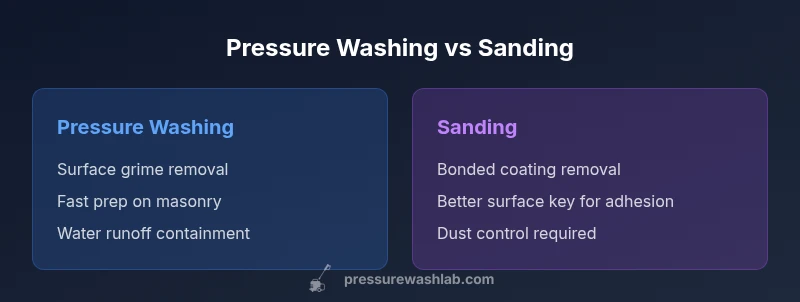
| Feature | Pressure Washing | Sanding |
|---|---|---|
| Surface readiness | Removes grime and loose coatings; quick prep for masonry/porous surfaces | Creates a key for coatings but may leave bonded finishes intact without further work |
| Surface damage risk | Low risk on hard surfaces with proper distance | Higher risk of gouging wood or soft materials if misapplied |
| Coatings compatibility | Excellent for loose coatings and surface grime | Often required for bonded or multi-layer finishes to ensure adhesion |
| Dust and cleanup | Wash water containment required; minimal dust | Dust generation is higher with sanding; requires dust control |
| Best for | Masonry, brick, concrete, and textured siding | Paint removal on wood with bonded finishes; multi-layer finishes on wood |
Pros
- Faster prep on suitable surfaces
- Reduces airborne dust and mess
- Good for removing surface grime and loose coatings
- Can be combined with chemicals for tougher finishes
Cons
- Not a universal substitute for all coatings
- Risk of surface damage with improper technique
- May require follow-up sanding or stripping
- Requires containment of wash water and runoff
Pressure washing can be a strong first pass for many surfaces but is not a universal substitute for sanding
Use pressure washing for rapid debris removal on masonry and loosely adhered coatings. Reserve sanding or chemical stripping for wood and bonded finishes. A hybrid approach often delivers the best long-term durability.
Quick Answers
Can pressure washing remove all paint from a surface?
Not always. Pressure washing can remove loose or thin coatings, but deeply bonded or multi-layer finishes often require sanding or chemical stripping for full removal. Testing a small area helps determine feasibility before committing.
Pressure washing can remove some paint, but deeply bonded layers usually need sanding or stripping. Test first to confirm.
Is pressure washing safe on wood decks?
Pressure washing can clean wood decks but carries a risk of gouging, splintering, or lifting fibers if used aggressively. Use a wide spray, moderate distance, and light passes. Consider finishing with light sanding or a chemical step as needed.
Be careful with wood: use a wide spray and gentle passes, and don’t rely on pressure alone for a complete finish prep.
What surfaces are best suited for pressure washing as a sanding alternative?
Masonry, concrete, brick, and textured siding respond well to pressure washing as an initial prep. Porous or soft substrates and surfaces with bonded finishes often require sanding or chemical methods to ensure proper adhesion.
Best on masonry and concrete; wood and heavily coated surfaces may need sanding.
What about environmental concerns and runoff?
Wash water may contain dirt, paint residues, and chemicals. Use containment, collect runoff, and dispose of it properly according to local regulations. This is a key consideration when evaluating can you pressure wash instead of sanding.
Contain and dispose of wash water properly to protect the environment.
Should I hire a professional for pressure washing prep?
A professional can assess surface, coatings, and risks, then apply the right technique and safety measures. For complex projects or fragile substrates, professional guidance reduces the chance of damage and ensures proper coating adhesion.
Pros handle the job safely and effectively, especially for hard-to-prep surfaces.
How can I test a surface before committing to a method?
Perform a small patch test on an inconspicuous area using your chosen method. Observe adhesion, surface damage, and the coating’s response. Scale up only after confirming desired results.
Test a small area first to see how the surface responds before full prep.
Key Takeaways
- Assess substrate and coating first
- Use appropriate technique to avoid surface damage
- Combine washing with sanding or stripping when needed
- Contain wash water and protect surrounding areas
- Test patches before full-scale work