Can You Pressure Wash Solar Panels? Safe Cleaning Guide
Explore whether you can pressure wash solar panels, understand the risks, and learn safe cleaning methods to protect efficiency, warranties, and your investment.


Generally no, pressure washing solar panels is not recommended. High-pressure water can scratch the panel surface, force water into seals, and void warranties. If cleaning is needed, use a low-pressure rinse, a soft brush, and mild non-abrasive cleaner. For best results, hire a professional solar panel cleaning service. This reduces risk to coatings, frames, and wiring.
Can you pressure wash solar panels? Practical reality
Solar panels sit at the intersection of demanding engineering and exposed outdoor elements. The glass is strong, but the coatings, edge seals, and wiring behind the glass are not designed for high-pressure water blasting. Pressure washing can micro-scratch coatings, push moisture into seals, or loosen fasteners over time. According to Pressure Wash Lab, homeowners should err on the side of caution and prioritize gentle cleaning methods that minimize risk to performance and warranty coverage. The goal is to remove surface debris (dust, pollen, bird droppings) without compromising the panel's protective layers or electrical components. A cautious approach protects not only efficiency but the long-term integrity of the system.
How solar panel construction affects cleaning approach
Solar panels are built with tempered or laminated glass, anti-reflective coatings, and a sealed frame designed for outdoor exposure. The backsheet and junctions may be sensitive to moisture intrusion if seals are compromised. Sanitizing cleaners or aggressive detergents can degrade coatings or corrode aluminum frames. Because panels vary by manufacturer and model, always refer to the user manual for cleaning guidance. The Pressure Wash Lab team emphasizes using the gentlest effective method and avoiding any technique that exerts direct force on the glass or seals. Understanding the construction helps homeowners choose cleaning methods that protect efficiency and warranty terms.
Why high-pressure cleaning is risky to solar panels
High-pressure water can etch, scratch, or crack the surface, especially around the edges where coatings are thinner. It can force water behind gaskets, leading to corrosion or water ingress into the frame and junction box. Repeated exposure to intense streams can also loosen mounting hardware. The risk is not only cosmetic—reduced light transmission and compromised electrical connections can lower energy output and trigger warranty concerns. For most homes, the risk outweighs the marginal benefit of a rapid wash.
Safer cleaning methods: low-pressure rinsing and brushing
Safe solar panel cleaning relies on gentler water delivery and careful brushing. Use a hose with a wide spray or a spray nozzle set to a gentle setting, keeping the nozzle several inches away from the glass. Pair this with a soft-bristled brush and a mild, non-abrasive cleaner. Work in small vertical or horizontal strokes to avoid streaking, and always rinse away soap thoroughly. Drying with a microfiber cloth isn’t strictly required, but it can help prevent mineral deposits if you have hard water. Avoid cleaning products with solvents, ammonia, or bleach that could damage coatings.
Detergents and cleaning agents: what to use and avoid
Choose mild cleaners designed for glass or for solar panels, and dilute according to label instructions. Avoid abrasive compounds, strong solvents, or household cleaners with additives that can leave residues. Do not mix cleaners with bleach or ammonia, as chemical reactions may occur. In many cases, plain water and a soft brush are enough to dislodge most buildup. If you choose detergents, test on a small area first and rinse completely to prevent streaking and residue that can attract more dirt.
Weather, timing, and conditions for cleaning
Clean panels when they are cool to the touch—ideally in the early morning or late afternoon on a shaded or overcast day. Cleaning in direct, hot sun can cause rapid drying and unsightly streaks. Calm, dry weather reduces splashback and helps you manage soap and rinse water more effectively. Avoid windy days that could blow debris into your work zone. If your area has significant mineral content in water (hard water), consider using distilled or demineralized water for final rinse to minimize deposits.
Tools, supplies, and setup for DIY cleaning
Prepare a low-pressure hose with a wide spray setting, a soft-bristled brush, mild non-abrasive cleaner, safety gear, and stable access (ladder or platform). Wear gloves and eye protection. Use a gentle rinse technique and keep a conservative distance from the glass. Establish a clean work zone away from the roof edge and ensure any cleaning steps are reversible and do not require climbing on panels. If you’re unsure about access or safety, contact a professional cleaner who specializes in solar panels.
Tools & Materials
- Low-pressure garden hose with spray nozzle(Set to wide spray; keep nozzle several inches from glass to minimize force.)
- Soft-bristled brush(Use a brush with gentle bristles; avoid stiff or wire brushes.)
- Mild, non-abrasive cleaner(Use a soap-like cleaner diluted as directed; avoid ammonia or solvents.)
- Safety gear (gloves, eye protection)(Prevent slips and chemical contact; roof work requires extra precautions.)
- Ladder or stable access platform(Ensure secure footing; use fall protection if required by height.)
- Distilled or demineralized water (optional)(Reduces mineral buildup in hard-water areas.)
Steps
Estimated time: 60-90 minutes
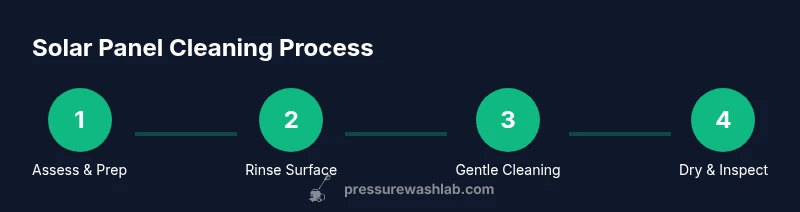
- 1
Prepare safety and access
Check the weather and ensure you have proper fall protection. Gather all tools within reach and place a stable ladder or platform. Confirm that the area beneath is clear of bystanders.
Tip: Always wear safety gear and have a helper nearby in case of a slip. - 2
Rinse the surface lightly
Use a wide spray to gently rinse away loose dirt from the panels. Do not use high pressure; keep the nozzle several inches away and short, controlled strokes.
Tip: Rinse from the top down to prevent dirt from running across clean sections. - 3
Apply a mild cleaner with a brush
Apply a small amount of mild cleaner with a soft brush. Gently scrub in straight lines to avoid scrubbing at the edges where coatings are thin.
Tip: Test cleaner on a small area first to ensure no staining or adverse reaction. - 4
Rinse thoroughly
Rinse again with low-pressure water to remove all soap residues. Ensure no suds remain on the surface, which can attract more dirt.
Tip: Repeat rinse if you see any soap film after the initial pass. - 5
Dry and inspect
Dry with a soft cloth if you see visible streaks, then inspect for residue or streaking. Check seals and mounting hardware for signs of wear or moisture intrusion.
Tip: Look for any clouding or micro-scratches that may indicate excessive abrasion. - 6
Document and decide on next steps
If dirt is stubborn or panels are difficult to access, consider professional cleaning or a more frequent maintenance schedule.
Tip: Do not scale you roof more than necessary; safety first.
Quick Answers
Is it safe to pressure wash solar panels?
No. Pressure washing can damage coatings and seals and may void warranties. Safer methods use low pressure and soft brushes.
Pressure washing is not safe for solar panels; it can damage coatings and seals. Safer methods use low pressure and a soft brush.
What cleaning methods are recommended for solar panels?
Use low-pressure rinsing with a soft brush and mild cleaner. Avoid harsh chemicals and high-pressure blasts. Dry as needed and inspect for residue.
Low-pressure rinsing with a soft brush and mild cleaner is recommended; avoid harsh chemicals and high pressure.
Should I clean solar panels myself or hire a professional?
DIY cleaning is possible with proper safety and equipment. Hire a professional if panels are on a difficult roof or you are unsure about safety.
You can clean them yourself if you’re confident in safety and have proper equipment; otherwise, hire a pro for safety.
Will cleaning void my solar panel warranty?
Cleaning itself usually doesn’t void a warranty, but using improper methods or damaging the panels can. Always follow manufacturer guidelines and consult your warranty terms.
Cleaning won’t void a warranty by default, but improper cleaning can. Follow manufacturer guidelines and warranties.
Can I use distilled water to rinse solar panels?
Distilled water helps reduce mineral deposits. If available, use it for the final rinse, especially in hard-water areas.
Distilled water for the final rinse can help reduce mineral spots in hard water areas.
What signs indicate I should stop and call a pro?
Cracked glass, corroded edges, or moisture intrusion near seals are signs to pause and get expert help.
If you see cracks, corrosion, or moisture around seals, stop and contact a professional.
Watch Video
Key Takeaways
- Avoid high-pressure cleaning on solar panels.
- Use low-pressure rinses and soft brushes for cleaning.
- Test cleaners and rinse thoroughly to prevent residue.
- Clean during cool, overcast conditions to minimize streaks.
- Consider professional cleaning for hard-to-reach panels or warranty concerns.