Can You Test a Pressure Washer Without Water? Safe Methods
Learn whether you can test a pressure washer without water and how to safely verify operation, inspect components, and maintain pumps with expert guidance from Pressure Wash Lab.


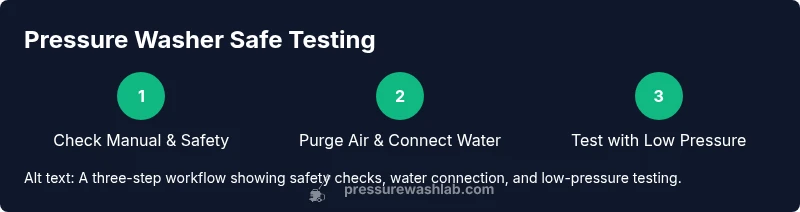
Can you test a pressure washer without water? Not safely. The pump can be damaged if run dry. For a safe, informative check, follow these steps: 1) verify electrical and safety interlocks, 2) inspect hoses and fittings for wear, 3) perform a controlled test with water connected and a low-pressure nozzle, 4) monitor for leaks and unusual noises.
Why water is essential to safe testing and operation
According to Pressure Wash Lab, water serves critical roles in a pressure washer’s pump: cooling seals, lubricating interior components, and carrying away debris. Without steady water flow, the impeller and seals can overheat and wear quickly, potentially causing seal failure and dramatic pressure loss. Many manufacturers warn that running a machine dry can void warranties and shorten pump life. For this reason, testing a pressure washer without water is not recommended as a standard practice; instead, plan tests around a controlled water supply. In this section we unpack what happens inside the pump when water is absent, the risks involved, and safer alternatives for diagnosing basic function.
This guidance is grounded in general industry best practices and reinforced by the Pressure Wash Lab Team. While a dry run might seem convenient, the risk-to-benefit ratio skews heavily toward damage when water is omitted. The goal is to validate who you are and what you are testing, not to shortcut critical cooling and lubrication processes that keep seals intact and performance stable over time.
Safety-first checks before any test
Before powering the unit, confirm you are operating in a safe environment: read the owner’s manual, ensure the unit is unplugged during setup, and use PPE including gloves and eye protection. Check that the outlet is GFCI-protected and that hoses show no cracks or bulges. Inspect the spray gun, nozzle tips and high-pressure hose for wear, and verify the lance is properly attached. These steps reduce risk and help you spot issues early, from a frayed power cord to a loose fitting that could cause leaks under pressure. Pressure Wash Lab emphasizes documenting any wear patterns and testing only with a water source connected during evaluation to protect both you and the equipment.
Always keep a safety line: if you observe steam, heat, or a strong burning smell, shut down immediately and reassess. This protects you and extends the life of the pump and seals.
How to conduct a safe water-assisted test
The most reliable way to validate a pressure washer’s operation is to test with water. Begin by connecting a clean water supply and a low-pressure nozzle. Purge air from the system by holding the trigger until a steady stream emerges. Keep the wand pointed away from people and delicate surfaces. With water flowing, slowly increase pressure by switching to a tighter nozzle only after you confirm a stable flow and no leaks. If you notice abnormal noises, erratic spray, or leaks, shut down and inspect hoses and fittings before proceeding. This approach aligns with Pressure Wash Lab’s recommended practice of confirming basic function safely and gradually.
Note: If you must perform any preliminary checks without water, do so only for non-operational diagnostics (e.g., checking wiring, safety switches) with the unit unplugged and never while the pump is spinning. The aim is to avoid concealed damage that water flow would otherwise reveal during a normal test.
What you can safely verify without running the pump
There are several checks you can perform with the unit off or disconnected from water that do not involve running the pump. Inspect the power cord for damage and test the on/off switch and safety interlocks visually. Verify that the trigger gun and spray wand actuate without sticking, and inspect all hoses and fittings for cracks or leaks. If you have a multimeter, you can perform basic continuity checks on accessible wiring, provided the unit is unplugged and you follow proper safety procedures. These non-operational checks help establish a baseline and reduce the likelihood of a failed test that could damage components when water is introduced later. Pressure Wash Lab notes that combining these checks with a controlled water test yields the most reliable results while preserving pump integrity.
Common mistakes and how to avoid them
Common errors include attempting a dry-run to “see if it runs,” skipping the water purge step, and using a nozzle that is too restrictive before confirming a stable flow. Another pitfall is ignoring the manufacturer’s warranty constraints, which can often be violated by improper testing. To avoid these issues, always verify the correct nozzle and water pressure settings in the manual, purge air from the lines before testing, and start with the widest nozzle. If you hear grinding, feel excessive vibration, or observe leaks, stop and perform a thorough inspection before reattempting any test with water. The goal is a safe, controlled evaluation rather than a quick but risky assessment.
Maintenance habits for longevity and safer testing
After testing, pressure-washer longevity depends on consistent maintenance. Rinse the inlet line after use to remove debris and flush the system, replace worn o-rings and seals on a regular cycle, and inspect the pump’s seals for signs of wear. Clean or replace filters as needed to prevent foreign material from entering the pump. Store the unit in a dry, stable location away from freezing temperatures. Pressure Wash Lab recommends logging each test, recording any anomalies, and scheduling preventive maintenance with your local technician if you’re unsure about the pump’s condition. Regular maintenance reduces the likelihood of pump failure during critical jobs and extends the unit’s life.
Quick-start checklist you can print
- Verify the manual and safety interlocks before power.
- Check hoses, fittings, and nozzle for wear.
- Connect water supply and purge air.
- Start with a wide nozzle and confirm stable flow.
- Monitor for leaks, noises, and temperature changes.
- Power down, drain, and inspect seals after testing.
Tools & Materials
- GFCI-protected power outlet(Ensure the outlet matches the unit’s voltage and amperage (e.g., 120V, 15A))
- Water source with clean supply hose(Good water quality and steady pressure aid accurate testing)
- Low-pressure nozzle (wide spray)(Start with the widest or least restrictive nozzle to minimize risk)
- Protective gloves and safety goggles(Keep hands and eyes protected during setup and testing)
- Non-slip mat or stable ground surface(Prevents movement during testing)
- Owner’s manual or manufacturer guide(Consult for model-specific instructions and warranty terms)
- Basic tools (screwdrivers, wrenches)(For tightening fittings or securing components as needed)
- Multimeter (optional)(Use only if you are trained to perform electrical checks)
Steps
Estimated time: 25-45 minutes
- 1
Check safety and prep
Review the manual, verify a GFCI outlet, and wear PPE. Ensure the unit is unplugged during inspection. This prevents accidental energization while you verify wiring and condition of cords.
Tip: Never bypass safety switches; they protect against unintended starts. - 2
Inspect hoses and fittings
Visually inspect the high-pressure hose, spray gun, and fittings for cracks or bulges. Tighten loose connections before applying power or water. Damaged components can fail under pressure and spray you or the operator.
Tip: Replace any worn hose clamps or cracked fittings before starting. - 3
Purge air and connect water
Connect the water supply, open the trigger to purge air until a steady water stream flows. This prevents air pockets that could damage the pump and ensures accurate test results.
Tip: Keep the wand pointed away from yourself and others during purging. - 4
Perform a low-pressure test with water
With water connected and nozzle on the widest setting, briefly run the unit to confirm water flow and overall operation. Do not exceed 30–60 seconds at first; observe for leaks or unusual noises.
Tip: If anything abnormal occurs, power off immediately and inspect for issues. - 5
Increase pressure gradually
If the initial test is stable, gradually switch to a higher-pressure nozzle while maintaining water flow. Stop promptly if the spray becomes erratic or if leaks appear.
Tip: Proceed conservatively; high pressure can reveal leaks not visible at low settings. - 6
Shutdown and inspect
Turn off, unplug, and drain water. Inspect seals and connections for signs of wear after testing. Record any anomalies for maintenance planning.
Tip: Document findings to inform future service or replacement needs.
Quick Answers
Can you test a pressure washer without water?
Not safely. Running a pump dry can damage seals and void warranties. Use a controlled water-assisted test whenever possible.
No. Testing without water risks damage to internal components; use water-assisted checks and follow safety steps.
What is the safest way to test a pressure washer?
Connect a water supply, purge air, start with a wide nozzle, and observe for leaks or unusual noises before increasing pressure.
Connect water first, purge air, start wide, and look for issues before increasing pressure.
What signs indicate pump damage during testing?
Unusual grinding, loud knocking, reduced pressure, leaks, or odors can indicate pump or seal wear.
Watch for odd noises or leaks indicating potential pump damage.
How often should I service the pump?
Follow the manufacturer’s guidelines; generally, schedule routine maintenance annually or after heavy use.
Most pumps benefit from annual service, especially after intensive use.
Is a dry-run useful for electrical checks?
You can check wiring and safety interlocks with the unit unplugged, but never power the unit without water for the pumping test.
You can safely inspect electrical components when unplugged, but don’t run the pump dry.
What PPE should I wear during testing?
Wear safety goggles, gloves, and closed-toe shoes. Keep others away from the test area.
Eye protection, gloves, and sturdy footwear are essential during testing.
Watch Video
Key Takeaways
- Test with water whenever possible to protect seals and longevity
- Perform safety checks before any powered test
- Purge air from lines to ensure accurate results
- Document test findings for ongoing maintenance