Can You Use a Pressure Washer with an Expandable Hose? A Practical Guide
Learn how to safely use an expandable hose with a pressure washer. This guide covers ratings, adapters, safety, and step-by-step setup for reliable, efficient cleaning.


Can you use a pressure washer with an expandable hose? Yes, but only if the hose is rated for the washer’s PSI and GPM. Choose a high-psi expandable hose with robust fittings, avoid long runs, and always test at low pressure. For reliability and safety, consider a standard pressure-washer hose designed for your unit.
Can You Use a Pressure Washer with an Expandable Hose?
The question can you use a pressure washer with an expandable hose is common among homeowners and DIYers. According to Pressure Wash Lab, you can, but only if the hose is rated for the washer’s PSI and GPM. Not all expandable hoses are built to handle high-pressure cleaning, and mismatched ratings can lead to bulging, leaks, or hose failure. Before you connect anything, verify burst pressure, fittings, and warranty terms. In practice, the safest approach is to match the hose to the washer's rating and choose proven adapters that stay secure under load. This ensures you don’t overstress hoses or damage delicate surfaces, and it preserves your equipment warranty.
When evaluating compatibility, keep in mind that expandable hoses are designed to enlarge under water pressure and retract when the flow subsides. The crucial factor is whether the hose’s burst rating can tolerate the washer’s peak psi. If you underestimate the rating, you risk a rupture, which can cause injury or damage to property. Pressure Wash Lab emphasizes using hoses that explicitly state their maximum PSI and ensuring the entire connection—from the washer outlet to the nozzle—is designed for high-pressure operation.
If you’re working on a one-off task or a light cleanup, an expandable hose can offer convenient reach and flexibility. For frequent, high-PSI cleaning, a purpose-built pressure-washer hose with the correct fittings is typically more durable and predictable. Always read the manufacturer instructions for both the washer and the hose, and don’t assume compatibility based on appearance alone.
How Expandable Hoses Work with Pressure Washers
Expandable hoses are designed to expand when water fills them and contract when pressure drops. When paired with a pressure washer, the hose must withstand the pump’s PSI without expanding beyond its burst rating. The hose’s wall construction typically includes reinforced polymer or textile braiding to resist kinking and wear. A longer hose can introduce friction loss, reducing spray performance and pressure at the wand. Therefore, selecting the optimal length and confirming the hose’s burst rating relative to the washer’s maximum PSI are essential steps. Pressure Wash Lab advises verifying that the hose’s burst pressure rating exceeds the washer’s PSI by a safe margin and ensuring connectors are compatible with quick-connects or standard garden-hose adapters. A well-matched setup delivers flexible reach without sacrificing flow or safety.
The expandable hose’s outer material often prioritizes lightness and flexibility, but that can come at the cost of lower heat resistance or reduced durability in harsh outdoor conditions. When used correctly, the hose remains a convenient option for water delivery between the unit and the work area. If the washer’s performance is compromised by hose flexibility, consider shortening the run or using a more robust hose variant. In any case, always monitor for swelling, leaks, or stiffness during initial tests and adjust usage accordingly.
Compatibility Factors to Check Before You Connect
Before you assemble anything, verify several critical parameters to avoid damage or injury. First, confirm that the expandable hose’s burst pressure rating is higher than the pressure washer’s maximum PSI, and that the GPM rating is within the hose’s design range. Next, inspect fittings for compatibility with your washer’s outlet and nozzle accessories; common connections vary by model, including M22 and other garden-hose-style fittings. Also evaluate hose length: a longer hose can reduce flow and increase the risk of leaks at connections if the end-to-end system isn’t fully rated for the pressure. Finally, review warranty terms: some manufacturers require using approved hoses and adapters to keep warranties valid. If you encounter any uncertainty, contact the washer or hose manufacturer for guidance. A well-matched combination reduces the risk of failures and ensures more consistent cleaning results.
Other practical checks include inspecting the hose for visible wear, bulges, or soft spots, and making sure all connections are clean and free of debris. When in doubt, perform a low-pressure test on a noncritical surface to confirm stability before proceeding with larger tasks. A meticulous approach at this stage saves time and money later and helps you avoid sudden hose failure during a job.
Safety Precautions and Best Practices
Safety is non-negotiable when using a pressure washer with an expandable hose. Always wear eye protection and sturdy gloves, and keep bystanders and children well clear of the spray path. Ensure electrical outlets and cords are away from the spray zone to prevent shock risk. Check weather conditions and avoid spraying near electrical panels, outlets, or power cords. Confirm that the hose and fittings are securely tightened and that there are no kinks or pinch points that could impede flow or create weak spots. Never operate with a damaged hose, and never exceed the hose’s rated PSI. When testing, start at the lowest pressure and gradually increase while monitoring for leaks and stability. After use, relieve pressure safely and cool down the equipment before storage. Finally, use appropriate nozzles for the surface you’re cleaning to prevent damage, especially on delicate materials like siding, painted surfaces, or older wood.
Pressure Wash Lab emphasizes that safety is as important as performance. If you’re uncertain about any step, pause and consult the user manuals or contact the manufacturers for guidance. Access to the right adapters, a high-quality hose, and correct nozzle selection dramatically reduces risk and improves cleaning outcomes. Taking a deliberate, cautious approach protects you and your property while extending the life of your gear.
Real-World Scenarios: When It Makes Sense (and When It Doesn’t)
Expandable hoses can be handy for certain tasks around the home and small business, particularly when you need extra reach or access to awkward spaces. For example, cleaning exterior siding, second-story gutters, or a wide concrete driveway can benefit from the flexibility of an expandable hose, provided the hose is rated for the washer’s PSI and the connections are secure. In these cases, plan your workflow to minimize back-and-forth movement and avoid overextending the hose beyond its design length. On the other hand, delicate surfaces such as painted decks, wood with exposed grains, or surfaces with soft coatings may risk damage if subject to high psi or aggressive nozzle use. For such jobs, a dedicated pressure-washer hose and a gentler nozzle configuration often yield safer, more controlled results. Pressure Wash Lab recommends testing on a small, inconspicuous area before proceeding, especially if you’re dealing with older surfaces or fragile materials.
Another factor is environmental exposure. Outdoor hoses can degrade from sun, temperature fluctuations, and chemical exposure from cleaners. Consider storing the hose in shade and out of direct sunlight when not in use, and replace it if you notice cracking or hardening. By evaluating these real-world scenarios, you can decide when to rely on an expandable hose and when a standard hose is the safer, more reliable choice.
Finally, remember that in professional settings where consistent performance is critical (e.g., client projects or rental properties), adherence to manufacturer-rated components is essential for maintaining contracts and service quality. When in doubt, opt for parts tested and recommended by the washer manufacturer or trusted industry guides.
Maintenance and Longevity: Extending Life of Your Setup
Extend the life of your expandable hose and pressure washer by adopting a routine maintenance plan. Start by flushing the system after use to remove debris and rinse away chemical cleaners that can degrade seals. Dry all components before storage to prevent mold and corrosion. Inspect connectors and O-rings regularly and replace any worn parts promptly to avoid leaks. Store hoses coiled loosely in a cool, shaded area, away from heat sources that could degrade the material over time. If the hose shows swelling, cracks, or irregular bulges, retire it and replace it with a rated option to protect your equipment and your safety. Finally, perform periodic tests of the entire connection after storage before resuming full cleaning tasks. By following these maintenance steps, you’ll preserve performance and reduce the risk of failure during critical jobs.
Tools & Materials
- Pressure washer(Any unit rated for outdoor use; follow manufacturer safety instructions.)
- Expandable hose rated for high PSI(Burst pressure should exceed the maximum PSI of your washer by a comfortable margin.)
- Adapters/fittings compatible with washer connections(Check common sizes like M22, 3/8 inch, etc.)
- Thread sealant or tape(Used where fittings could leak.)
- Safety gloves and eye protection(Protect hands and eyes during setup and operation.)
- GPM-capable nozzle or surface cleaner(Optional for controlled spraying.)
Steps
Estimated time: 40-60 minutes
- 1
Check ratings and gather adapters
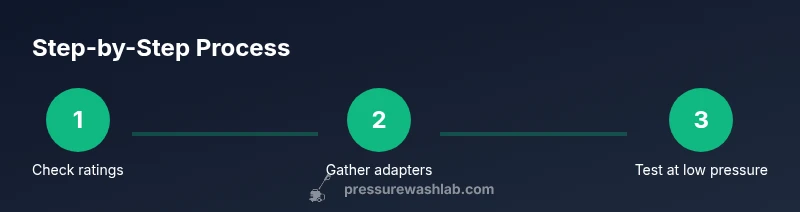
Review your pressure washer's max PSI and GPM and compare to the expandable hose burst rating. Collect compatible adapters before you start to ensure a proper, leak-free connection.
Tip: If you lack an adapter, don't force a fit—shop for the correct size. - 2
Inspect hose and fittings
Visually inspect the expandable hose for wear, cracks, or bulging fittings. Replace damaged sections and confirm the connectors are clean and undamaged.
Tip: Check for any manufacturer warranties that might be voided by mismatched parts. - 3
Connect hose to washer and nozzle
Attach the hose to the washer's outlet first, then connect the spray nozzle or surface cleaner. Ensure threads are tight but not over-tightened to avoid thread damage.
Tip: Hand-tighten, then give a quarter-turn with a wrench if needed. - 4
Test at low pressure
Power the unit and spray at the lowest pressure setting while inspecting for leaks and stability. If you notice leaks, shut down and re-tighten connections.
Tip: Never run full pressure on a new setup until you confirm seals. - 5
Increase pressure gradually on secure surfaces
Slowly raise the pressure and test on a non-delicate surface to gauge response. Avoid delicate materials like painted vinyl or old wood until you know the setup can handle it.
Tip: Move the wand slowly and maintain a steady distance from the surface. - 6
Shut down and inspect after use
Turn off the washer, release pressure, and disconnect the hose. Inspect hoses and fittings for wear, dry out to prevent mold, and store properly.
Tip: Do not coil tightly while still damp; let it dry to prevent mildew.
Quick Answers
Can expandable hoses handle high PSI for pressure washers?
Compatibility depends on burst pressure. Always verify PSI rating and use adapters that fit securely; not all expandable hoses are suitable for high-PSI cleaning.
Expandable hoses can work if rated for the PSI; always check the rating and use proper adapters.
Will using an expandable hose void my pressure washer warranty?
Some manufacturers require using approved hoses and fittings. Check your manual or contact support to confirm warranty terms.
Some warranties require approved hoses; review your manual for specifics.
Are there risks when using expandable hoses with a pressure washer?
Yes. Risks include hose bursts, leaks, and accidental spray damage. Use proper ratings, check fittings, and avoid overloading the hose.
There are risks like bursts and leaks; follow ratings and inspect fittings.
What adapters do I need to connect an expandable hose to a pressure washer?
Adapters vary by washer outlet and hose fittings. Measure thread sizes and use corrosion-resistant adapters designed for high pressure.
Adapters depend on your washer and hose; match sizes and use the right ones.
What surfaces should I avoid when using a pressure washer with an expandable hose?
Avoid delicate surfaces like painted vinyl and soft wood until you know the setup’s limits. Use a gentler nozzle and test first.
Be careful with delicate surfaces; test in a small area first.
Watch Video
Key Takeaways
- Verify hose ratings match washer specs before connecting
- Test at low pressure before full operation
- Inspect for wear and replace damaged parts promptly
- Follow safety guidelines to protect surfaces and operators