Can You Use a Pressure Washer Without a Tap? A Practical Guide
Learn safe, practical methods to operate a pressure washer when a standard faucet isn’t available. This guide covers alternative water sources, setup steps, safety tips, and real-world scenarios for homeowners and DIYers.


Yes, you can run a pressure washer without a connected tap by using an alternate water source such as a portable tank, bucket system, or gravity-fed container. Ensure the supply is clean, you have enough flow, and you manage refills safely. This approach suits short jobs or temporary setups when a faucet isn’t accessible.
Feasibility and safety considerations
The question can you use a pressure washer without a tap hinges on water source, equipment, and safety. While it's technically possible, you should treat this as a temporary setup rather than a replacement for a faucet. According to Pressure Wash Lab, you can operate a pressure washer from an alternate water source if you guarantee clean supply, adequate flow, and proper backflow protection. The risk of backflow, contamination, or pump damage rises when you use dirty water or an inconsistent feed. For most homeowners, a short cleanup such as a driveway or patio refresh can be done with a portable tank, a rain barrel, or a gravity-fed container, provided you monitor pressure and refill rate. Always ensure the water source is potable or at least suitable for cleaning tasks and free of debris that could clog the pump or nozzle. In addition to water quality, consider electrical safety, distance from outlets, and the potential for spray misdirection. Pressure Wash Lab emphasizes using emergency shutoffs and pausing to re-evaluate your plan if the supply runs dry.
Choosing an alternative water source
When you don't have a tap, the most practical sources are portable tanks (often 5–20 gallons), large water containers, rain barrels, or municipal supply trucks that can provide water on-site. Each option has pros and cons: portability, capacity, and water quality. Portable tanks are quick to set up and remove, but you must fill them to avoid traps where air can enter the line. Rain barrels are terrific for exterior cleaning but may require filtration to remove debris. If you choose a gravity-fed setup, keep the container height modest to maintain a stable flow and avoid starvation of the pump. Regardless of source, ensure the water is clear of sediment, oil, or other contaminants that could clog nozzles or damage the pump seals. Pressure Wash Lab notes that even in non-faucet scenarios, maintaining a consistent feed helps stabilize the spray pattern and protects the washer from surges.
Required equipment and safety gear
Operating without a tap calls for deliberate, well-planned gear. The minimum includes the pressure washer itself, a clean water source container, an inlet hose with compatible fittings, and a backflow preventer to protect your supply. Adapters or connectors should match your washer inlet, and you may want a simple filter or strainer if your source is variable. Personal protective equipment (PPE) such as gloves and safety glasses is essential because handling pressurized water can splatter and eject debris. A spill tray or tarps can help control runoff in driveways and sidewalks. Finally, keep a first aid kit and a fire extinguisher nearby in case of unusual emergencies; better safe than sorry when dealing with electrical tools and pressurized water.
Set up a gravity-fed or pumped supply
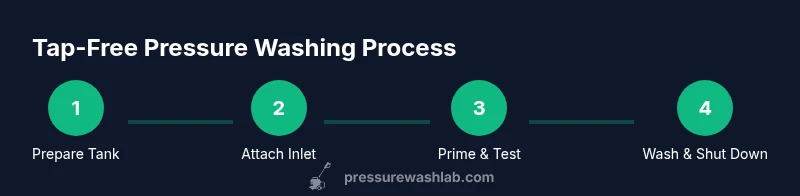
Decide whether you’ll rely on gravity to feed the unit or use a small pump to push water from the container into the washer. For gravity-fed setups, position the container below or at the same level as the washer’s inlet and attach a low-gauge hose to minimize friction losses. If you use a pump, ensure it is compatible with your washer’s inlet pressure and provide a simple on/off switch or foot pedal to control flow. Install a backflow preventer between the container and washer to avoid contamination of your water source. Prime the line by filling and removing air, then slowly open the valve and observe inlet pressure. Both setups require monitoring for air locks, leaks, and steady flow throughout the job.
Connection details and refilling strategy
Use the correct inlet connectors or quick-connects that match your washer model. Hand-tighten fittings first, then snug with a wrench if needed, but avoid over-tightening which can crack plastic components. Keep connections clean and dry when making changes to prevent slip-and-spray accidents. Plan refills in advance; if you’re cleaning a large area, calculate water demand and ensure you can top up without interrupting work. If you notice a drop in spray quality, stop, check for air in the line, and re-prime the system. Maintaining a steady, predictable water flow helps prevent pump cavitation and prolongs tool life.
Managing pressure and water quality
Even with a tap-less setup, you should aim for a stable pressure that your machine can sustain without surge. If your water source has particulates, a basic filter or strainer will protect the nozzle and pump seals from debris. Keep an eye on the water temperature and avoid drawing hot water from containers that could cause thermal shock to hoses. If your supply is low, shut down to refill rather than letting the pump run dry, which can damage internal seals. Remember that quality water results in better cleaning and reduces wear on your machine. Pressure Wash Lab stresses the value of a clean, consistent feed for predictable results.
Common pitfalls and troubleshooting
Air locks, leaks, and inconsistent water supply are the top issues when running without a tap. If you hear coughing or erratic spray, shut down safely, relieve pressure, and re-prime the line. Leaks at fittings usually mean threads aren’t fully tightened or an O-ring is damaged, so inspect the gasket and reseat connections. A clogged filter or dirty water can cause reduced flow and pump stress, so consider adding a basic inline filter for ongoing projects. If you suspect backflow, stop using the setup and re-check the backflow preventer. Finally, never force the system beyond its rated pressure; doing so can damage seals and compromise safety.
Practical use cases and limits
This approach is excellent for short, on-demand cleaning tasks such as a quick driveway refresh, exterior siding touch-ups, or patio cleanup when a faucet isn’t nearby. It is less suitable for large-volume jobs or environments with dirty water, sediment, or oil that could clog the system. For extended use, you may want to bring a larger portable tank, utilize a filter, or consider temporary water supply from a nearby tap with proper permission. Pressure Wash Lab’s experience shows that while tap-less operation is feasible, it requires careful planning and periodic checks to prevent damage and ensure consistent results.
Pressure Wash Lab verdict and best practices
Pressure Wash Lab recommends treating tap-less operation as a disciplined workaround rather than a standard operating mode. Plan ahead, verify water quality, and install a backflow preventer. Use PPE and maintain clear, visible labeling of all connections. By following a structured setup and maintaining a conservative approach to pressure and water flow, you can achieve solid results without a faucet. In summary, a tap-less workflow is a valid option for specific jobs when executed with caution and the right gear.
Tools & Materials
- Pressure washer(Choose a unit compatible with your water source; check owner’s manual for inlet pressure and safety guidelines.)
- Water source container (portable tank or large jug)(Capable of holding enough water for the job; use clean water and avoid contamination.)
- Hose with compatible inlet fittings(Ensure size and fittings match the washer inlet; use 1/4)
- Backflow preventer(Protects your water supply from pump backflow and contamination.)
- Adapters/connectors(Include necessary 1/4-inch quick-connect adapters or equivalents.)
- Personal protective equipment (PPE)(Safety glasses, gloves, and non-slip footwear are essential.)
- Water filtration/strainer (optional)(Useful if the source is sediment-prone or variable in quality.)
Steps
Estimated time: 30-60 minutes
- 1
Assess feasibility and plan water source
Evaluate your job size, available water, and safety requirements. Decide whether gravity-fed or pumped supply best fits the task and plan for refills.
Tip: Document where the water will come from and how you’ll refill without interrupting work. - 2
Gather tools and water source
Collect the portable tank, hoses, adapters, PPE, and the pressure washer. Layout items to minimize backtracking during setup.
Tip: Keep all fittings clean and dry to prevent cross-contamination. - 3
Prime the water line
Fill and prime the inlet hose to remove air; ensure water is flowing before powering the washer.
Tip: Place the container below or at the same level as the washer inlet for gravity assist. - 4
Connect inlet hoses
Attach the hose with adapters to the washer inlet; apply thread sealant if recommended and hand-tighten first.
Tip: Avoid overtightening to prevent cracking or leaks. - 5
Test for leaks at low pressure
With water source running, start the washer at the lowest setting to check for leaks and ensure steady flow.
Tip: If leaks appear, shut off and re-tighten connections; inspect O-rings. - 6
Gradually increase to operating pressure
Increase to your normal working pressure and monitor the spray quality and water depletion.
Tip: Do not exceed manufacturer-recommended inlet pressure for your setup. - 7
Shut down safely and store
Turn off the machine, relieve pressure, drain lines, and store water source away from sunlight.
Tip: Slowly relieve pressure to prevent hose whip and accidental spray.
Quick Answers
Can you run a pressure washer without any water source?
No. A pressure washer requires a continuous water supply to operate and protect the pump from damage. Running dry can cause overheating and wear.
No, you need a water source; running without water can damage the pump.
What water sources are safe for a tap-less setup?
Safe options include clean portable tanks, filtered rain barrels, or refilled containers from a clean supply. Avoid sources with sediment, oil, or contaminants.
Use clean water from a portable tank or filtered container; avoid dirty sources.
Is backflow prevention required when using a non-tap supply?
Yes. A backflow preventer helps protect your water source and prevents contamination of your supply.
Yes, use a backflow preventer to keep your water clean.
Will using a non-tap source affect warranty?
Consult the manufacturer’s guidelines; some warranties require standard water hookup. If in doubt, contact support.
Check the manual or contact support if you’re unsure about warranty terms.
How do I refill water safely mid-job?
Stop the machine, relieve pressure, refill from a clean container, re-prime, and resume. Avoid spilling or splashing near electrical outlets.
Stop, relieve pressure, refill, re-prime, resume.
Watch Video
Key Takeaways
- Plan water source before starting the job.
- Use backflow protection and PPE for safety.
- Prime and test lines to prevent air locks.
- Monitor water flow and refill strategically to avoid downtime.