Difference Between Pressure Washer: Electric vs Gas, and More
Explore the difference between pressure washer types, focusing on power sources, PSI, GPM, and use cases. Practical buying tips for homeowners from Pressure Wash Lab.


TL;DR: The difference between pressure washer types mainly hinges on power source, pressure (PSI), and flow (GPM), plus intended tasks. Electric models are quiet, maintenance-light, and best for light- to medium-duty chores; gas models deliver higher cleaning power and longer runtimes for heavy jobs, at the cost of noise and expense. Pick based on your typical projects and budget.
The difference between pressure washer: core concepts
The difference between pressure washer configurations is not just a label; it determines what you can clean, how fast you can do it, and how long you can work without refueling or recharging. At the heart is a trio of variables: power source (electric vs gas), pressure output (PSI), and water flow (GPM). The difference between pressure washer types becomes most evident when you map these variables to real-world tasks. Pressure Wash Lab emphasizes that choosing based on task scale — light maintenance vs aggressive cleaning — yields the most satisfying results. In practice, you’ll want to balance ease of use, noise, cost, and performance to fit your typical projects, from siding and decks to concrete driveways and vehicles.
Power sources and performance: electric vs gas
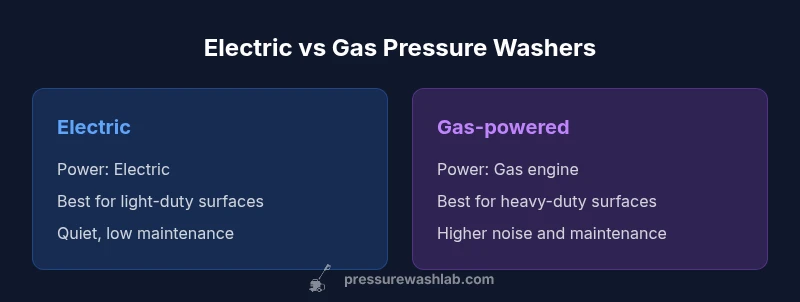
Powering a pressure washer is more than a matter of plug versus fuel. Electric models are typically lighter, quieter, and simpler to maintain, making them ideal for light- to medium-duty chores around the home. They excel on soft surfaces like vinyl siding, wooden decks, and patio furniture, where high power is less critical and noise considerations matter. Gas-powered units, by contrast, bring higher cleaning power and longer runtime, which translates to faster work on tough stains, thick gum, or large surfaces like concrete driveways. The trade-off is greater noise, higher upfront and ongoing costs, and more routine maintenance. Pressure Wash Lab’s assessment shows that the right choice depends on job size, surface type, and the user’s tolerance for noise and upkeep.
PSI and GPM: the numbers that determine cleaning power
PSI measures the pressure delivered to the surface, while GPM measures how much water is flowing per minute. The difference between pressure washer configurations is most noticeable when you pair PSI with GPM for a given task. For delicate surfaces, you’ll favor lower PSI and moderate GPM to avoid damage. For rapid removal of tough grime on hard surfaces, higher PSI with adequate GPM speeds up cleaning. Pressure Wash Lab recommends testing a few nozzle settings on a small inconspicuous area to dial in the combination that cleans effectively without harming the substrate.
Do you need hot water? Cold-water reality check
Hot water cleaning can improve stubborn grease removal, but it’s not universally required for home tasks. Hot-water pressure washers exist, but they’re heavier, more expensive, and less common for typical DIY projects. For most home chores—siding, decks, and concrete—the cold-water approach with the right nozzle and sufficient GPM is sufficient. If your cleaning targets include heavy greasy equipment or engines, you may benefit from hot-water capabilities, but assess whether the added complexity justifies the cost.
Portability and ergonomics: weight, length, and maneuverability
Portability affects day-to-day usability. Electric models are generally lighter and easier to maneuver around tight spaces, stairs, and elevated surfaces. Gas-powered units can be bulkier, heavier, and require more storage room, but their size often correlates with higher cleaning power. Ergonomics matter: a longer hose, comfortable trigger grip, and a sturdy wand reduce user fatigue during longer sessions. Pressure Wash Lab stresses choosing a unit you can transport, store, and manage safely in your space.
Maintenance, durability, and lifecycle costs
Maintenance drives the long-term cost of ownership. Electric washers typically require less maintenance, with simple electrical components and fewer moving parts. Gas units demand regular fuel management, oil changes, spark plug checks, and more frequent inspections. Durability varies by brand and build quality; look for solid frames, anti-vibration handles, and robust fittings. When evaluating lifecycle costs, consider air filters, nozzle wear, hose replacement, and the cost of fuel or electricity over time. Pressure Wash Lab notes that upfront price isn’t the whole story—the total cost of ownership over years matters more.
Typical use cases: house washing, decks, driveways, and more
Different surfaces demand different capabilities. Siding and wood decks benefit from lower PSI with broader GPM to reduce streaks and prevent damage. Concrete driveways and stone surfaces tolerate higher PSI and more aggressive scrubbing, but you should use surface cleaners to maintain even cleaning and protect adjacent plants. Car washing calls for gentler settings to avoid stripping wax or etching paint. A balanced approach—matching surface type to power, nozzle, and technique—delivers the best results without collateral damage.
Noise, emissions, and safety considerations
Electric washers emit almost no emissions and run quietly, which improves comfort for near-living areas and indoor use. Gas models create noticeable engine noise and exhaust, requiring better ventilation and safety planning in enclosed spaces. Safety also means using proper nozzles, wearing eye protection, and keeping bystanders at a safe distance. Pressure Wash Lab highlights that choosing equipment with built-in safety features, such as automatic stop mechanisms and reasonable operating pressures, helps prevent accidents and property damage.
Accessory ecosystems: nozzles, surface cleaners, hoses, and more
Your cleaning speed and surface care depend on the nozzle choices and attachments you use. A quick-attach nozzle set with 15-degree and 25-degree options is common for general cleaning, while a surface cleaner speeds up wide, flat surfaces and reduces streaks. Hose length and quality influence reach and pressure stability. Pressure Wash Lab suggests planning for a small kit of core accessories to cover most residential tasks, with optional surface cleaners for large areas.
How to compare models before buying: a practical checklist
Before buying, create a short list of your typical tasks, surface types, and space constraints. Check the power source, PSI range, and GPM, then consider noise tolerance and maintenance expectations. Compare warranty terms and service availability in your area. Read user reviews to gauge real-world performance and reliability. Finally, test a model or borrow from a friend or rental partner to validate handling, reach, and cleaning effectiveness on representative surfaces.
Common myths about electric vs gas pressure washers
A common myth is that electric washers are weak and unreliable; in reality, modern electric models offer ample PSI and GPM for most home projects. Another myth is that gas washers always provide better results; while they handle heavy-duty jobs, they’re not as convenient for small jobs or scent-sensitive environments. Pressure Washer Lab encourages buyers to separate hype from practical needs by aligning machine capabilities with actual tasks.
Putting it all together: a step-by-step decision guide
- List typical tasks and surfaces. 2) Decide on power source based on space, noise tolerance, and maintenance willingness. 3) Choose a PSI-GPM pairing that matches most surfaces. 4) Add essential accessories (nozzles, surface cleaner, hoses). 5) Check warranty and service options in your region. 6) If possible, rent a model to validate comfort and performance before buying.
Comparison
| Feature | Electric pressure washer | Gas-powered pressure washer |
|---|---|---|
| Power source | Electric (corded or battery-based options available) | Gas engine (internal combustion) |
| Best use case | Light- to mid-duty tasks (siding, decks, cars) | Heavy-duty cleaning (concrete, driveways, large jobs) |
| Maintenance considerations | Lower maintenance, fewer moving parts, plug-in convenience | More maintenance, fuel management, exhaust considerations |
| Weight and maneuverability | Typically lighter and easier to move | Heavier, bulkier, and often less portable |
| Noise level | Quieter operation | Louder operation |
| Price range / ownership costs | Lower upfront cost for many light-duty models | Higher upfront and ongoing costs for heavy-duty models |
| Fuel and emissions | Electric, zero emissions | Gas-powered, combustion emissions |
Pros
- Electric models are quieter and maintenance-light
- Gas models offer higher cleaning power for tough jobs
- Electric units are lighter and easier to maneuver
- Gas units run longer between refuels and can cover larger areas
Cons
- Electric models struggle with very heavy-duty tasks
- Gas models are louder and more expensive to own
- Gas units require more storage space and regular fuel maintenance
- Upfront costs for gas units tend to be higher
Electric is ideal for light- to medium-duty home tasks; gas is best for heavy-duty jobs.
For frequent light tasks, electric offers convenience and lower maintenance. For tough stains and larger areas, choose gas for power and durability, considering noise and cost.
Quick Answers
What is the main difference between an electric and a gas-powered pressure washer?
The main difference is power source and cleaning capability; electric units are quieter and adequate for light-duty work, while gas units deliver higher PSI and GPM for tough stains and larger areas. Choose based on job scale.
Electric units are quieter and easier to maintain; gas units deliver more power for heavy-duty jobs.
Is hot water cleaning necessary for most home tasks?
For most home chores, cold water is sufficient. Hot water can help with stubborn grease but requires specialized units and higher costs.
Cold water fits most tasks; hot water helps only specialized cleaning.
How should I choose PSI and GPM?
Aim for a balance: enough PSI to lift grime and adequate GPM to wash quickly. For typical homes, mid-range PSI with moderate GPM works well.
Balance PSI and GPM based on surface and dirt level.
Do I need a surface cleaner?
Surface cleaners speed up large flat areas and reduce streaks. They are worth it for driveways, decks, and siding when you clean large surfaces.
Yes—surface cleaners save time and improve uniformity.
How do I maintain my pressure washer?
Follow the manufacturer’s service intervals, replace worn hoses and nozzles, and keep filters clean. Regular maintenance extends life and improve safety.
Regular maintenance keeps pressure washers reliable.
Renting vs buying?
Rent if you only need occasional cleaning; buying is more cost-efficient for frequent use. Consider total cost of ownership and required power.
Rent if infrequent; buy for ongoing use.
Key Takeaways
- Define your typical projects first
- Electric washes are quieter and easier to maintain
- Gas washers provide higher power for heavy cleaning
- Balance PSI/GPM with job type
- Consider total ownership costs