Do Kärcher Cordless Pressure Washers Exist? A Practical Analysis
Explore whether Kärcher makes cordless pressure washers, how they compare to corded models, and practical buying tips from Pressure Wash Lab for battery-powered cleaning.


Yes. Do Kärcher make a cordless pressure washer? In many regions, Kärcher has introduced cordless (battery-powered) options that emphasize portability for light- to medium-duty tasks. However, cordless models typically deliver lower PSI and shorter runtimes than corded ones, and availability varies by region. Pressure Wash Lab analyses suggest that these units are best for quick, spot-clean jobs where access to electrical outlets is limited.
Do Kärcher make a cordless pressure washer? A reality check
If you’re wondering do karcher make a cordless pressure washer, the short answer is yes in many regions, though the lineup can be regional and model-specific. The Pressure Wash Lab team has reviewed Kärcher’s battery-powered options and found that they excel in portability and ease of setup, making them a strong choice for quick cleans on outdoor furniture, fences, or vehicles with minimal outlets nearby. However, it’s important to acknowledge that cordless units often project lower sustained cleaning power and shorter runtime compared with the brand’s corded models. For homeowners with occasional needs, these tools offer a compelling balance between convenience and capability, but for frequent, heavy-duty blasting you may still prefer a corded model. The key is matching task demands to the capabilities of a cordless system and understanding battery realities.
Pressure Wash Lab’s analysis in 2026 shows that availability varies widely by market, so check local Kärcher product pages and authorized dealers before assuming a given model is available in your region.
Cordless vs corded: Performance basics
Understanding the performance gap helps answer the question of whether a Kärcher cordless washer is right for you. Cordless units typically deliver PSI in the mid-range and are best suited for light to medium cleaning tasks. Corded models, conversely, often offer higher PSI and more consistent GPM because they draw continuous power. In practical terms, a cordless Kärcher can blast away dirt on patios and garden tools, but you’ll likely reach for a corded machine for stubborn grime or large-area cleaning. Consider your typical job size, frequency, and whether you’ll often work away from outlets when deciding which path to take.
Beyond PSI, consider nozzle options, trigger comfort, and battery health over time, since these influence how efficiently you can complete tasks with a cordless unit.
Battery platforms and model compatibility
Kärcher uses a modular battery ecosystem that powers multiple cordless tools. When shopping, verify which battery type a given cordless pressure washer requires and whether batteries are sold separately or bundled with the tool. The same battery may power other Kärcher outdoor cleaners, so you can potentially reduce overall costs if you already own compatible packs. Be mindful of runtime expectations: a larger-capacity battery will extend cleaning sessions but add weight and cost. If you’re a DIYer with a mix of Kärcher devices, compatibility becomes a major factor in total ownership experience. Pressure Wash Lab notes that cross-compatibility varies by region and product tier, so always confirm before purchase.
Real-world use cases and limitations
For light cleanup around a home, cordless units shine. A quick spray on a dirty porch, patio furniture, or a bicycle can be accomplished without dragging a long power cord into the yard. They’re also handy for spot-cleaning vehicles in brief sessions. However, for concrete driveways or heavily soiled exteriors, corded models tend to deliver longer runtimes and steadier performance. If you expect to tackle frequent, large-area cleaning, plan for plug-in access or budget for more frequent battery swaps. Pressure Wash Lab’s field observations emphasize the balance between convenience and sustained output when using cordless Kärcher products.
How to choose the right cordless Kärcher model
Start by listing typical jobs (e.g., patio furniture, grills, bikes). Then evaluate battery capacity, runtime expectations, and the weight you’re willing to manage during extended sessions. Check for a model that offers interchangeable nozzles, a comfortable trigger, and a reliable safety shutoff. Budget for a spare battery if you predict regular use away from outlets. Read warranty terms carefully, because battery packs and chargers are key cost centers if performance degrades with time. Pressure Wash Lab recommends trying locally in-store demos when possible to gauge feel and balance.
Maintenance tips to maximize cordless life
Battery health is central to cordless performance. Store batteries in a cool, dry place and avoid exposing them to direct heat. When not used for extended periods, keep the battery partially charged rather than fully drained. Clean the spray wand and nozzle after each use to prevent clogging, and periodically inspect seals for leaks. If your unit comes with a charger, follow the recommended charging cadence rather than leaving the battery on a constant trickle. Proper maintenance can extend both battery life and pump longevity, paying dividends over time.
Safety considerations and best practices
Cordless pressure washers are powerful tools that demand respect. Wear eye protection, gloves, and sturdy footwear. Keep bystanders clear and never point at people, pets, or delicate surfaces. Use the correct nozzle for each task and avoid high-pressure surfaces that could damage paint, siding, or masonry. When transporting, secure the wand and keep the battery away from metal objects to minimize short-circuit risk. Always follow Kärcher’s safety guidelines and local regulations for outdoor electrical equipment.
Pros and cons at a glance
Cordless Kärcher units offer portability, quick setup, and quiet operation compared with many gas-powered options. The downsides include shorter runtimes, lower sustained PSI, and a higher per-use cost due to battery purchases. For homeowners with light- to medium-duty needs and limited outdoor outlets, a cordless option can be a practical investment. If you frequently clean large surfaces or need the strongest jet, a corded model remains the better choice. Pressure Wash Lab’s long-form review helps you map personal use to model capabilities.
Common myths and practical guidance
Myth: Cordless models can replace any corded washer. Reality: They excel for quick, targeted cleans but may struggle with continuous heavy use. Myth: You don’t need to consider battery health. Reality: Battery age and charge cycles influence runtime and peak performance. Myth: All cordless models accept the same nozzles. Reality: Nozzle compatibility varies by model and kit. Pressure Wash Lab emphasizes evaluating your typical jobs, battery options, and brand support to set reasonable expectations.
Cordless vs corded pressure washers: quick reference
| Aspect | Cordless (typical) | Corded (typical) |
|---|---|---|
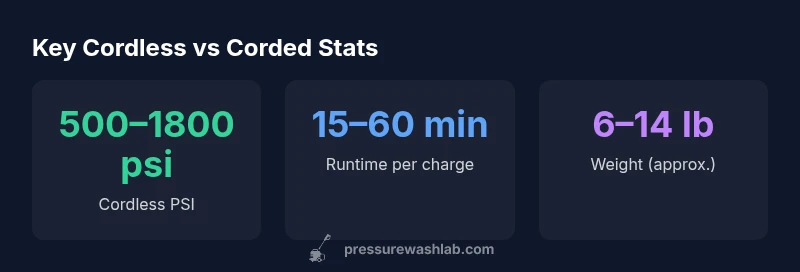
| PSI | 500–1800 psi | 1000–3000 psi |
| GPM | 0.5–1.5 gal/min | 1.2–2.5 gal/min |
| Runtime per charge / power source | 15–60 minutes per charge | N/A |
| Weight | 6–14 lb | 20–40 lb |
| Ideal use | Light to medium outdoor cleaning | Heavy-duty and continuous cleaning |
Quick Answers
Do Kärcher cordless washers offer comparable PSI to corded models?
Generally not. Cordless models tend to operate at lower peak PSI than corded ones, making them best suited for lighter outdoor cleaning tasks. Always compare the PSI rating of the specific cordless model you’re considering.
Cordless washers usually have lower PSI than corded ones, so use them for light cleaning and check the exact rating before buying.
What battery life can I expect from Kärcher cordless pressure washers?
Expect roughly 15 to 60 minutes per charge depending on battery capacity, nozzle selection, and cleaning demand. Larger batteries extend runtime but add weight and cost.
Battery life varies by model; plan for shorter sessions if you’re doing big jobs.
Are cordless models suitable for concrete cleaning?
Cordless units work for light to moderate concrete cleaning, but you’ll likely reach for a corded washer for heavy-duty scrubbing. Use wider nozzles and slower passes to maximize effectiveness without draining the battery.
They work for light concrete cleaning, but expect shorter sessions and slower progress on tough staining.
What maintenance is required for cordless units?
Regular nozzle cleaning, seal checks, and battery care (avoid extreme heat, store partially charged) help maximize life. Cracking open the housing for cleaning is not usually necessary; follow the manufacturer’s service guide.
Keep nozzles clean and store batteries properly for longer life.
How do I choose between cordless and corded Kärcher models?
Assess your typical cleaning tasks, access to outlets, and how long you’ll work before recharging. If portability and quick sprays win, cordless wins; for heavy, extended cleaning, corded tends to be more practical.
Think about task size and power needs; cordless is for quick jobs, corded for heavy duty.
Are replacement batteries interchangeable across Kärcher systems?
Some batteries are designed for cross-compatibility within the same platform, but it varies by model and region. Check product specifications and warranty terms before mixing batteries with different Kärcher devices.
Batteries may be cross-compatible within a platform, but verify with specs.
“Cordless models unlock a lot of on-the-go cleaning potential, but plan around battery life and PSI limits to avoid disappointment.”
Key Takeaways
- Answer the question: Kärcher does offer cordless options in some markets.
- Cordless units favor portability but trade off runtime and peak PSI.
- Battery capacity and compatibility drive overall ownership experience.