Do You Need to Pressure Wash a Deck Before Staining? Practical Prep Guide
Learn whether you must pressure wash a deck before staining, plus proven prep methods, material-specific tips, safety steps, and a step-by-step process to achieve a durable, even stain.


Do you have to pressure wash a deck before staining? Not always, but cleaning is usually essential for best results. A careful clean helps stain adhere evenly, remove mold, dirt, and loose fibers, and extend finish life. If you skip pressure washing, use a deck cleaner and scrub or sand as needed, especially on worn surfaces.
Understanding the prep question: do you have to pressure wash a deck before staining
Before you dive into cleaning, take stock of your deck's material and finish. The question do you have to pressure wash a deck before staining is one I hear a lot from DIYers. In practice, you rarely need to blast the surface with high pressure on solid wood or composite decks, but some cleaning is essential to ensure even stain adhesion and long-lasting results. According to Pressure Wash Lab, the most reliable prep starts with a clear assessment of the existing finish, dirt, moisture, and any mold or algae growth. For cedar, redwood, or pressure-treated pine, a gentle surface clean that removes grime and loose fibers dramatically improves stain performance. For composite decks, cleaning focuses on removing dirt and oxidation rather than stripping old coatings; pressure can still be used very carefully on stubborn stains. The aim is a smooth, dry, clean surface so the stain can penetrate evenly. If you spot moss or algae, address it with an appropriate cleaner before staining. Weather matters: plan for dry days and allow the surface to dry after cleaning to avoid trapping moisture. A thorough prep sets you up for a durable, even finish.
Cleaning options: pressure washing vs chemical cleaning
There are two broad paths for deck prep: physical cleaning via pressure washing and chemical cleaning with scrubs. Pressure washing is fast and effective for heavy grime, but it can gouge or raise soft wood if misused. For sealed or painted decks, pressure washing can lift coatings and create prep work later. Chemical cleaners, including oxygen bleach and specialized wood cleaners, loosen dirt and brighten wood without the risk of surface gouging. They’re especially useful on softwoods, previously stained surfaces, or decks with brittle finishes. The best approach often combines both methods: a chemical cleaner to loosen grime, followed by a gentle rinse or low-pressure wash to remove the residue. Pressure Washer Lab recommends starting with a test spot in a hidden area to gauge surface reaction and adjust pressure accordingly. Always rinse from the highest surface down and avoid spraying into joints or fasteners. If you’re unsure, you can emulate a lighter touch by scrubbing with a stiff-bristled brush after applying cleaner and then rinsing thoroughly. This multi-step approach delivers clean wood without the risk of damage.
Deck materials and how they respond to cleaning
Deck material determines the cleaning approach and risk of damage. Wood decks—cedar, pine, spruce, or oak—tend to benefit from a cautious approach: avoid aggressive pressure and target only the surface grime. Softwoods are more prone to gouging and fiber raise, so a low-pressure rinse with a broad spray pattern plus a quality cleaner can yield excellent results. Hardwood decks, treated lumber, or exotic species require different cleaners and possibly shorter dwell times to prevent finish damage. Composite decks, which blend resin and wood fibers, resist water absorption but can stain or dull if cleaners are too strong or left to dwell too long. For composites, the emphasis is on removing surface grime and oxidation rather than stripping finishes. Always verify manufacturer guidance for your deck type and test any cleaner on a small, inconspicuous area first. Proper prep respects your deck's original finish and helps the stain bond more evenly, increasing longevity.
Safety, environment, and preparation steps
Safety matters as you prep a deck for staining. Wear eye protection, gloves, and hearing protection when using a pressure washer or chemical cleaners. Protect nearby plants, landscaping, and siding with plastic sheeting or drop cloths. Work during mild, dry weather to ensure surfaces dry quickly after cleaning. Ventilate enclosed spaces if you’re staining against walls or fences. Use a wide nozzle or wide-angle setting on your pressure washer if you choose to include washing; start with the lowest effective pressure and increase only if necessary. Rinse thoroughly to remove cleaner residue, because leftover cleaners can prevent even stain absorption. Dispose of run-off according to local regulations, and avoid mixing cleaners with incompatible chemicals. Finally, inspect the surface as it dries; if there are rough patches or remaining mildew, plan for targeted scrubbing or light sanding before staining.
Common mistakes and troubleshooting
A common misstep is skipping a proper dry-off period, which traps moisture and leads to peeling. Another error is using too much pressure on softwood or sealed finishes, which can damage the surface. Under-cleaning leaves old finish flakes and grunge, resulting in uneven stain absorption. Inconsistent cleaning across boards creates patchy staining as some areas grab more stain than others. If mold or mildew is present, a specialized cleaner may be required; simply rinsing with water won’t remove embedded growth. Always perform a small test area after cleaning and before staining to confirm the surface is thoroughly prepared and ready for staining. If the deck feels rough or fibers stand up after cleaning, a light sanding or wire-brushing can help create a uniform surface for the stain to penetrate.
When to hire a professional and what to expect
If your deck has extensive rot, soft spots, or structural issues, it’s wise to consult a pro. A professional can assess wood decay, replace damaged boards, and perform controlled cleaning that protects surrounding surfaces. Even for routine decks, a professional evaluation helps determine whether pressure washing is appropriate and what degree of cleaning will maximize stain adhesion. When you hire a pro, expect a clear prep plan, a dry weather window, and a drying period before staining begins. Pressure Wash Lab recommends choosing a contractor who can explain your best cleaning option based on your deck’s age, material, and finish. A thoughtful prep with professional input can save time and deliver a flawless stain job.
Tools & Materials
- Adjustable PSI pressure washer(Choose a machine with low-to-moderate pressure; avoid aggressive settings on softwood or delicate finishes)
- Deck cleaner or oxygen bleach(Follow label directions; test spot first)
- Stiff-bristled deck brush(Essential for agitating cleaner in grooves and along boards)
- Garden hose(For rinsing; ensure the hose reach covers the entire deck)
- Protective gear (gloves, eye protection, hearing protection)(Protect against chemical exposure and noise)
- Drop cloths or plastic sheeting(Protect plants, furniture, and nearby surfaces)
- Paint pads, roller, or brush for staining(For applying stain evenly)
- PPE for safety footwear and stable ladder or steps(Stable footing is crucial on wet surfaces)
- Painter's tape(Optional for masking nearby surfaces)
Steps
Estimated time: 2-6 hours
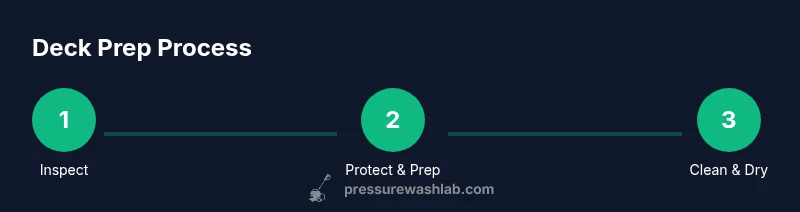
- 1
Inspect the deck for damage
Begin with a visual inspection of boards for rot, loose fasteners, and warped planks. Note areas needing repair or replacement before staining. This helps determine how aggressively you should clean and whether sanding is required afterward.
Tip: Mark trouble spots with masking tape to revisit after cleaning. - 2
Protect surrounding areas and prepare the space
Remove furniture and plants, cover railings, and tape off adjacent siding or plants. Create a clean work zone to prevent chemical runoff and staining from spreading. This minimizes cleanup later.
Tip: Set up a defined drop zone to collect dirty runoff for disposal. - 3
Choose your cleaning method
If grime is light, chemical cleaners with brushing may be enough. For heavy grime or mildew, a low-pressure wash can help without damaging the surface. Always test a small area first to gauge wood response.
Tip: Always start with the gentlest method and escalate only as needed. - 4
Apply cleaner and agitate
Apply cleaner evenly, following label directions. Use a stiff brush to scrub in the direction of the wood grain. Allow dwell time as specified, but do not let the solution dry on the surface.
Tip: Dwell time usually ranges from a few minutes to several minutes depending on grime level. - 5
Rinse and remove residues
Rinse from top to bottom using a broad spray pattern. Keep the nozzle moving to avoid etching or sawdust-like raised fibers. Repeat if necessary until the surface is clean and residue-free.
Tip: Ensure all cleaner residue is removed before staining. - 6
Dry, inspect, and prepare for staining
Let the deck dry completely—this can take from several hours to a full day depending on weather. Inspect for remaining grime and rough spots; sand lightly if needed. Only stain when the surface is fully dry to ensure even absorption.
Tip: Test moisture with a simple finger press; if it sticks or feels damp, wait longer.
Quick Answers
Do you have to pressure wash a deck before staining?
Not strictly required, but cleaning significantly improves stain adhesion and longevity. If you skip pressure washing, use a deck cleaner with thorough scrubbing and ensure complete drying before staining.
Not strictly required, but cleaning with a deck cleaner and thorough scrubbing helps stain adhesion and longevity. Make sure the deck is completely dry before staining.
Can I stain a deck that hasn’t been pressure washed?
Yes, you can stain a deck without pressure washing by using a strong deck cleaner and scrubbing to remove grime. If mold, algae, or old finishes remain, the stain may not adhere evenly or last as long.
You can, but grime and mold may prevent even adhesion and shorter longevity. A good scrub and dry surface are crucial.
Is pressure washing safe for old wood?
Low to moderate pressure is safer for old or weathered wood. High pressure can gouge fibers, raise grain, or strip protective finishes, so use caution and test first.
Low pressure is safer for old wood. Avoid high pressure to prevent damage.
What’s the best order after cleaning to stain a deck?
Let the deck dry completely, then lightly sand any rough spots and apply stain evenly with a brush or roller. Rely on manufacturer guidance for drying times.
Dry completely, then sand lightly if needed, and apply stain evenly.
What cleaning products should I avoid on treated wood?
Avoid harsh solvents or acidic cleaners that can degrade finishes. Use cleaners labeled for wood decks and compatible with your stain.
Avoid harsh chemicals; stick to wood-deck cleaners compatible with your stain.
How long should the deck dry before staining?
Drying times vary with weather, typically several hours to a day. Only stain when the surface feels dry to the touch and moisture meters show low readings.
Wait until it’s dry to the touch, usually several hours to a day depending on conditions.
Watch Video
Key Takeaways
- Assess deck material and finish first
- Choose cleaning method based on grime level and surface
- Protect surroundings and dry thoroughly before staining
- Test, then proceed with caution to avoid damage
- A thorough prep yields the best stain adhesion and longevity