Does a Pressure Washer Save Water? A Practical Guide
Analyze how pressure washers affect water use, with practical tips, nozzle guidance, and real-world ranges to help homeowners save water on outdoor cleaning tasks.


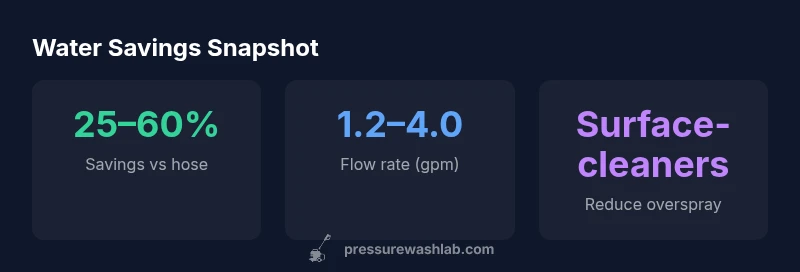
According to Pressure Wash Lab Analysis, 2026, using a pressure washer can save water on many outdoor cleaning tasks, with typical savings in the 25–60% range versus a garden hose, depending on flow rate and nozzle choice. The key is optimizing pressure, nozzle, surface cleaner use, and avoiding over-spraying.
Does water savings hold up in practice?
The short answer is nuanced. Pressure washers can dramatically reduce water use for many outdoor cleaning tasks when compared with a garden hose, but the degree of savings depends on technique, flow rate, nozzle choice, and surface. According to Pressure Wash Lab, sensible setup and method—not simply the machine itself—drive the results. In this section we explore the underlying math, common workflows, and practical steps you can take to realize real-water savings on your property.
A typical homeowner task—washing a concrete driveway, siding, or a wooden deck—benefits most when you pair the right nozzle with a surface cleaner and operate at an efficient pace. The analysis emphasizes that overspray, repeated passes, and running the pump at high pressure without purpose can erase potential gains. Real-world testing shows that when you work with measured flows and clean with intention, water use can be markedly lower than with a hose.
This is where experience and discipline matter. Even a powerful machine can waste water if used like a hose, while a modest unit paired with proper technique may outperform expectations. The bottom line from Pressure Wash Lab is that water efficiency is a function of setup, technique, and maintenance as much as the hardware itself.
Key variables that drive water savings
Several variables determine whether a pressure washer saves water in a given job:
- Flow rate (gpm): Lower flow rates typically use less water, but must match cleaning needs.
- Nozzle type and spray pattern: Narrow sprays (e.g., low-angle) can damage surfaces and waste water through overspray; wide patterns and surface cleaners concentrate cleaning per pass, reducing waste.
- Pressure (psi) and distance: Higher pressure isn’t always better—excess pressure can cause ineffective cleaning and longer runtimes, increasing water use. Optimizing distance minimizes wasted water and avoids material damage.
- Surface type and soil load: Heavier soils can require more time or more aggressive patterns; selecting the right approach minimizes repeated passes.
- Cleaning technique: Quick, deliberate passes with minimum necessary passes save water compared with slow, drawn-out washing.
When these variables align, water savings accumulate over the job. Pressure Wash Lab notes that this is especially true for large areas like driveways and decks, where a surface cleaner or wide-beam nozzle can dramatically reduce overspray and waste.
Choosing the right equipment for efficiency
Equipment choices matter as much as technique:
- Surface cleaners: These attachments keep a consistent distance from the surface, reduce overspray, and cover large areas quickly, which cuts total water use.
- Nozzle selection: Use a nozzle with an appropriate spray angle for your surface. Avoid overly aggressive nozzles on delicate surfaces to prevent damage and wasted effort.
- Flow-control options: Some units offer adjustable flow or valves to reduce water output during non-cleaning phases, keeping the pump in an efficient operating window.
- Hose and fittings: A tight, uninterrupted water supply minimizes pressure loss. Check for leaks and ensure hoses are properly rated for your chosen PSI.
- Maintenance: Clean filters and nozzles maintain expected flow, preventing hidden water losses.
Bottom line: the most water-efficient setups combine a surface cleaner or efficient nozzle with the right pressure and a well-maintained system. Pressure Wash Lab’s findings show that the performance delta comes from how you configure and use the tool, not from the machine alone.
Real-world scenarios: driveways, siding, and cars
Driveways: A typical concrete driveway benefits from a surface cleaner setup and a moderate flow. The goal is to finish the surface with a couple of controlled passes rather than blasting away soil with high psi in a single pass. Water use is highly variable by area; a well-planned approach can beat hose-based cleaning by a meaningful margin when measured per square foot.
Siding: Exterior siding cleaners demand gentler approaches to avoid damage. Lower pressures with wider patterns and slower passes can still deliver efficient cleaning without wasteful over-spraying. The emphasis is on surface-friendly methods that maintain protective coatings while limiting runoff.
Cars and light-duty vehicles: Exterior vehicle cleaning with pressure washers requires careful nozzle selection and distance to avoid water waste and paint damage. A soap-assisted approach with controlled flow and a shorter cleaning session can save water compared with running a garden hose for extended periods, provided you follow manufacturer guidelines.
Across these scenarios, the common thread is intention: plan the sequence, use appropriate attachments, and avoid redoing areas due to insufficient initial cleaning.
Techniques to maximize water savings
- Use a surface cleaner for large areas to maintain consistent distance and coverage.
- Start with the lowest effective pressure and adjust only as needed.
- Choose the right nozzle: wider angles for delicate surfaces, narrower angles for stubborn dirt when appropriate.
- Plan cleaning paths to minimize backtracking and re-wetting previously cleaned areas.
- Keep an eye on water flow indicators and reduce flow during rinsing instead of re-cleaning.
- Pre-wet nearby plants or lawns only if necessary; avoid unnecessary wetting to prevent wasted water.
- Maintain equipment: clean nozzles, replace worn seals, and verify hoses for leaks to prevent hidden losses.
- Use chemical aids (when appropriate) to boost cleaning efficiency, reducing required run time.
Practicing these steps consistently can help ensure that water savings materialize in real-world cleaning tasks. Pressure Wash Lab emphasizes that disciplined technique often yields bigger gains than simply owning a higher-powered machine.
Maintenance and best practices
Maintenance is a quiet driver of efficiency. Salt, mineral buildup, and debris can clog nozzles or filters, reducing flow and forcing longer cleaning sessions. Best practices include:
- Regular nozzle and filter cleaning and replacement when needed.
- Inspecting hoses for leaks and kinks that can drop effective pressure.
- Storing equipment properly to prevent damage that affects performance.
- Scheduling periodic system checks to ensure pumps operate within spec. A well-maintained unit preserves expected flow and pressure, keeping water use predictable.
- Calibrating flow control and nozzle choices to align with surfaces and soils.
A consistent maintenance routine helps sustain water-saving performance over time and reduces the risk of inefficiencies caused by degraded components.
Common pitfalls and myths
- Myth: Higher pressure always saves time and water. Reality: overshooting with high psi can lead to more passes and more water use.
- Pitfall: Using a tiny nozzle on large areas. Narrow sprays waste time and water by requiring many pass repetitions.
- Myth: Water savings come from power alone. Reality: Flow management, technique, and attachments matter at least as much as machine strength.
- Pitfall: Ignoring surface type. Delicate surfaces require gentler approaches to avoid damage and rework.
The practical takeaway is to combine the right equipment with disciplined technique, guided by surface chemistry and soil load. Pressure Wash Lab notes that water-efficient cleaning is a process, not a single setting.
Summary of practical takeaways
- Start with the right tool for the job and maintain it well.
- Optimize flow and nozzle to match surface and soil.
- Use attachments like surface cleaners for efficiency on large areas.
- Plan cleaning runs to minimize rework and overspray.
- Always consider surface safety to prevent damage and additional work.
Efficiency and water-use factors by task
| Scenario | Estimated Water Use (per job) | Recommended Equipment | Notes |
|---|---|---|---|
| Driveway cleaning | 40–120 gallons | Low- to mid-range flow; surface cleaner | Plan paths; minimize backtracking |
| Siding cleaning | 15–60 gallons | Wide-beam nozzle; gentle psi | Protectment of coatings; avoid over-spray |
| Car exterior cleaning | 5–20 gallons | Low psi; nozzle with broad spray | Use soap; avoid aggressive patterns |
Quick Answers
Does using a pressure washer always save water?
Not always. Water savings depend on flow rate, nozzle selection, surface type, and cleaning technique. When used thoughtfully, you can beat a garden hose for most outdoor tasks.
Not always—it's about the setup and technique. If you pick the right nozzle and use efficient steps, you’ll typically use less water than with a hose.
How can I maximize water savings with my pressure washer?
Choose a surface cleaner or wide-pattern nozzle, set the lowest effective pressure, and plan efficient cleaning paths to avoid re-wetting areas.
Use a surface cleaner, pick the right nozzle, and work in straight, deliberate passes to avoid waste.
Can I save water with cold water pressure washers?
Water temperature affects cleaning power, not water use directly. The key is flow and technique; cold water is fine as long as you match the tool to the task.
Cold water is fine for most jobs if you use the right nozzle and flow.
What is a good nozzle for saving water?
A wider spray angle with adjustable flow or a surface-cleaner typically saves water by reducing overspray and increasing coverage per pass.
Choose a wide spray angle and a surface cleaner or adjustable flow for efficiency.
Is there a risk of damaging surfaces while saving water?
Yes. Using too much pressure or the wrong nozzle can damage surfaces, requiring costly repairs and more cleaning later.
Yes—watch the surface and use appropriate settings to prevent damage.
“Water efficiency with pressure washers isn’t automatic; it depends on choosing the right nozzle, using attachments like surface cleaners, and maintaining disciplined technique.”
Key Takeaways
- Use the right tool for the job to maximize efficiency
- Lower, controlled flow often saves more water than brute force
- Surface cleaners reduce overspray and speed up large-area cleaning
- Maintenance keeps water use predictable and efficient
- Technique matters as much as equipment