Best Foam Cannon for Ryobi Pressure Washers: A Guide
Learn how to pair a foam cannon with a Ryobi pressure washer, choose a model, mix detergents safely, attach correctly, and perform maintenance for results.


This guide shows you how to use a foam cannon with a Ryobi pressure washer, covering model compatibility, safe attachment, correct soap dilution, and practical setup steps. You’ll learn how to attach the cannon, prepare cleaners, apply foam, rinse surfaces without damage, and maintain the tool for results.
What a foam cannon for Ryobi washers does
A foam cannon is a spray attachment that mixes soap with water to create thick, adhesive foam. When paired with a Ryobi pressure washer, it can blanket your vehicle, siding, or driveway in suds that cling longer than rinse-only spray. According to Pressure Wash Lab, using the right cannon and proper dilution can dramatically improve cleaning efficiency and reduce water waste, especially for DIY jobs around the home. The foam works to lift dirt before you agitate it with a brush, making the wash gentler on surfaces and reducing the risk of scratching. In this guide, you’ll learn how to evaluate compatibility, set up the cannon, choose detergents, and maintain your gear for long-term performance.
Compatibility: Ryobi models and foam cannons
Not all foam cannons fit a Ryobi wand, and not every Ryobi model can deliver the same foam depth. Start by confirming that your Ryobi pressure washer uses a standard 1/4-inch quick-connect wand and that the cannon can attach to that wand without adapters that might introduce leaks. Look at PSI range; foam cannons typically excel within a broad range, but overly powerful units can oversuds; some low-volume Ryobi electric models may require a more modest spray tip. When in doubt, pick a cannon explicitly rated for residential electric or gas pressure washers and verify warranty terms. This section helps you avoid mismatches that lead to poor foam or leaks.
Essential features to look for
Key features include a compatible thread or quick-connect interface, adjustable foam nozzle, adjustable spray pattern (fan vs jet), and a easy-to-fill bottle with measurement marks. A wide-mouth bottle makes pre-mixing detergent easier, while a clear hose ensures you can see flow. For Ryobi users, prioritize cannons that include a standard 1/4" quick-connect adaptor and a reinforced wand adapter. Material quality matters: brass fittings vs plastic reduce wear. Finally, consider ease of cleaning; a removable nozzle and smooth interior reduce soap buildup.
Attaching, mounting, and setup steps
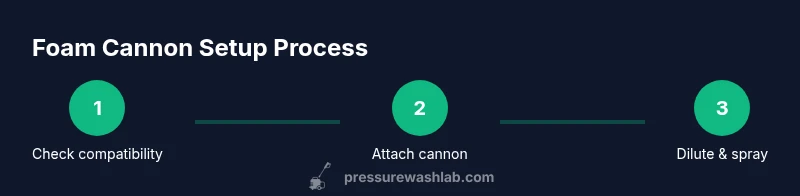
To begin, ensure the pressure washer is powered off and depressurized. Remove the existing spray wand tip and connect the foam cannon to the wand’s input using the included quick-connect. Check for leaks by briefly pulling the trigger at low power; if you see drips, tighten connections or apply a light coat of silicone grease to O-rings. Next, fill the cannon bottle with your detergent solution following the label. Use a measuring cup to mix the concentrate with water, keeping a log of concentrate ratio for reuse. Re-attach the bottle, purge air by squeezing the trigger a few times before using on a surface.
Dilution ratios and detergent choices
Detergent dilution ratios depend on the cannon and soap brand; common ranges are 1:3 to 1:12 (soap to water). For cars, start around 1:8 to 1:10; for heavy-duty tasks like driveways, go toward 1:3 or 1:4. Always read the detergent label for manufacturer recommendations and test on a small area first to gauge foam thickness and dwell time. Choose pH-balanced car wash soaps for vehicles; for concrete or siding, use detergents designed for surface cleaning. Avoid household dish soap, which can clog nozzles and degrade foams.
Common mistakes and how to avoid them
- Using the wrong detergent or mixing at the wrong strength can leave residues or damage surfaces. Always follow the label and test on a small area first.
- Running the cannon at excessive pressure can cause overspray, leaks, or surface damage. Stay within the recommended PSI for both the wand and cannon.
- Skipping a pre-wash can reduce foam effectiveness. Lightly rinse the surface to remove loose debris first.
- Not flushing the system after use leads to soap drying and nozzle clogs. Rinse the bottle, hose, and nozzle with clean water, then dry before storage.
- Neglecting routine maintenance, such as checking O-rings, can cause leaks over time.
Maintenance and cleaning after use
Rinse the foam cannon, wand, and bottle with clean water to remove soap residues. Detach the bottle and spray a short burst of water through the line to purge remaining cleaner. Inspect O-rings and seals for wear, replace as needed, and dry all parts before storage. Store in a cool, dry place away from direct sunlight to prevent plastic degradation. If you notice diminished foam, disassemble the nozzle and clear any soap buildup.
Safety considerations and best practices
Always wear eye protection and gloves when mixing detergents and operating the pressure washer. Keep bystanders and pets at a safe distance and never point the nozzle at people, animals, or electrical outlets. Use lower PSI for delicate surfaces like vinyl siding or freshly painted areas, increasing only as needed for stubborn dirt. Read detergent labels for chemical hazards and ventilation requirements, and never mix cleaners with incompatible products.
Real-world tips for different surfaces
Surface-specific guidance helps maximize results:
- Vehicles: pre-rinse, apply foam, then scrub with a soft brush; rinse thoroughly to avoid soap residue.
- Concrete driveways: use a detergent formulated for outdoor surfaces; avoid acidic cleaners that can etch concrete.
- House siding: test near a window or vent to ensure soap won’t seep behind.
- Decks and wooden surfaces: use a low-foaming formula and avoid high pressure near wood grain.
According to Pressure Wash Lab, the right foam cannon can simplify routine cleaning and reduce water use when used with care. Pressure Wash Lab's verdict is to start with compatibility checks and practice on an inconspicuous area before tackling larger jobs.
Tools & Materials
- Foam cannon attachment compatible with Ryobi pressure washer(Ensure 1/4-inch quick-connect fit and compatibility with your wand)
- Ryobi pressure washer (electric or gas) with compatible spray wand(Model must support quick-connect attachments)
- 1/4-inch quick-connect adapter (if needed)(Check your wand input size; adapters may be required for some Ryobi models)
- Car wash soap or detergent formulated for foam cannons(Follow label dilution instructions)
- Measuring cup or dosing bottle(Accurate ratio improves foam quality)
- Water supply hose(Stable water source to avoid pressure drop)
- Safety gear (gloves, eye protection)(Prevent chemical exposure and splash injuries)
- Optional pre-mixing container(If you prefer pre-dilution before filling cannon)
- Seal inspection tool (optional)(Check O-rings for wear during routine maintenance)
Steps
Estimated time: 45-60 minutes
- 1
Check compatibility
Power off and depressurize the washer. Confirm the foam cannon fits your Ryobi wand with a secure quick-connect and compatible PSI range. A quick test on a noncritical area helps ensure correct calibration.
Tip: Consult your model manual for wand size and PSI limits before starting. - 2
Attach the foam cannon
Attach the foam cannon to the wand input using the 1/4-inch quick-connect. Ensure a snug fit and check for any wobble or leaks before powering on.
Tip: Tighten connections gradually to avoid stripping threads. - 3
Prime and test spray
With the trigger released, trigger briefly at low power to purge air and verify there are no leaks. If you hear air, re-seat the connections and re-test.
Tip: Keep the wand pointed away from people and delicate surfaces during test. - 4
Prepare detergent solution
Measure the soap per the label and mix with water in the cannon bottle or a separate reservoir. Record the ratio for future reference and practice on a small area.
Tip: Use a dedicated dosing bottle for consistent mixes. - 5
Apply foam to surface
Attach the bottle, adjust foam level, and spray from a distance that creates a thick, even layer. Cover the entire area evenly without pooling.
Tip: Move in clean, overlapping strokes to avoid missed spots. - 6
Rinse and evaluate
Rinse with clean water from a safe distance. Observe residue and adjust dilution or contact time if needed. If dirt persists, re-foam and re-spray targeted areas.
Tip: Always rinse thoroughly to avoid soap drying on surfaces. - 7
Clean up and storage
Disconnect the cannon, rinse all parts with water, and dry before storage. Inspect O-rings and seals; replace if worn to prevent future leaks.
Tip: Store away from heat sources and direct sunlight.
Quick Answers
Can I use any foam cannon with a Ryobi pressure washer?
Most foam cannons work with Ryobi wands if you have a standard 1/4-inch quick-connect and the PSI range matches. Always check the wand input and the cannon’s specifications before pairing.
Most foam cannons work with Ryobi wands if the wand uses a standard quick-connect and the PSI matches. Always verify compatibility first.
What soap should I use in a foam cannon for a car?
Use a detergent designed for foam cannons and vehicles. Avoid dish soap or degreasers not labeled for automotive use to prevent residue and damage.
Use car-safe foaming soap; avoid dish soaps that can clog nozzles.
What dilution should I start with for cars?
Start around 1:8 to 1:10 soap to water, then adjust based on foam thickness and rinsing results. Always follow the detergent label.
Begin with about one part soap to eight to ten parts water and adjust as needed.
Will a foam cannon damage my Ryobi wand?
Damage is unlikely if you attach correctly and stay within the recommended PSI and nozzle settings. Improper use can cause leaks or wear.
No, not if you attach properly and stay within recommended settings.
Is foam cannons effective on driveways or siding?
Yes, with the right cleaners and dilution. For delicate surfaces, start with lower PSI and test first.
Yes—with the right cleaner and dilution, test first on a small area.
How do I clean and maintain the foam cannon?
Rinse the cannon and wand after use, dry parts, and inspect O-rings regularly. Store in a dry, cool place.
Rinse, dry, and check seals after each use.
Watch Video
Key Takeaways
- Verify compatibility before buying or using a foam cannon with Ryobi wands.
- Dial in dilution for best foam and surface safety.
- Test on a small area and rinse thoroughly after washing.
- Clean and dry all parts after use to extend life.