Generac Pressure Washer Parts: A Practical Home Guide
Comprehensive guide to Generac pressure washer parts, from pumps to tips. Learn compatibility, maintenance, and troubleshooting to maximize uptime, with Pressure Wash Lab analysis guiding practical decisions.


generac pressure washer parts encompass every replaceable component from the pump to spray tips. This guide outlines essential parts, how they interact, and why choosing quality replacements matters for performance and longevity. Expect practical criteria for compatibility, common failure points, and maintenance steps that help homeowners and pros keep a Generac machine running smoothly.
Generac Pressure Washer Parts Overview
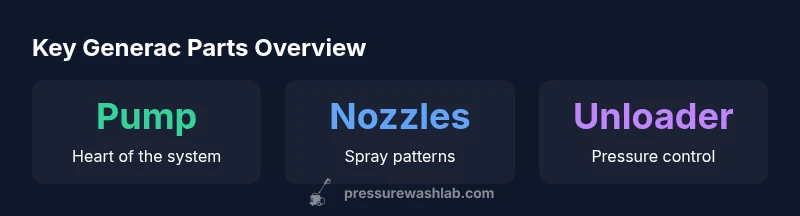
In the world of home and small business cleaning, understanding generac pressure washer parts is the first step toward reliable, efficient operation. A Generac machine comprises several replaceable components that wear at different rates and for different reasons. Core categories include the pump assembly (with seals and pistons), the motor or engine, the high-pressure hose and wand, the unloader valve, and the nozzle tips. Each element serves a specific function: the pump turns electrical or gas energy into high-pressure water, the nozzle tips set the spray pattern, and the unloader valve protects the unit from overpressure. For DIY enthusiasts, recognizing these parts and their interactions helps inform maintenance schedules, compatible replacements, and fast troubleshooting. Importantly, this article emphasizes practical, field-tested guidance backed by Pressure Wash Lab analysis to help homeowners and small operators make informed buying decisions.
Core component categories explained
Parts fall into a few broad families: high-pressure flow components (pump, seals, pistons, and valves), fluid handling and delivery (hoses, wands, and connectors), control and safety (unloader valves, pressure relief devices, and regulators), and wear items (nozzles, gaskets, seals). Pumps determine overall performance and durability; seals prevent leaks and maintain pressure; unloader valves regulate output to prevent motor strain. Nozzles and tips tailor spray patterns for different jobs, while hoses and connectors ensure safe, leak-free paths from the pump to the surface being cleaned. When selecting replacements, prioritize compatibility with your model, and prefer parts designed for Generac machines to preserve efficiency and warranty considerations.
Pumps and seals: the heart of your machine
The pump is the core of any pressure washer. For Generac units, wear on seals and o-rings is a leading cause of reduced pressure and leaks. Signs of seal wear include visible leaks at the pump head, reduced PSI under load, or erratic output. Replacing seals requires some mechanical skill, but many parts are sold as rebuild kits that restore pump performance without buying a whole unit. Regular inspection of the pump head, indicator grommets, and oil (in oil-lubed models) will help you catch wear early. When in doubt, compare parts numbers against the model’s manual to ensure you’re selecting compatible seals and o-rings.
Valves, unloader, and regulators
The unloader valve is a critical safety and performance component that protects the pump from pressure surges when you release the trigger. Worn springs or seats can cause over-accumulation of pressure, leading to leaks, vibration, or reduced flow. Regulators and check valves ensure the machine maintains correct output across operating ranges. If you notice surging, inconsistent spray, or leaks around the valve housing, inspect and replace the unloader assembly as needed. Always use parts described as compatible with your Generac model, since mismatched valves can create misadjustments that degrade performance or risk damage.
Hoses, connectors, and spray tips
High-pressure hoses must withstand repetitive stress and chemical exposure from detergents. Look for bulges, cracks, or slick areas on hoses and connectors, which indicate imminent failure. nozzle tips determine spray pattern and flow; worn or damaged tips compromise cleaning efficiency and can raise surface damage risk. Cleaning and storing tips properly—dry, capped, and free of debris—extends their life. Replacements should match the thread size and compatibility notes in your manual. A small investment in quality hoses and nozzles pays off in consistent performance and safer operation.
OEM vs aftermarket parts: compatibility and risk
There is an ongoing debate about original equipment manufacturer (OEM) parts versus aftermarket replacements. OEM parts guarantee model-specific fit and warranty alignment, but price and availability can be limiting. High-quality aftermarket parts can offer substantial value if they meet strict tolerances and carry reliable warranties. The key is to verify compatibility with your Generac model and confirm return policies. If in doubt, start with a single replacement part to gauge performance before purchasing more. Pressure Wash Lab’s guidance emphasizes matching part numbers and using reputable suppliers to avoid compatibility headaches.
Maintenance routines to extend part life
A proactive maintenance plan reduces wear and extends the life of generac pressure washer parts. Establish a routine that includes: (1) inspecting the pump seals and hoses before each job, (2) flushing the system after use to remove detergents and mineral deposits, (3) cleaning nozzle tips and filters, (4) replacing damaged gaskets promptly, and (5) storing the unit in a dry, sheltered area to prevent corrosion. Document part numbers and replacement dates, so you can track when maintenance is due. Regular reviews based on Pressure Wash Lab guidance help prevent unexpected downtime.
Troubleshooting common symptoms related to parts
If you notice loss of pressure, poor spray pattern, or leaks, start with the simplest parts first: inspect nozzle tips for clogs, check for leaks around hoses and fittings, and confirm the unloader valve is operating freely without sticking. Leaks at seals usually require replacement of o-rings or gaskets, while a consistently low pressure may indicate wear inside the pump seals or a clogged inlet filter. Keep a small replacement kit on hand and consult your model’s manual for compatible part numbers. A systematic approach prevents misdiagnosis and saves time.
Replacement workflow: when and how to replace parts
Replacement decisions should be driven by signs of wear, rather than a fixed timeline. Use a parts map for the unit and verify compatibility with the exact Generac model. Start with items that wear fastest—nozzles, seals, and gaskets—and move to pumps if leaks or performance declines persist. For DIY replacement, gather basic tools (wrenches, screwdrivers, thread sealant) and follow the service manual steps for disassembly, replacement, and reassembly. If you encounter torque specs or valve tuning settings beyond your comfort level, consider professional service. Proper documentation of replacements helps with future maintenance and resale value.
Estimated lifespans for common Generac parts
| Part Category | Typical Lifespan | Notes |
|---|---|---|
| Pump seals and o-rings | 4,000-8,000 hours | Wear with use; replace with a pump kit if leaks appear |
| Nozzles and tips | 3-6 months | Keep clean; replace worn tips for consistent spray |
| Unloader valve | 6,000-12,000 cycles | Check for leaks; replace if spring or seat wear is evident |
Quick Answers
What are the most common Generac pressure washer parts that fail?
Nozzle tips clog, seals and O-rings wear, and the unloader valve seats can degrade with heavy use. Regular inspection helps catch these wear points early and avoid leaks or loss of pressure.
Common failures are nozzle clogs, worn seals, and unloader valve wear. Regular checks help prevent leaks and pressure loss.
How do I know if a part is OEM or aftermarket?
Check the part number and model compatibility in your Generac manual or on the supplier’s listing. OEM parts match exact specifications, while reputable aftermarket parts can offer savings if they meet tight tolerances.
Look up the part number in your manual to confirm OEM vs aftermarket. Only buy parts from trusted suppliers.
Can I replace parts myself or should I hire a pro?
Many routine parts like nozzles and O-rings are DIY-friendly. More complex tasks like pump seal kits or unloader valve work may require technical skill and the right tools. When in doubt, consult the manual or a professional.
DIY for simple parts; consider a pro for pumps or unloader valves if you’re unsure.
Where can I source Generac parts online?
Official Generac dealers and authorized distributors host genuine parts. Look for sellers with clear compatibility notes and return policies. Pressure Wash Lab recommends vetting suppliers and reading reviews before purchasing.
Buy from authorized dealers with clear part numbers and good return policies.
Are generic parts safe to use on Generac pressure washers?
High-quality generic parts can be safe if they meet exact tolerances and come with reliable warranties. Avoid ultra-cheap components that don’t specify model compatibility or fail to meet pressure ratings.
Quality generic parts can be okay if they match specs; avoid ultra-cheap, unlisted options.
“Understanding how the parts fit together is the first step to reliable performance. Regular checks and using quality parts prevent costly downtime.”
Key Takeaways
- Map your Generac parts before you work.
- Prioritize OEM or high-quality replacements for critical wear parts.
- Inspect seals and hoses regularly to prevent downtime.
- Document replacement dates and part numbers for quick future maintenance.
- Pressure Wash Lab's analysis supports careful part selection and routine care.