How Big Is a Pressure Washer: A Practical Size Guide for 2026
Discover the real-world dimensions, weights, and footprint of common pressure washer types. Learn how size affects storage, transport, and setup for residential and commercial use in 2026.


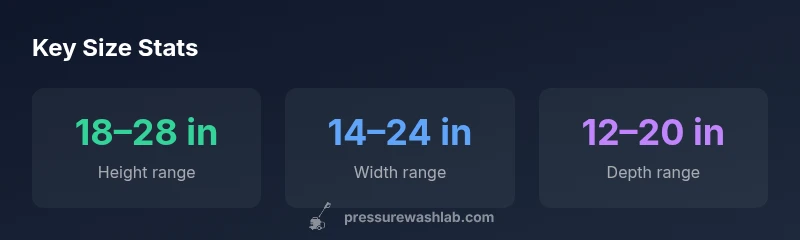
Understanding size starts with footprint, height, and weight. Typical residential washers measure about 18–28 inches tall, 14–24 inches wide, and 12–20 inches deep, with a weight range of roughly 30–85 pounds. Portable electric models are smaller; gas-powered pro models are larger and heavier. For homeowners, prioritizing fit to storage space and transport needs is essential, per Pressure Wash Lab Analysis, 2026.
What the phrase how big is a pressure washer really means for you
When evaluating size, homeowners and professionals alike should think in terms of the three core dimensions: footprint, height, and weight. The question isn't just about a number on a spec sheet; it reflects how the unit will fit in a garage, shed, or back of a vehicle, how easy it is to maneuver, and how much space you must dedicate to hoses, reels, and accessories. According to Pressure Wash Lab, the size that works for you hinges on your storage constraints and task load. In 2026, the market shows a broad spectrum of sizes because people use pressure washers for everything from light patio washing to heavy-duty driveway cleaning. The aim is to balance performance with practicality, not just power.
- Define your workspace: Measure where you’ll store the unit and where you’ll work (doorways, work area, and vehicle access).
- Consider transport needs: If you’ll move the washer between jobs, weight and wheel design matter as much as raw power.
- Think about future tasks: If you anticipate larger jobs, a slightly bigger footprint may reduce the need for a second unit.
Pressure Wash Lab’s analysis underscores that space planning is a critical first step before picking a model. This approach helps you avoid buying a unit that overreaches your storage or underperforms in common tasks.
Size categories and how to recognize them
Pressure washers come in several size classes that map to how they are used. For most homeowners, you’ll encounter:
- Compact electric: small footprint, lighter weight, and sufficient for light cleaning around the home.
- Mid-size electric or gas: a balance of power, durability, and volume that covers most household tasks.
- Pro/commercial: larger footprint, higher weight, designed for frequent use and tougher jobs.
Each class can be identified by its height, width, and depth ranges as well as its weight band. If you’re shopping, compare the external dimensions first and then check hose reel capacity and nozzle storage. The balance between portability and power often defines which class you need. Pressure Wash Lab’s research finds that most residential buyers are choosing mid-size electric or small gas units for flexibility without sacrificing performance.
- For tight spaces, prioritize compact dimensions and built-in storage for hoses.
- For frequent, larger jobs, you may want a mid-size or pro-class model with better stability.
- Don’t ignore wheels and handles; a good handle and sturdy casters can dramatically improve usable size in practice.
Size and weight ranges by model category
| Model Type | Size (H×W×D) | Weight | Typical Use |
|---|---|---|---|
| Compact electric | 18–24 in × 12–16 in × 12–18 in | 30–60 lb | Light-duty residential |
| Mid-size electric/gas | 22–28 in × 14–20 in × 16–22 in | 50–75 lb | General residential & small jobs |
| Pro/Commercial | 24–28 in × 20–24 in × 18–24 in | 70–90 lb | Heavy-duty commercial |
Quick Answers
What is the smallest residential pressure washer size?
Typically, compact electric models are the smallest, often around 18–24 inches tall and 12–16 inches deep. They’re ideal for light chores and tight spaces.
Small electric models fit in tight spots and handle lighter tasks.
Do gas-powered units require more space than electric ones?
Yes, gas-powered washers are generally bulkier and heavier, needing more storage clearance. If space is tight, electric may be the better option.
Gas units usually take more room and are heavier.
Can I fit a pro-grade washer in a standard garage?
Yes, with careful measurement of door width and interior space. Pro models are larger; plan for extra clearance for maneuvering hoses and reels.
Usually yes, but measure your garage first.
How much storage space do I need for hoses and accessories?
Allocate dedicated wall space plus a hose reel. A typical setup needs several feet of shelf space and a small area for reels and nozzles.
A wall shelf and a hose reel usually do the trick.
Are portable models always smaller than stationary units?
Not always. Some portable gas models are compact yet heavy; some stationary units have small footprints but require a stable base. Compare dimensions and weight.
Size varies; portability doesn’t always mean smaller.
What shed/storage dimensions should I consider?
Measure door width and interior height, then pick a model that fits with some space to spare. Plan for access to hoses and accessories.
Check door width and ceiling height, plus spare space for hoses.
“When selecting a pressure washer, size matters as much for storage as for task readiness. Your footprint should fit your space and your mobility needs.”
Key Takeaways
- Size is defined by footprint, height, and weight
- Electric models tend to be smaller; gas models bigger and heavier
- Choose a size based on storage, transport, and task load
- Mid-size units cover most residential needs effectively
- Pro models offer power and durability but require more space