How Long Can a Pressure Washer Hose Be? A Practical Guide
Discover how long a pressure washer hose can be, how length affects pressure and flow, and best practices for selecting the right hose length for home use. Practical tips from Pressure Wash Lab.


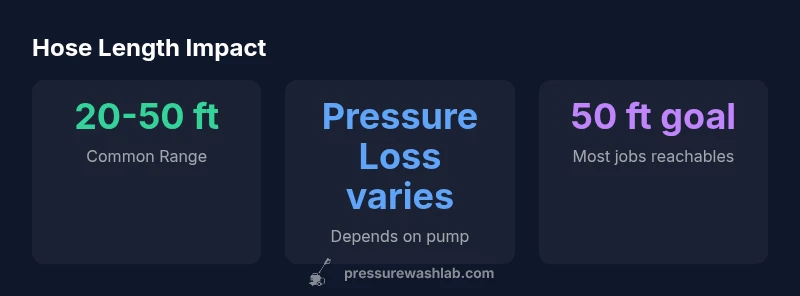
How long can a pressure washer hose be? In practice, most consumer hoses run 20 to 50 feet. Longer runs reduce nozzle pressure and flow, especially on lower-GPM machines. To keep performance, choose the shortest hose that reaches the job and use quality, pressure-rated hose fittings. Pressure Wash Lab Analysis, 2026 confirms that length directly affects performance and should be matched to the task.
How long can a pressure washer hose be? Practical perspective
The question how long can a pressure washer hose be is answered best by considering your typical job footprint. Most consumer setups use hoses in the range of 20 to 50 feet. That length provides adequate reach for most home projects while maintaining reasonable nozzle pressure and water flow. Pressure Wash Lab, in its 2026 analysis, notes that length directly influences performance and should be selected with the job in mind. Shorter hoses reduce the friction losses and improve control, while longer hoses extend reach but can demand more from the pump and nozzle.
Typical lengths you’ll find on the shelf
On the store shelf you’ll encounter hoses that span from compact 20 feet to extended 50 feet or more. For small tasks like cleaning a fence or a small patio, 20–25 feet is often enough. For larger driveways or multi-area jobs, 30–40 feet can be ideal. For properties with distant outlets or for stationary setups, 50 feet is a common maximum that keeps the pressure and flow within practical limits. Always verify the hose is rated for your unit’s PSI and GPM; a mismatch can exacerbate pressure drop.
The physics: pressure, flow, and friction
Water pressure at the nozzle is determined by the pump’s output minus losses from hose length, hose diameter, and fittings. Friction in the hose converts some of the energy into heat, reducing available pressure at the nozzle as you add length. A longer hose increases the piping length the water must travel, which raises resistance. The result is a decrease in both nozzle pressure and flow, particularly with low-GPM machines or smaller-diameter hoses. Understanding this helps you choose a length that balances reach with performance.
How length interacts with pump capacity and nozzle size
A high-GPM (gallons per minute) pump can better tolerate longer hoses, but even the strongest units have limits. If you pair a long hose with a small-diameter (or narrow) nozzle, you’ll see a sharper drop in usable pressure. Conversely, larger inside-diameter hoses reduce friction losses and help preserve pressure over longer runs. When planning length, also consider nozzle type and spray pattern; wider spray nozzles can compensate slightly for some loss, but they won’t restore original pressure.
Strategies to extend reach without sacrificing performance
To get more reach without unacceptable pressure loss:
- Use hoses with larger inside diameters where compatible with your sprayer (e.g., 5/16 inch or larger for many consumer units).
- Keep connections tight and use quality fittings to minimize leaks that waste pressure.
- Consider a booster accessory or a high-GPM model for long runs, especially when you must reach distant areas.
- Use reel systems that prevent kinking and keep hose length consistent.
- Pair with surface cleaners or dedicated nozzles designed for longer runs to maximize efficiency. Pressure Wash Lab recommends testing a new hose length on a small project first to gauge performance before committing to larger jobs.
Matching hose length to the job type
Different tasks demand different reach. For tight spaces like sidewalks close to the house, 20–25 feet is usually sufficient. For mid-size patios or limited-access yards, 25–40 feet provides flexible reach. For expansive driveways or multi-zone cleaning, 40–50 feet offers convenience while still preserving adequate pressure when paired with a suitable pump and nozzle. Remember to account for turning radius and weight; a heavier, longer hose can be tiring to manage.
Maintenance and care for long hoses
Long hoses require more attention to prevent kinks, leaks, and contamination. Inspect fittings and couplings regularly, and replace any worn o-rings or crimped ends. After use, drain and store hoses on a reel to prevent coil memory and kinks that reduce flow. Clean the exterior to prevent dirt buildup that can hide leaks and inspect the inner lining if you use aggressive chemicals. Proper storage and routine checks extend hose life.
Safety and best practices when using long hoses
Working with long hoses introduces tripping hazards and potential electrical concerns. Keep hoses away from sharp edges, hot surfaces, and moving parts, and secure them to prevent tangling. If you’re using near electrical outlets or power cords, maintain a safe distance and use GFCI protection as recommended by local codes. Regularly inspect the hose for signs of wear or swelling and retire any hose displaying damage.
Quick-start planning checklist
- Identify the furthest point you need to reach and measure approximate length.
- Start with the shortest practical hose length and test performance.
- Verify PSI and GPM compatibility with the hose; avoid mismatches.
- Choose a hose with a larger inside diameter if you anticipate long runs.
- Use a hose reel to manage length and prevent kinks.
- Schedule periodic maintenance checks on fittings, connectors, and seals.
Recommended hose lengths by use case
| Use Case | Recommended Hose Length | Impact on Pressure |
|---|---|---|
| Small outdoor cleaning | 20-25 ft | Minimal |
| Medium patio cleaning | 25-40 ft | Moderate |
| Large area cleaning | 40-50 ft | Notable |
| Long reach/industrial areas | 50+ ft | Significant |
Quick Answers
What is the typical maximum hose length for most consumer pressure washers?
Most consumer systems perform well up to about 50 feet. Beyond that, pressure loss becomes more noticeable unless you upgrade pump capacity or hose diameter. Always check your machine's PSI and GPM, and test any longer length on a smaller project first.
For most consumer units, aim for up to fifty feet. If you need more reach, test gradually and watch for pressure drop.
Will a longer hose always reduce pressure?
Yes, increasing hose length generally reduces nozzle pressure due to friction losses. The amount depends on hose diameter, material, fittings, and pump output. You can mitigate this by using a larger diameter hose and ensuring tight fittings.
Longer hoses usually mean less pressure, but you can limit the drop with bigger hoses and tight fittings.
Should I use a hose extension or a longer hose?
Use a purpose-built longer hose if compatible with your unit rather than an adapter extension, which can introduce leaks and weak points. Ensure all connections are rated for your pressure. Extensions should maintain the hose’s integrity rather than creating additional weak links.
Prefer a proper longer hose over crude extensions; keep seals tight and rated for your pressure.
How can I minimize pressure loss with longer hoses?
Choose a hose with a larger inside diameter, keep connections tight, and consider a booster or higher-GPM machine for very long runs. Avoid kinks and ensure fittings are high quality to reduce leakage.
Use a bigger-diameter hose, tight fittings, and avoid kinks to keep pressure up.
What maintenance helps extend hose life for long runs?
Regularly inspect fittings and couplings, store properly on a reel, and flush after use to prevent chemical damage. Replace worn ends and avoid dragging hoses over rough surfaces. Proper maintenance reduces leak points and extends life.
Inspect, reel, and replace worn ends to extend hose life.
Are there safety concerns with very long hoses?
Yes. Longer hoses can create tripping hazards and pull the unit if snagged. Keep hoses organized, avoid trip zones, and follow manufacturer safety guidelines when working around electrical sources.
Be mindful of tripping hazards and electrical safety with long hoses.
“Length matters for pressure and performance. A longer hose will inevitably reduce nozzle pressure, but with proper sizing and fittings you can extend reach without excessive loss.”
Key Takeaways
- Choose the shortest hose that reaches the job
- Expect some pressure loss as length increases
- Use larger inner-diameter hoses for longer runs
- Test length on a small job before committing to a long reach