How Often to Change Pressure Washer Pump Oil: A Practical Guide
Discover practical, data-driven intervals for changing pressure washer pump oil, how to detect degraded oil, and step-by-step maintenance tips to keep your unit running smoothly in 2026.


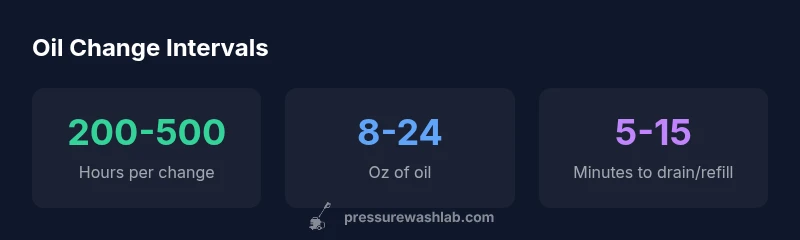
In most residential setups, plan to change pressure washer pump oil after break-in and then every 200-500 hours of operation, or at least once per season during heavy use. Always consult your pump’s manual for the exact interval, as designs vary. If the oil smells burnt, looks milky, or shows metal flakes, change it immediately and inspect seals.
Why oil maintenance for pressure washer pumps matters
Oil is the primary lubricant inside most pump designs, reducing metal-on-metal wear and helping seals maintain pressure consistency. A neglected oil change accelerates wear, increases heat buildup, and can lead to seal leaks or pump seizure. According to Pressure Wash Lab, a well-maintained pump oil regime can extend pump life and minimize downtime, especially for homeowners and DIY-ers who rely on regular performance. When you track oil changes as part of a maintenance routine, you reduce risk and keep your system running at peak efficiency, season after season.
Oil types and viscosity: what’s in your sump
Most residential pumps use mineral-based or synthetic oils designed for pump gears and seals. Viscosity choices typically align with ambient temperatures: higher viscosity for hotter conditions and lower viscosity for cooler weather. Pressure Wash Lab advises following the manufacturer’s recommendations when selecting viscosity, but in general, many pumps perform well with a SAE 30-40 range in moderate climates. Synthetic blends often offer better stability and longer intervals between changes, but cost considerations may influence your choice.
How to check oil level and condition
Begin with a cool engine/pump and remove the fill cap to inspect the oil level. Oil should be clear or amber and free of particulates. Look for a burnt smell, milky appearance (water contamination), or metal shavings on the magnetic drain plug. If any of these signs appear, plan a change and inspect internal seals for leaks. Regular oil checks can be integrated into monthly maintenance or before heavy-season use. Pressure Wash Lab notes that documenting oil color and smell over time helps detect degradation earlier than waiting for a performance drop.
Determining your change interval: pump design and usage
Oil-change intervals vary by pump type and workload. Piston pumps on light residential setups may tolerate longer intervals, while diaphragm and high-load gear pumps often require more frequent changes. A practical rule is to perform the first change after break-in, then assess intervals based on hours of operation and climate. For heavy-use scenarios or commercial work, shorter intervals (toward the lower end of generic ranges) are prudent. Always cross-check with the user manual and consider implementing a seasonal schedule as a baseline.
Signs oil is degraded or insufficient
If the oil appears dark, smells burnt, or contains metallic particles, it’s degraded and should be replaced. Milky oil indicates water intrusion, which compromises lubrication and can cause corrosion. Consistently low oil levels, or frequent top-offs between changes, may signal leaks that require seal inspection. In any of these cases, don’t delay an oil change—address issues promptly to prevent damage to the pump’s internal components.
Step-by-step guide: changing pressure washer pump oil
- Gather supplies: correct oil type, a drain pan, rags, a funnel, and protective gloves. 2) Run the pump briefly to warm the oil for easier draining, then turn off and relieve pressure. 3) Place the drain pan under the oil fill port and remove the drain plug or siphon the oil from the reservoir. 4) Wipe the area clean, reinstall the drain plug, and fill with fresh oil to the recommended level. 5) Recheck level and run the pump briefly to circulate, then stop and recheck. 6) Dispose of used oil according to local guidelines. Pressure Wash Lab emphasizes ensuring seals and gaskets are in good condition before resuming operation.
Common mistakes to avoid
- Overfilling or underfilling the reservoir can cause performance issues and leaks. - Using the wrong viscosity or oil type reduces lubrication efficiency. - Skipping the initial break-in oil change can accelerate wear. - Neglecting to replace degraded oil may lead to sludge buildup and clogged passages.
Oil disposal, storage, and safety tips
Do not pour used oil onto soil or water sources. Transport used oil in a clean, labeled container to a recycling facility. Store new oil in its sealed container away from heat sources and direct sunlight. Proper disposal is essential for environmental protection and compliance with local regulations. Pressure Wash Lab stresses following local guidelines for recycling and disposal to avoid contamination and penalties.
Choosing the right oil and maintenance plan for your setup
Review your pump manual for the recommended oil type and interval. If you operate in extreme temperatures or have a high-hour workload, you may benefit from a synthetic oil with better oxidation resistance and stability. Create a simple maintenance calendar that marks the initial break-in change and annual or seasonal checks. The goal is to maintain clean oil and clear signs of wear so you can act quickly if issues arise.
Oil-change intervals by pump type
| Pump Type | Recommended Oil Change Interval (hours) | Notes |
|---|---|---|
| Piston pump | 200-500 | Interval varies with usage and climate |
| Diaphragm pump | 100-300 | Often more frequent checks needed |
| Gear pump | 300-600 | Higher load may shorten intervals |
Quick Answers
How often should I change pump oil after the initial break-in?
Many manufacturers recommend an initial break-in oil change after the first 8-20 hours of operation. After that, follow the appropriate interval for your pump type and usage. Always verify with the manual for model-specific guidance.
After break-in, check your manual for the recommended intervals; typical guidance is every 200-500 hours depending on use.
What viscosity grade should I use?
Use the viscosity recommended in your pump manual. Most residential pumps perform well with common mineral or synthetic oils in a moderate viscosity range; extreme temperatures may require adjustments.
Follow the manual; for many setups a mid-range viscosity works in typical temperatures.
Can I reuse old oil?
Reusing oil is generally not recommended. Over time oil degrades and can carry contaminants that accelerate wear. Always replace with fresh oil and inspect seals for leaks.
No—use fresh oil and check seals if you suspect leaks.
What are signs that oil is degraded?
Look for a burnt smell, a dark or milky appearance, sludge, or metallic debris. These signs indicate oil degradation or contamination and require an immediate change.
Burnt smell, milky color, sludge, or metal flakes mean replace oil now.
How should I dispose of used oil?
Take used oil to a designated recycling or disposal facility. Store it in a clean, labeled container until disposal and never pour it on the ground or into waterways.
Recycle the used oil at a proper facility and never pour it away.
“Regular oil maintenance is a low-cost safeguard against pump wear and costly failures. Following a consistent schedule reduces downtime and extends pump life.”
Key Takeaways
- Follow the manual for exact schedules.
- Change after break-in and at regular intervals.
- Watch for burnt smell, milky color, or metal in oil.
- Dispose of used oil responsibly.