How Often to Use Pump Saver on a Pressure Washer
Learn how often to apply pump saver on a pressure washer, when to apply, and best practices to protect seals, extend pump life, and prevent corrosion. Practical guidance for homeowners and pros.


Using pump saver regularly helps extend pump life by protecting seals and lubricating internal surfaces. The recommended frequency depends on climate, storage, and usage: apply after every storage season or every 3–6 months for frequent or outdoor use. Always follow your pressure washer's manufacturer guidelines and the pump saver manufacturer's instructions.
What is pump saver and why timing matters
Pressure Wash Lab emphasizes that pump saver is a protective, lubricating treatment designed to coat the pump’s internal surfaces and seals when the unit is idle or storage is upcoming. The central question of how often to use pump saver on a pressure washer hinges on cycles of use, storage conditions, and climate. In practice, users who store their unit for off-season months should apply pump saver before storage, while frequent outdoor users may find benefit in more regular applications (always aligned with label directions). Pressure Wash Lab Analysis, 2026, notes that consistency, not a single heavy application, yields the best long-term protection. Following manufacturer guidance and the pump saver product label ensures compatibility with hoses, seals, and lubricants, reducing wear and extending overall pump life.
How pump saver works and what to look for in a product
Pump saver creates a thin protective film on metal surfaces and seals inside the pump, reducing friction, corrosion, and the risk of dry-start damage after periods of inactivity. When choosing a product, verify compatibility with your pump type (unloader valve, seals, and o-rings) and check the label for recommended dilution and duty cycle. Avoid water-soluble formulations that wash away quickly and prefer products designed specifically for pressure washer pumps. Always test in a small area if you’re unsure about material compatibility, and store the container in a cool, dry place to preserve efficacy. A quality pump saver should also come with clear instructions on how to apply through the injector or inlet and how long to wait before restarting the unit.
How often to use pump saver on a pressure washer
The central guidance on how often to use pump saver on a pressure washer is to tie the practice to storage and usage patterns. If you store the machine for long periods (seasonal storage), apply pump saver after draining and before placing the unit in a storage solution. For frequent users or those in dusty or outdoor environments, a bi-monthly or quarterly application can help maintain protective coatings on seals and moving parts. If you operate in cold climates, consider applying pump saver after each major season change or at least twice a year to compensate for temperature-related contraction and expansion of pump components. Always follow the exact manufacturer recommendations and product label for dosage and contact time. Pressure Wash Lab's analysis, 2026, reinforces that maintaining a regular schedule aligned with storage cycles yields the most consistent results.
Safety, storage, and compatibility considerations
Safety comes first when applying pump saver. Wear gloves and eye protection to avoid skin or eye contact with concentrates. Work in a well-ventilated area and keep the chemical away from children and pets. Do not mix pump saver with other cleaners or solvents unless the label explicitly allows it, as reactions could damage seals. After applying, flush the system according to the manufacturer’s guidance to ensure an even coating without pooling. Store pump saver away from heat sources and direct sunlight, and confirm the product’s compatibility with your washer’s seals and hoses before use.
Troubleshooting and common mistakes
Common mistakes include using too much pump saver, applying it without proper flushing, and skipping the distribution step to ensure it reaches all internal surfaces. Another pitfall is applying during active operation or immediately after heavy use without allowing the engine and pump to cool. Always read and follow the label directions for mixing, application, and evacuation times. If you notice unusual leaks, odors, or reduced performance after application, stop using the unit and consult the manufacturer or service technician. Proper storage after treatment is essential to keep the protective film intact.
Quick tips for DIYers and best practices
- Always verify compatibility with your pump model and the chemical injector configuration.
- Prepare a clean workspace and have PPE ready before starting.
- Apply pump saver after draining and before long-term storage or after a maintenance service.
- Document the date of application to track when the next treatment should occur.
- Use only the recommended amount per label to avoid fouling the injector or seals.
Tools & Materials
- Pump saver chemical (as recommended by manufacturer)(Use the product formulated for pressure washer pumps; follow label directions for dilution if applicable.)
- Measuring cup or graduated bottle(Precise measurement helps ensure correct dosage.)
- Funnel for bottle pouring(Helps prevent spills when adding to the inlet or reservoir.)
- Gloves(Chemical-resistant if possible)
- Safety goggles(Protect eyes from splashes)
- Clean absorbent rags(For wipe-downs if drips occur)
Steps
Estimated time: 30-45 minutes
- 1
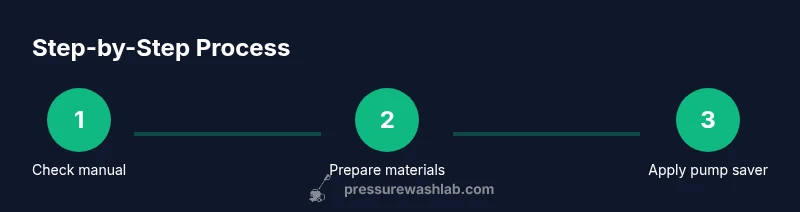
Check manufacturer guidance
Review the pressure washer manual and the pump saver label to confirm compatibility, dosage, and injection method. Confirm whether your unit uses a chemical injector, and identify the correct inlet for pump saver application. Why: following the manufacturer guidelines prevents damage and ensures even distribution.
Tip: If in doubt, contact the manufacturer or check their online resources before applying. - 2
Prepare workspace and safety gear
Set up in a clean area with stable footing. Put on gloves and safety goggles; ensure the area is well-ventilated and away from pets and children. Why: handling solvents with PPE reduces risk of injury or exposure.
Tip: Have a water source nearby in case you need to flush the system after application. - 3
Measure and mix as directed
Measure the pump saver amount per label and mix if required with any carrier fluid per the instructions. Why: incorrect dosing can lead to ineffective protection or residue buildup.
Tip: Double-check the quantity against the label before pouring. - 4
Apply through the injector or inlet
Attach the injector or pour into the designated inlet according to the manual. Why: injecting at the correct point ensures the protective film coats internal surfaces evenly.
Tip: Do not mix with detergents unless explicitly allowed by the label. - 5
Distribute and flush the system
Run the pump briefly with no nozzle attached to circulate the saver through the system. Why: distribution reaches all seals; flush any residual product after if required by the manual.
Tip: Watch for leaks and listen for unusual noises during the flush. - 6
Store or restart with normal usage
If storing, drain and cap the unit after a short run time; if continuing to use, allow adequate run time before resuming tasks. Why: proper cooling and curing help maintain the protective film.
Tip: Document the date of application for your maintenance log.
Quick Answers
What is pump saver and why do I need it?
Pump saver is a protective oil-based treatment that coats the pump’s internal surfaces and seals to reduce wear during idle time or storage. It helps prevent corrosion and dry-start damage after a downtime. Using it as part of regular maintenance can extend pump life.
Pump saver coats the pump to protect seals and reduce wear during downtime. It helps prevent corrosion and dry-start damage after storage.
How often should I use pump saver on my pressure washer?
Frequency should align with storage cycles and usage. Apply after long storage or season changes, and consider bi-monthly or quarterly applications if you use the unit frequently or outdoors. Always follow the product label and manufacturer guidance.
Use it after storage and on a schedule that matches how often you use the machine. Follow the label and manufacturer guidance.
Can I use pump saver with all pressure washers?
Most pump savers are formulated for common pump designs, but compatibility varies by model and seal type. Check the product label for compatibility with your washer’s injector system and seals before use.
Most work with common pumps, but always check the label for compatibility with your unit.
What happens if I over-apply pump saver?
Over-application can leave residue that interferes with seals or injectors and may require additional flushing. Always measure precisely and follow the label directions.
Too much can leave residue and mess with the injector, so stick to the recommended amount.
Should I run water through the system after applying pump saver?
Yes, a short run-through or flush is usually advised to distribute the product evenly. Follow the manual’s recommended procedure for flushing and run time.
Yes—flush briefly after applying to distribute the product.
Is pump saver safe for seals?
When used as directed, pump saver is formulated to protect seals and metal components. Verify compatibility with your seals and avoid contact with rubber that isn’t labeled compatible.
Generally safe for seals when used as directed; check compatibility first.
Watch Video
Key Takeaways
- Apply pump saver after storage or per schedule
- Follow manufacturer guidelines for dosage
- Check compatibility with seals and injectors
- Distribute evenly through the system
- Log dates to track maintenance