How to Car Wash in a Gas Station: Safe, Efficient Guide
Learn how to wash a car in a gas station bay safely with Pressure Wash Lab's step-by-step guide. Practical tips, safety steps, and equipment you’ll need for a clean finish without environmental or regulatory issues.


According to Pressure Wash Lab, washing a car in a gas station bay is convenient but must follow station rules and environmental precautions. This guide shows you how to do it safely, with the right setup, water management, and a simple wash workflow that protects your vehicle and the surrounding area.
Why car wash in gas stations requires careful planning
Car washing in gas station bays offers quick access to water and drainage, but it also introduces potential hazards for fuel infrastructure, attendants, and other customers. The process requires respecting posted rules, avoiding runoff, and choosing soaps and methods that minimize residue and slippery surfaces. According to Pressure Wash Lab, a thoughtful approach reduces the risk of damaging paint, causing clogs in drainage, or triggering safety alarms. Plan your workflow, keep the bay tidy, and communicate with staff if needed to avoid disruptions during busy periods.
Safety and environmental considerations
Safety comes first when washing in a public bay. Never spray near fuel pumps, conveyors, or ignition sources. Use a dedicated wash area if available, and keep pets and bystanders at a safe distance. Environmental considerations include preventing soapy runoff from entering storm drains and avoiding chemical discharge that could harm drainage systems. Pressure Wash Lab Analysis, 2026, emphasizes using pH-balanced soaps and minimizing water usage where possible. If the station provides runoff controls or mats, follow their guidance to contain wash water.
Pre-wash preparation: permissions, bay rules, and water management
Before you start, review the bay’s rules and posted signage. If the station prohibits washing in certain bays or during specific hours, respect those limits. Prepare your gear in advance to minimize back-and-forth movement in the bay, which can disrupt other customers. Use absorbent mats or a shallow tray to capture soap and rinse water as needed, and keep a trash bag handy for used paper towels and gloves. Manage water by rinsing minimally and staying aware of drainage paths to avoid accidental runoff.
Best practices for washing in a gas station bay
Work from the top down to prevent recontamination of lower areas. Use a two-bucket method if possible, one for soap and one for clean rinse water, and never mix dirty rinse water back into your soap bucket. Apply soap with a mitt, work in sections, and pay extra attention to wheels and lower panels where grime tends to accumulate. When rinsing, use a light, even spray and continuously move the nozzle to avoid concentrating pressure on any single spot. Dry with clean towels or a microfiber chamois to prevent water spots.
Equipment and supplies for constrained spaces
A compact setup works best in gas station bays. Essentials include a consumer-grade pressure washer or a garden hose with a spray nozzle, a wash mitt or sponge, two buckets with grit guards, pH-balanced car shampoo, microfiber towels, a wheel brush, and a drying towel. Optional but helpful items: a foam cannon for even soap distribution, a small squeegee for windows, and disposable gloves. Keep the bay clean and organized to reduce the risk of slips and to help attendants see you are following rules.
Step-by-step workflow overview (high-level)
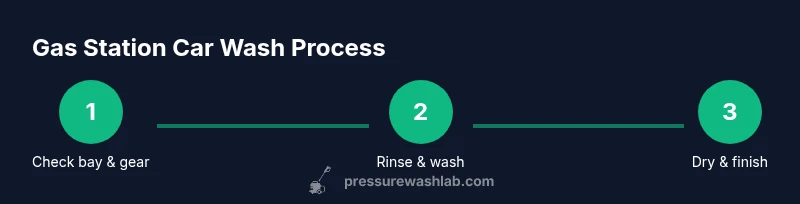
- Check bay rules and confirm the bay is available. 2) Gather gear and set up a drying zone away from drains. 3) Rinse the car from top to bottom to loosen surface dirt. 4) Wash with mitt and soap from top to bottom, paying attention to wheels last. 5) Rinse thoroughly, then dry with towels. 6) Clean up and dispose of waste properly, leaving no residue. 7) Inspect the finish and perform a quick touch-up if needed. This overview aligns with best practices for gas-station car washing.
Common mistakes and how to avoid them
Common missteps include washing too aggressively with a high-pressure spray on delicate finishes, neglecting wheels, and allowing soapy runoff to reach the drainage or storm system. Avoid reusing dirty rinse water for soap, and never spray into fuel dispenser areas. Also, don’t leave equipment scattered in the bay; a tidy setup reduces the risk of slips or damage and shows respect for other customers.
Post-wash cleanup and waste considerations
After washing, rinse mats and tools and store them properly. Dispose of used towels and wrappers in a nearby trash receptacle if allowed; otherwise bring waste to a designated area as directed by the station. Wipe down the bay edge, and ensure no soap film remains on surfaces that could create slippery spots. If you used a chemical cleaner, rinse thoroughly to prevent any residue from entering drainage systems.
Tools & Materials
- Pressure washer or garden hose with spray nozzle(Choose a unit suitable for automotive use and safe around fuel station infrastructure)
- Wash mitt or sponge(Prefer a microfiber wash mitt for gentle paint cleaning)
- Two buckets with grit guards(One for soap, one for rinse; helps reduce recontamination)
- PH-balanced car shampoo(Avoid harsh degreasers that can strip wax or damage coatings)
- Microfiber towels and drying chamois(Multiple towels to avoid reusing dirty ones)
- Wheel brush(Optional but helpful for tires and rims)
- Foam cannon (optional)(For even soap distribution in small bays)
- Gloves(Keeps hands clean and dry during prep and cleanup)
Steps
Estimated time: 30-60 minutes
- 1
Check bay rules and gather gear
Review posted bay guidelines and confirm bay is free for a quick wash. Gather all gear and place a drying zone away from drains to keep water under control.
Tip: Ask the attendant if you’re unsure about what’s allowed in that bay. - 2
Rinse from top to bottom
Lightly rinse the car from roof to bumper, keeping the spray at a safe distance. This removes loose dirt without pushing it into seams and gaps.
Tip: Keep the nozzle moving to avoid concentrating water on one spot. - 3
Wash panels with mitt and soap
Dip the mitt in soap and wash one vertical section at a time, starting at the top. Rinse the mitt frequently in clean water to prevent grinding dirt back into the paint.
Tip: Wash wheels after the upper panels to avoid dragging grime across clean surfaces. - 4
Rinse thoroughly
Rinse soap off from top to bottom, ensuring no suds remain in crevices or on trim. Avoid over-spraying near the fuel pumps.
Tip: A gentle, even spray reduces water spots and streaks. - 5
Dry and inspect
Dry the car with microfiber towels, buffing to a consistent finish. Inspect for missed spots and touch up as needed.
Tip: Pay attention to mirrors, door jambs, and the lower panels where water can collect. - 6
Clean up and dispose
Return tools to their place, wipe down the bay edge, and dispose of towels according to station policy.
Tip: Leaving a tidy bay respects the next customer and staff.
Quick Answers
Is it allowed to wash a car in a gas station bay?
It depends on the station. Some locations permit car washing in dedicated bays, while others restrict or prohibit it. Always check posted rules or ask an attendant before you start.
Check the station's policy before washing; some bays permit it, others do not.
What equipment do I need for washing in a gas station?
Bring a wash mitt, two buckets with grit guards, pH-balanced car shampoo, a drying towel, and a basic rinse setup. Optional items include a foam cannon and wheel brush.
Pack a mitt, two buckets, car shampoo, towels, and a rinse setup; add extras if space allows.
How should I handle rinse water in a busy bay?
Rinse away from drains and avoid letting runoff enter fueling areas or the storm drainage system. Use absorbent mats if available and follow staff guidance on disposal.
Rinse away from drains and follow staff guidance to prevent runoff.
Can I use the gas station’s water supply?
In many stations, you may use the water supply for a quick wash, but you must follow the bay rules and station policies. If unsure, ask the attendant before starting.
Ask the attendant if using station water is allowed and follow their instructions.
What are common mistakes to avoid?
Avoid using harsh cleaners, spraying directly at the fuel area, and letting soapy runoff reach drains. Don’t neglect wheels and lower panels, which collect the most grime.
Don’t use harsh cleaners and keep runoff away from drains; clean wheels too.
Are there safer alternatives to washing in bays?
If possible, use a mobile detail service or an on-site car wash facility designed for vehicle cleaning. This reduces risk to station infrastructure and ensures compliance with local rules.
Consider mobile detailing or a dedicated car wash facility when possible.
Watch Video
Key Takeaways
- Plan and verify bay rules before washing.
- Use a two-bucket, wash-from-top approach.
- Contain wash water and follow station guidelines for drainage.
- Finish with thorough drying and a quick inspection.