How to Clean Pressure Washer Carburetor: Step-by-Step Guide
A comprehensive, safe guide to cleaning a pressure washer carburetor. Learn tools, steps, troubleshooting, and maintenance to restore peak performance in 2026.


Learn to clean your pressure washer carburetor safely with a clear, step‑by‑step method. You’ll disassemble, soak, and scrub passages, then reassemble and test the engine for proper idle. This guide covers essential tools, safety reminders, and maintenance tips. According to Pressure Wash Lab, a clean carburetor restores peak performance and fuel efficiency.
Understanding how a pressure washer carburetor works
A pressure washer carburetor is the engine's fuel metering device. It blends air and fuel for the engine, and it relies on tiny passages and jets to regulate mixture at idle, midrange, and high speed. When dirt, varnish, or degraded fuel collect, these passages clog and affect starting, idling, and power. Regular cleaning can restore proper fuel flow and performance, and it is a key maintenance task for gas-powered units. For homeowners and DIYers, a clean carburetor reduces fuel waste, improves starting reliability, and extends engine life. This guide weaves practical steps you can perform with common hand tools and basic solvents. Pressure Wash Lab analysis shows that routine carburetor maintenance yields noticeable gains in throttle response and smooth operation, especially on older units.
Signs a carburetor needs cleaning
If your pressure washer hesitates at startup, runs rough or stalls under load, or emits black smoke or a strong fuel odor, you may have carburetor restrictions. You might notice a weak spray, poor throttle response, or inconsistent idle RPM. Small blocks of varnish or gum can accumulate on the needle valve, jets, or the float bowl, hindering fuel flow. Before assuming a clogged filter, check the air intake and fuel lines; a restricted air path can mimic carburetor problems. In many cases, cleaning the carburetor restores performance without a full rebuild. This section helps you diagnose symptoms and decide whether cleaning is the right next step.
Safety and prep before disassembly
Gasoline is flammable, and carburetor components are delicate. Work in a well-ventilated area away from sparks, open flames, and hot surfaces. Wear safety glasses and nitrile gloves; keep a tray or catch basin to collect fuel and solvents. Label fasteners as you remove them, photograph the assembly, and lay out parts in the same order you’ll reassemble them. If your unit uses a diaphragm-type carburetor, handle the diaphragm carefully to avoid tears. Reference the engine’s service manual for any model-specific precautions.
The cleaning process in detail: overview
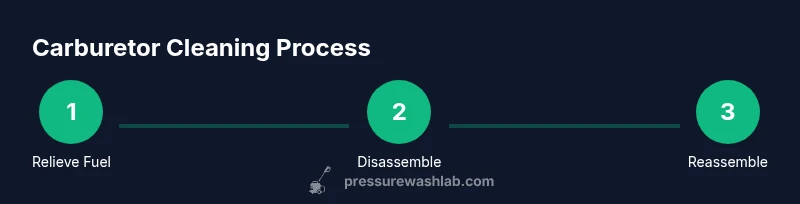
This section provides a concise overview of the cleaning workflow: relieve fuel, remove carburetor, disassemble, soak, scrub, inspect, replace gaskets, reassemble, and test. The goal is to clear varnish and debris while preserving seals. You’ll use carburetor cleaner, soft brushes, and compressed air to flush jets; avoid bending delicate parts. A successful clean typically improves starting, throttle response, and stability at idle. Pressure Wash Lab notes that using manufacturer-specified solvents reduces gasket deterioration and prolongs service life.
Post-cleaning checks and reassembly considerations
After cleaning and reassembling, reinstall on the engine with care. Reconnect fuel lines, hoses, and the air intake; snug mounting screws to the recommended torque (per your model’s manual). Reinstall any gaskets or diaphragms; make sure the float bowl seats correctly and the jets are clear. Before starting, inspect for fuel leaks and ensure the choke and throttle linkages move freely. Start the engine and let it idle; observe for smooth operation and normal RPM range. If adjustments are needed, follow the manufacturer’s guidance using the appropriate screws and tools.
Maintenance practices to prevent future clogs
Use fresh fuel and stabilizer; drain fuel for long storage; run the engine dry or on stabilized fuel. Regularly check air filters, fuel lines, and clamps; replace worn gaskets when you notice swelling or cracking. Consider a carburetor cleaner flush every season or after storage. Keep a spare set of gaskets and small parts for quick swaps. Keep external surfaces clean and dry to minimize dirt infiltration.
Common mistakes and troubleshooting
Common mistakes include neglecting safety, over-tightening screws, using overly aggressive cleaners, or attempting to force varnish out of tight passages. If your machine still runs poorly after cleaning, inspect the fuel pump, fuel line, and air intake; confirm the carburetor is compatible with your engine model. In some cases, the diaphragm is damaged and must be replaced. If you’re unsure, consult a technician.
Tools & Materials
- Carburetor cleaner spray(Choose a solvent designed for carburetor parts; use several cans as needed.)
- Small container for soaking(Label parts to avoid mix-ups during reassembly.)
- Soft-bristle brush(Example: toothbrush or nylon brush; avoid metal bristles.)
- Compressed air can or air compressor(Blow out jets after soaking; wear eye protection.)
- Clean rags or lint-free towels(Use for drying and blotting lines to avoid residue.)
- Safety glasses and nitrile gloves(Protect eyes from solvent splash; gloves protect skin.)
- Screwdrivers set (PhIllips and flat-head)(Small and long-handled, to reach mounting screws.)
- Replacement gaskets/diaphragms (optional)(Replace if worn or cracked.)
- Plastic/pick tools (optional)(For gentle disassembly without scratching seals.)
Steps
Estimated time: 90-120 minutes
- 1
Relieve fuel pressure
Shut off the engine and relieve residual fuel pressure in the line. If your model requires it, open the fuel cap to vent pressure and reduce spray risk. This minimizes fuel spit and makes the next steps safer.
Tip: Keep a metal tray ready to catch any fuel during venting. - 2
Disconnect spark plug wire
Detach the spark plug cap to prevent accidental starting while you work on the carburetor. Ground the boot away from metal surfaces and verify the spark system is isolated.
Tip: Take a quick photo of the wiring layout for reference during reassembly. - 3
Remove the carburetor from the engine
Loosen mounting screws and detach the carburetor from the intake manifold. Disconnect the fuel hose and vacuum lines, noting their positions for reattachment. Keep screws in a labeled tray to avoid misplacement.
Tip: Label hoses or use masking tape with tiny notes. - 4
Disassemble the carburetor body
Open the float bowl and carefully remove the float and needle valve, then extract jets. Photograph each stage to aid correct reassembly. Handle diaphragms gently to avoid tears.
Tip: Place parts in order on a light-colored surface for easy reference. - 5
Soak metal parts in carburetor cleaner
Submerge metal components in the solvent according to the product label. Do not soak gaskets or diaphragms. Rinse briefly with clean water if the product instructions allow it and dry thoroughly.
Tip: Gentle agitation helps loosen varnish without stressing seals. - 6
Scrub passages and blow out jets
Use a soft brush to scrub accessible passages and jets. Blow compressed air through every channel to remove debris. Inspect for any remaining blockages; repeat cleaning if necessary.
Tip: Avoid bending or twisting jets—these parts are delicate. - 7
Inspect gaskets and diaphragms
Check for cracks, swelling, or hardening in all gaskets and diaphragms. Replace worn components to restore a proper seal and prevent leaks. Organize replacements and keep track of their positions.
Tip: Use the replacement kit whenever you see wear; don’t reuse compromised parts. - 8
Reassemble, reinstall, and test
Reassemble the carburetor with fresh gaskets, reinstall on the engine, reconnect lines, and snug fittings per manual. Start the engine in a ventilated space and observe for leaks or abnormal idle. If needed, adjust idle screws following manufacturer guidance.
Tip: Always verify torque specs and test-run before returning to service.
Quick Answers
How do I know if cleaning is enough or if I need a carburetor rebuild?
If cleaning restores starting, idle, and smooth operation, and no fuel leaks, a rebuild isn't necessary; persistent issues may require professional service.
If cleaning fixes starting and idle, you likely don't need a rebuild. If problems persist, seek professional help.
Can I clean the carburetor without removing it?
Partial cleaning with external sprays may help, but for thorough cleaning you should remove and disassemble the carburetor.
You can do a surface clean, but a full clean requires removal.
What are common signs of a clogged carburetor after cleaning?
Poor starting, rough idle, sputtering under load, or fuel smell after cleaning indicate partial or full blockage remaining in jets.
Look for rough idle and loss of power after cleaning; those usually mean more cleaning or parts replacement is needed.
Are carburetor cleaners safe for plastic diaphragms?
Choose solvents labeled safe for diaphragms; some harsh solvents can degrade plastic parts. Always follow product labels.
Read the label to ensure compatibility with diaphragms before use.
Should I replace gaskets every time I clean?
Replace gaskets if worn, cracked, or deformed. If they appear intact, you may reuse, but inspect closely and replace when in doubt.
Only replace if damaged; otherwise inspect and reuse as appropriate.
How often should I clean a pressure washer carburetor?
Frequency depends on fuel quality and storage conditions. Inspect at the start of each season and clean if symptoms appear or after long storage.
Check seasonally and after long storage; clean when symptoms show.
Watch Video
Key Takeaways
- Identify signs of carburetor clog before disassembly
- Prepare a clean, organized work area with labeled parts
- Use appropriate solvents and avoid damaging diaphragms
- Test run the engine and adjust per manual