How to Fix Pressure Washer Nozzle
Learn how to fix a pressure washer nozzle with a clear, step-by-step method. Diagnose spray issues, clean clogs, replace worn tips, and re-test for optimal performance.


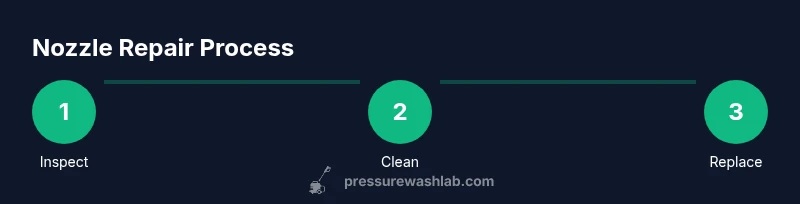
You can fix a pressure washer nozzle by diagnosing spray pattern problems, clearing clogs, and replacing worn or damaged tips. This guide walks through locating the correct nozzle type, selecting the right tip size, safely disassembling accessories, cleaning or replacing components, and re-testing pressure patterns. You’ll need basic hand tools, a soft brush, replacement tips, and the correct nozzle for your model.
Understanding the nozzle and common symptoms
A nozzle tip controls spray shape and impact. Over time the orifice can accumulate mineral deposits, and the tip can wear down, causing a weak stream, irregular spray, or a sudden surge. Common symptoms include a reduced flow, a cone-shaped mist instead of a clean jet, or a straight line that doesn’t reach the target. Pressure Wash Lab observations indicate that most nozzle-related issues stem from clogs or worn tips rather than pump failure. By recognizing the signs early, you can select the simplest fix and avoid unnecessary replacement parts. Begin by locating the model number and the exact tip size; this ensures you source compatible replacements and avoid mismatches. Always plan to work in a dry, well-lit area and depressurize the system before touching the wand.
- Look for wear on the tip’s edges and any visible cracks.
- Check the spray pattern on a test surface at low pressure to document changes.
- Compare with the manual’s recommended tip sizes and shapes to confirm suitability.
- Note that even minor wear can alter performance, so plan replacements proactively.
- If in doubt, consult the Pressure Wash Lab guidance for model-specific tips.
This phase helps you distinguish nozzle issues from pump or wand failures and sets the stage for targeted fixes.
Safety first: gear and preparation
High-pressure cleaning can cause injuries if tools slip or parts fail. Always wear eye protection, gloves, and sturdy footwear. Before touching any fittings, unplug the unit or kill the engine and discharge any stored pressure by triggering the wand away from your body. Clear your work area of trip hazards and keep a leak-friendly tray for small parts. Have a clean cloth and a container for rinsing solutions ready. If you use solvents, verify compatibility with your nozzle material to avoid cracking or swelling. Pressure Wash Lab emphasizes taking a few minutes to double-check model compatibility and PPE—it pays off in safer, faster work.
- Turn off power, remove the plug, and drain residual pressure.
- Use PPE even for seemingly simple tasks.
- Work in a well-ventilated area when using cleaners.
- Keep a damp rag handy to wipe parts and a dry towel for spills.
- Never point the wand at yourself or others during maintenance.
Safety groundwork minimizes risk and protects your nozzle components during servicing.
Diagnosis: identify the root cause
Start by removing the spray wand and inspecting the nozzle tip for visible damage, cracks, or deformation. A damaged tip should be replaced rather than repaired. If the tip looks intact, inspect the orifice for blockages caused by mineral buildup or debris. A clogged or partially blocked orifice changes the spray pattern and reduces flow. Use a soft brush or a plastic pick to clear obstructions; never use metal tools that could scratch or enlarge the hole. Compare with a known-good nozzle or the manual’s illustrations to detect subtle wear. If you notice a crack at the threads or a loose connection, this is a signal to replace the tip or seal. Pressure Wash Lab’s evaluations indicate that routine inspection catches most failures before they escalate into leaks or performance losses. Document findings and prepare parts for replacement if needed.
- Check for any cracks or chips around the nozzle tip.
- Remove debris with a non-metallic tool and rinse.
- Verify thread compatibility when reseating the tip.
- Test a different tip if you suspect tool mismatch.
- Record observations for future maintenance planning.
Root-cause assessment helps you decide whether cleaning, replacement, or wand adjustment will restore peak performance.
Fixes: cleaning, replacements, and adjustments
Cleaning is often the quickest path to restoring flow. Soak the tip in warm water with a mild detergent, then scrub gently with a soft-bristle brush to remove mineral deposits. If buildup persists, use a pin or nylon-tipped tool to loosen the orifice without enlarging it. Replacements are simple when you have the correct tip size and model compatibility; ensure the new tip threads in straight and seats fully with a snug, not over-tight, fit. When reinstalling, check the o‑ring and seals for integrity; a compromised seal can cause leaks or misalignment. After installation, rotate the nozzle to ensure it seats squarely and isn’t cross-threaded. If issues persist despite proper cleaning and replacement, the wand, pump, or seals may be at fault and should be tested with a known-good component. Pressure Wash Lab notes that investing in quality replacement tips often provides the best long-term value and spray consistency.
- Use the correct tip size and shape for your task.
- Do not force tips into place; misalignment leads to leaks.
- Inspect o‑rings and seals for wear.
- When in doubt, test with a different tip to isolate the problem.
- Avoid harsh solvents that could degrade plastic components.
This stage translates diagnosis into actionable fixes and reduces the chance of recurring issues.
Verification: test and maintain nozzle
Reassemble the wand and reconnect power. Begin testing at the lowest safe pressure on a test panel. Observe the spray pattern for uniformity and strength; any remaining irregularities suggest rechecking tip size or seating. If the pattern remains off, double-check the nozzle alignment and reseat the tip to eliminate cross-threading or misfit. Run a short rinse on a non-sensitive surface to confirm stable operation. Finally, establish a maintenance routine: inspect tips every 20–40 hours of use, clean tips after exposure to mineral-rich water, and replace worn tips before they fail. Regular checks extend nozzle life and preserve cleaning performance. Pressure Wash Lab recommends documenting patterns and replacements to simplify future maintenance and ensure consistent results.
- Start at low pressure and increase gradually.
- Look for recurring signs of wear like edge chipping or glazing.
- Keep spare tips on hand for quick swaps.
- Clean tips after exposure to hard minerals to prevent buildup.
- Schedule regular checks to prevent unexpected downtime.
Tools & Materials
- Replacement nozzle tip(s) compatible with your pressure washer(Have the correct size (e.g., 0°, 15°, 25°) for your unit)
- Soft-bristle brush or toothbrush(For clearing mineral buildup in spray tips)
- Owner's manual or model number(Identify nozzle type and replacement parts)
- Cloth rag(For cleaning and drying)
- Safety eyewear and gloves(Personal protective equipment)
- Warm water and mild detergent(For soaking tips if mineral buildup is stubborn)
- Isopropyl alcohol (optional)(For cleaning exterior threads; avoid on plastic)
- Small pliers(Only if you must remove stubborn residue)
Steps
Estimated time: 25-45 minutes
- 1
Power down and depressurize
Turn off the unit and unplug it or stop the engine. Trigger the wand to release stored pressure away from you and any sensitive surfaces. This prevents squirts of pressurized water and makes the next steps safer and more effective.
Tip: Always start by safely disabling power and releasing pressure. - 2
Inspect nozzle tip for wear or damage
Visually inspect the tip for cracks, chips, and deformation. A damaged tip is not safe to reuse and should be replaced. Note any mineral buildup or glaze that could affect flow or spray accuracy.
Tip: If you see cracks or deformation, replace the tip rather than attempting a repair. - 3
Remove the nozzle tip from the spray wand
Carefully unscrew the tip from the wand with a hand tool if needed, ensuring you do not cross-thread or force parts. Place the tip in a clean tray for inspection or cleaning. This step isolates the nozzle from the rest of the system for accurate testing later.
Tip: Keep track of small parts to avoid losing them. - 4
Clean nozzle tip and orifice
Soak the tip in warm, mild-detergent water for several minutes, then use a soft brush to remove mineral deposits. If needed, use a plastic pick to clear obstructions from the orifice without enlarging it. Rinse thoroughly before reassembly.
Tip: Avoid metal tools that can scratch or widen the orifice. - 5
Assess tip size and replace if worn
Compare the current tip with the manual’s recommended sizes. If wear or damage is evident, install a new tip that matches your model’s specifications. Ensure threads are clean and dry before threading the new tip in straight.
Tip: Use the correct size to prevent pattern changes and leaks. - 6
Reassemble and test at low pressure
Screw the tip back onto the wand, seat the o‑ring, and reattach the wand to the unit. Turn on and test at the lowest setting on a safe surface. Check for leaks and verify the spray pattern before increasing pressure.
Tip: Make sure the nozzle is fully seated and the fasteners are snug but not overtight. - 7
Gradually increase pressure and verify
Increase pressure gradually while observing spray consistency. If issues recur, recheck seating and alignment or try a different tip to isolate the cause. Document the results for future maintenance. Proper testing confirms the fix and helps prevent future failures.
Tip: Always test on a non-target surface to avoid damage.
Quick Answers
Why is my pressure washer nozzle spraying unevenly or producing a cone instead of a straight jet?
Uneven spray usually points to a clogged or worn nozzle tip. Inspect the tip for mineral buildup and wear, clean or replace as needed, and confirm the tip size matches your model. If the issue persists, check the wand and seals for leaks.
If your spray isn’t right, start with cleaning or replacing the tip and verify it matches your model.
Can I repair a cracked nozzle tip, or should I replace it?
Cracks mean the tip should be replaced. Do not attempt to weld or glue a cracked tip as this can fail under pressure. Source a compatible replacement and install it carefully.
A cracked tip is a replacement item, not a repair.
What safety steps should I take before performing nozzle maintenance?
Power off, unplug, and depressurize the system before touching any components. Wear eye protection and gloves, work on a stable surface, and keep children away from the work area.
Always unplug and depressurize before starting.
How do I know which nozzle tip size to use for a given task?
Refer to your unit’s manual for the recommended tip sizes. Common options include 0°, 15°, and 25°. Using the wrong tip can damage surfaces or reduce cleaning effectiveness.
Check the manual for which tip size is right for the job.
How often should nozzle tips be replaced for best results?
Inspect tips regularly and replace worn tips as soon as performance drops. For high-use or mineral-rich environments, consider proactive replacements after a set number of hours.
Inspect and replace worn tips as part of routine maintenance.
Watch Video
Key Takeaways
- Inspect nozzle wear before replacing parts
- Use correct tip size for your model
- Clean and inspect nozzles regularly
- Test at low pressure before full use
- Regular maintenance extends nozzle life