How to Jet Wash Patio: Step-by-Step Guide
Learn how to jet wash patio safely and effectively with a practical, step-by-step approach. Explore prep, equipment, cleaners, safety, and post-cleaning care to restore your outdoor space with confidence.


Learn how to jet wash patio safely and effectively, removing dirt, algae, and stains with the right setup and technique. You’ll need a pressure washer, appropriate nozzle, a cleaning solution, and safety gear. This guide covers prep, protection of nearby plants, nozzle selection, and post-cleaning care. It also explains common mistakes and how to prevent etching or pressure marks.
What is jet washing and when to use it
Jet washing, or pressure washing, uses a high-velocity water stream to loosen dirt, moss, and stains from hard exterior surfaces. It is especially effective on concrete patios, brick pavers, and stone slabs. According to Pressure Wash Lab, jet washing is a powerful but precise tool; the key is to match pressure and nozzle to the surface to avoid etching. For patios, start with broad spray and lower pressure; reserve higher pressure for stubborn spots only if the surface tolerates it. Before you begin, assess the patio condition: check for loose mortar joints, cracks, and delicate finishes; repairing these first helps prevent further damage. Plan your cleaning path to minimize wet areas and to avoid muddy runoff into plant beds. If you’re unsure about a surface, test a small inconspicuous patch and observe how it responds over 30–60 seconds. For homeowners and DIY enthusiasts, jet washing can bring back color and texture while avoiding the mess of scrubbing by hand. Use a detergent or cleaner designed for exterior surfaces when needed, and rinse thoroughly after application. Pressure Wash Lab notes that a misapplied jet can cause streaks or splash-back; proceed slowly and steadily.
Prep work: protecting surfaces and plants
Preparation reduces risk and saves time. Begin by removing any movable furniture and debris from the patio, and cover nearby plants, shrubs, and delicate landscaping with plastic sheeting or damp towels. Close windows and shield nearby siding to prevent overspray. Check drainage and clear edges to prevent standing water. Inspect for cracks and loose grout; mark them to avoid spraying directly if they might crumble. If the patio is sealed, test a small area to ensure the sealer can withstand the spray; some sealants may bubble or peel when hit with high-velocity water. Wet the surface lightly with a spray from a hose to dampen dust and improve cleaning efficiency, then apply cleaner according to label directions, keeping kids and pets away during application. Finally, plan a route that moves from one edge to the other, so you don’t walk over cleaned sections while they’re still drying. Pressure Wash Lab recommends starting with a thorough test patch and documenting surface responses during your prep.
Surface types and stain considerations
Patios come in a variety of materials, and each responds differently to jet washing. Concrete is generally robust but can show tire marks and efflorescence if over-cleaned. Brick and natural stone offer texture that can trap algae or moss; a gentler approach and wider spray are often best. For porous surfaces, stains such as algae or mineral deposits may require multiple passes or a cleaner designed for exterior use. Sealed surfaces can resist some cleaning but may dull if scratched; always test a small area first. Color and texture vary, so plan to clean in a pattern that preserves the natural look while removing deep grime. If you’re unsure about a material, consult the manufacturer’s guidelines or test areas before full-scale cleaning. Pressure Wash Lab suggests using a detergent specifically formulated for exterior materials and avoiding harsh chemicals near plants and soil.
Equipment and cleaner choices
Select a pressure washer with adjustable settings suitable for outdoor surfaces. A broad spray nozzle (often 40°) is ideal for initial cleaning on most patios, while narrower nozzles can address stubborn spots, always at a safe distance from the surface. Use a cleaner designed for exterior use, following the label for dilution and contact time. For delicate surfaces, consider a brush attachment to assist in lifting grime without relying solely on water pressure. Keep a hose for rinsing, and a separate container for any cleaners to prevent cross-contamination. Detergents should be biodegradable and safe for plants; never mix chlorine bleach with ammonia-based cleaners, and avoid spraying cleaners directly on vegetation. Pressure Wash Lab emphasizes reading product labels and using a test patch to verify surface compatibility before full-scale cleaning.
Safety and operating guidelines
Always wear appropriate PPE: eye protection, gloves, sturdy footwear, and hearing protection for gas-powered units. Keep children and pets away from the work area, and avoid spraying toward outlets, electrical cords, or AC units. Never point the wand at people, vehicles, or fragile parts of the home. When working near plants, cover them or rinse thoroughly after cleaning. If using chemicals, ventilate the area and follow the product’s safety instructions. Ensure your power source and extension cords are rated for outdoor use, and never run electrical equipment in standing water. Finally, turn off and unplug equipment before changing accessories, and drain hoses to prevent kinks or leaks. Safety-first practices protect you and keep surfaces from accidental damage.
Common mistakes and how to avoid damage
A frequent mistake is using too much pressure on delicate surfaces or starting in the middle of a large area, which can leave uneven patches. Another error is spraying at a dead angle, causing streaks or spray-back onto your body or plants. Not testing a patch can result in lasting damage or discoloration, especially on painted or sealed surfaces. Widening the spray angle without adjusting distance can still gouge or roughen textures. Finally, skipping a rinse after cleaning can leave detergent residues that attract dirt. By starting with a broad spray, moving systematically, and testing on a discreet patch, you minimize risk while achieving a uniform finish. Pressure Wash Lab notes that most damage comes from rushing or overpowered settings; take your time and verify results on a small area first.
Post-cleaning care and long-term maintenance
After cleaning, allow the surface to dry completely before applying any sealant or coating. Drying times vary with weather and material, but plan for at least 24–48 hours in moderate conditions. When dry, inspect for remaining stains; stubborn areas may require a second, lighter pass or a specialized cleaner. Consider applying a penetrating sealer to concrete or pavers to repel moisture, inhibit staining, and ease future maintenance. Regular maintenance—such as annual or semi-annual cleanings and timely resealing—extends the life of the patio and keeps it looking fresh. Finally, store equipment away from direct sunlight and monitor hoses for wear, replacing parts as needed to maintain performance.
Cost considerations and time management
The total cost of jet washing a patio depends on surface size, material, and whether you handle it yourself or hire a pro. DIY projects typically involve the cost of a pressure washer rental or purchase, cleaners, and PPE, plus time spent on prep and drying. Professional services may charge by square footage and surface type, with additional fees for sealing or heavy staining. Time management matters: plan for 60–120 minutes for a standard patio, more for larger or heavily soiled areas. Budget extra time if you intend to seal the surface afterward. Pressure Wash Lab recommends weighing the cost against your comfort level with equipment and the potential risk of surface damage when deciding between DIY and pro services.
Troubleshooting quick tips
If staining remains after an initial pass, switch to a wider nozzle and re-check distance. For persistent mold or algae, repeat with a cleaner formulated for growth removal and rinse thoroughly. If you notice etching or surface dulling, stop using high-pressure settings and consult the manufacturer’s guidance or a professional. When you see spray-back on plants or siding, re-angle and back off slightly, then re-test on a patch. Finally, if you encounter electrical hazards or water intrusion near outlets, stop immediately and address safety concerns before continuing.
Tools & Materials
- Pressure washer(Choose a unit with adjustable pressure; gas-powered models handle large areas, electric units are suitable for smaller patios)
- Nozzle set (40°, 15°, 25°, 0°)(Start with the widest angle and adjust as needed; avoid 0° on delicate surfaces)
- Rotating brush attachment(Helpful for stubborn grime on textured surfaces)
- Biodegradable exterior cleaner(Follow label for dilution and contact time; avoid chlorine near plants)
- Garden hose(For pre-wetting and rinsing; ensure outdoor-rated hose)
- Protective gear(Eye protection, gloves, hearing protection, and closed-toe shoes)
- Plastic sheeting or tarps(Cover nearby plants or delicate surfaces if spray risk is high)
- Plastic clips or tape(Seal gaps to reduce overspray on doors or windows)
- Stiff broom or brush(Assist with initial loosening of surface grime)
Steps
Estimated time: 60-120 minutes
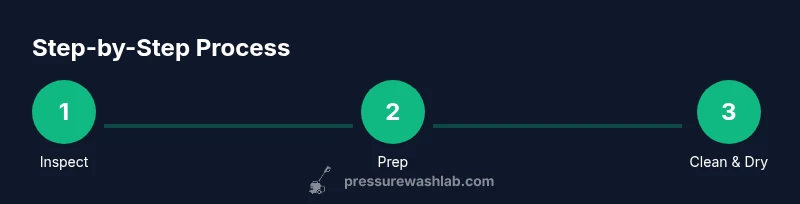
- 1
Inspect and plan
Survey the patio to identify materials, stains, cracks, and any fragile sections. Plan your cleaning path from the outer edges toward the center, so you don’t re-wet areas you’ve already cleaned.
Tip: Document any pre-existing damage to avoid claims of new damage after cleaning. - 2
Clear area and protect surroundings
Remove furniture and debris. Cover plants and nearby landscaping with plastic sheeting and close doors/windows to prevent overspray from matching the surface.
Tip: Keep a clear exit path in case you need to move away from a spill quickly. - 3
Test patch and nozzle choice
Apply cleaner to a hidden patch and test different nozzles on a small area. Start with a wide-angle nozzle and a gentle distance, evaluating the surface response before progressing.
Tip: If the patch dries unevenly, adjust distance or choose a milder setting. - 4
Set up equipment and safety checks
Connect hoses, verify power source, and attach the 40° nozzle for the initial pass. Wear PPE and ensure electrical outlets are protected from spray.
Tip: Never spray toward electrical outlets or vulnerable wiring. - 5
Begin cleaning with broad passes
Hold the wand at a safe distance and sweep from edge to edge in overlapping passes. Maintain a steady motion and avoid lingering on one spot.
Tip: Overlap passes by a third of the width to avoid stripes. - 6
Address stubborn stains
Switch to a narrower nozzle only for stubborn spots, and use a cleaner appropriate for the stain type. Rinse the area after treating with cleaner.
Tip: Do not use high pressure on sealed or delicate surfaces; test first. - 7
Rinse and assess
Rinse the entire surface with clean water to remove cleaner residues. Inspect for remaining stains and plan a follow-up pass if needed.
Tip: Avoid leaving cleaner residue that can attract more dirt. - 8
Dry, seal (if desired), and store
Allow the patio to dry completely before applying any sealant. If you plan to seal, follow product directions and allow ample curing time before heavy use.
Tip: Store equipment in a dry place away from direct sun after use.
Quick Answers
Is jet washing safe for all patio surfaces?
Jet washing works on many patios, but some materials require gentler cleaning or alternative methods. Always test a patch first and follow manufacturer guidelines.
Jet washing works on many patios, but some materials need gentler cleaning. Always test a patch first and follow guidelines.
What nozzle should I start with?
Start with a wide-angle (gentler) nozzle and a safe distance, then increase pressure only if the surface tolerates it.
Start with a wide-angle nozzle and a safe distance, then increase pressure if the surface tolerates it.
Can I use detergents with a pressure washer?
Yes, use detergents formulated for exterior surfaces and follow the label. Rinse thoroughly after applying cleaner.
Yes, use detergents made for exterior surfaces and rinse well after applying.
Why is a test patch important?
A test patch helps you see how the surface reacts and prevents permanent damage like etching or discoloration.
A test patch shows how the surface reacts and helps prevent damage.
How long does a patio jet wash take?
Most patios take about 60–90 minutes, depending on size and stain level. Plan extra time for sealing afterward.
Most patios take about an hour to an hour and a half, depending on size.
Do I need to seal my patio after cleaning?
Sealing after complete drying can protect surfaces from weather and stains; follow product instructions for curing times.
Sealing after drying helps protect surfaces; follow the product's curing times.
What safety gear should I wear?
Wear eye protection, gloves, sturdy shoes, and hearing protection for gas-powered units. Keep kids and pets away.
Wear eye protection, gloves, sturdy shoes, and hearing protection; keep kids away.
Watch Video
Key Takeaways
- Test patch before full cleaning
- Use correct nozzle and maintain distance
- Protect plants and electrical outlets
- Seal surface after thorough drying
- Inspect for damage and adjust technique