How to Make a Pressure Washer Quieter
Learn practical, safe steps to quiet a pressure washer: choose quieter models, add mufflers, reduce vibration, optimize nozzle usage, and maintain your unit for low-noise operation.


You will learn how to make a pressure washer quieter by selecting models with lower decibel ratings, installing simple mufflers, reducing vibration, and optimizing nozzle use. This guide covers practical steps, safety checks, and setup tips for homeowners, DIYers, and small operators seeking a calmer worksite. Start by inspecting the unit, choosing the right accessories, and following step-by-step actions.
Why Quiet Operation Matters
According to Pressure Wash Lab, quiet operation helps protect hearing, keeps neighbors happy, and avoids compliance issues with local noise ordinances. In practice, a quieter setup can make your DIY projects or small-business jobs more pleasant and productive. Reduced noise also lowers fatigue during long runs, improves communication on-site, and minimizes disturbance for families and pets nearby.
Beyond comfort, noise reduction typically comes without sacrificing cleaning power when you choose the right approach. The goal isn't to stifle performance but to manage energy and sound pathways. We'll explore proven tactics that blend engineering, attachment strategy, and routine maintenance to deliver meaningful quieting—without compromising safety or reliability.
How Noise Works in Pressure Washers
Noise from a pressure washer originates from several sources: the engine or motor (fuel burning or electric compressor), the high-pressure pump, the water flow and nozzle, and mechanical vibrations transmitted through the frame. Exhaust and intake play significant roles for gas units, while electric models emit less exhaust noise but can still rattle or hum when mounted poorly. In addition, the surface you work on—wood, concrete, or metal—can reflect and amplify sound, making it seem louder.
Understanding these sources helps you target quieting efforts efficiently: if the engine is loud, consider mufflers or better mounting; if the pump hum dominates, inspect the water path and check for cavitation; if vibration is high, add anti-vibration pads or a stable base.
Key Strategies for Lower Noise
A practical quieting plan combines multiple strategies rather than relying on a single fix. The most impactful ones include: engine/noise path management (mufflers, enclosure), vibration control (anti-vibration mounts, solid mounting), water flow optimization (lower nozzle pressure where possible, appropriate nozzle selection), and enclosure considerations (ventilated covers that don’t trap heat). Pressure Wash Lab analysis shows that a balanced approach—covering both engine and pump pathways—delivers the best noise reduction while preserving cleaning performance.
As you plan, quantify your baseline by noting the unit's general operating level, then test significantly after each change to confirm improvement.
Engine Noise Reduction
Gas engines generate the most audible noise. Start with a manufacturer-approved muffler or silencer designed for your engine size, and ensure the exhaust path is unobstructed. A shielded, ventilated enclosure can help direct sound away from the work area, but avoid sealing so tightly that overheating occurs. Keep air intakes clean and unobstructed, and replace worn gaskets or seals that rattle. Also, consider a model with a lower idle or idle-tiring throttle setting to reduce peak noise during startup.
Important: always follow the manufacturer’s guidelines. Do not modify exhaust components beyond what is approved, as improper changes can create safety risks and void warranties.
Pump and Water Noise Considerations
The pump and high-pressure water flow contribute a steady hum and vibrating thrum. Choose nozzle configurations that maintain cleaning power with lower flow or use wider fan nozzles where appropriate to reduce cavitation. Use longer, high-quality hoses to reduce pump load, and maintain clamps and couplings so the water path remains smooth. When cavitation occurs, inspect for worn impellers or blocked filters; cleaning or replacing these parts reduces grinding noise and improves efficiency.
Reducing pressure slightly during delicate jobs can also cut noise without harming results. If you must work at peak PSI, combine with vibration control for best outcomes.
Suspending Vibration for Quiet Performance
Vibration is a major amplifier of sound. Place the machine on a rigid, level surface and add anti-vibration mounting feet or mats. Rubber pads under the unit absorb a portion of the energy and prevent the frame from vibrating against the ground. For portable units, use a compact, purpose-built stand that keeps the body off soft ground. Secure hoses with clips to reduce movement that transmits vibration to surrounding surfaces.
A stable base not only lowers noise but also improves operator control, reducing accidental drops that could cause damage or leaks.
Sound-Damping Accessories and Enclosures
Sound-damping accessories, such as purpose-built enclosures or acoustic shields, can dramatically reduce perceived noise when used correctly—provided there is adequate ventilation. Choose ventilated options and avoid completely sealing the unit, which can cause overheating. Add acoustic foam panels on nearby walls or fences to absorb reflected sound. When using enclosures, ensure access panels remain easy to open for maintenance and cooling.
Intake and Exhaust Management
Air intake and exhaust design affect noise. Use intake screens that do not restrict airflow, and keep exhaust routes smooth and free of obstructions. If the unit uses a snorkel-style exhaust, angle it away from work zones and direct the discharge toward open space. Avoid wrapping heat shields or stacking components in a way that traps hot air and amplifies heat-related noise. Regularly inspect and clean air filters as clogged filters force the engine to work harder, increasing noise and wear.
Maintenance Practices for Quietness
Quiet operation is often a byproduct of good upkeep. Regularly replace worn hoses and seals, clean or replace air and fuel filters, and keep lubricants at recommended levels. Tighten loose panels and hardware because rattles are a common source of extra noise. Schedule routine inspections after heavy use seasons to identify worn parts that create excess vibration. Document changes to track improvements over time, and return to baseline if a modification creates new noise.
Field Testing and Verification
To verify improvements, perform controlled tests: start from a consistent baseline, run at typical tasks, and measure at multiple distances using a sound level app or smartphone decibel meter. Record the settings, sounds, and environmental conditions (wind, surface, temperature). Compare before-and-after data to confirm noise reductions. If results are not as expected, revisit the changes in reverse order to identify culprits and refine your approach.
Selecting a Quiet Model and Setup
When shopping for a quieter unit, look for explicit decibel ratings and guaranteed noise reductions in marketing materials. Favor models that publish on-board noise controls, mufflers, and vibration isolation. Consider electric models or gas units with well-designed mufflers and enclosed housings. Remember to check warranty terms before modifying a unit; some changes can void coverage. Pressure Wash Lab recommends prioritizing built-in quiet features and a stable, ventilated setup over ad-hoc modifications to achieve durable noise reduction.
AUTHORITY SOURCES
- OSHA. Noise and hearing conservation. https://www.osha.gov/noise
- NIOSH. Noise control. https://www.cdc.gov/niosh/topics/noise
- National Institute of Standards and Technology. Sound measurements. https://www.nist.gov
Tools & Materials
- Hearing protection(ANSI-rated earplugs or earmuffs; replace as needed during work)
- Muffler kit or approved exhaust silencer(Must be compatible with your engine size and model; verify warranty terms)
- Anti-vibration mounting pads(Rubber or silicone; provide a stable base on hard surfaces)
- Enclosure or sound-damping shield (ventilated)(Ensure ventilation to prevent overheating; avoid complete sealing)
- Ventilated stand or rack(Keeps unit off soft ground and reduces transmitted vibration)
- Hose clips and ties(Organize hoses to minimize movement and noise transmission)
- Air and fuel filters (spares)(Regular replacements reduce engine strain and noise)
- Basic hand tools(Screwdrivers, wrenches; used for routine checks and minor adjustments)
Steps
Estimated time: 45-90 minutes
- 1
Inspect current noise sources
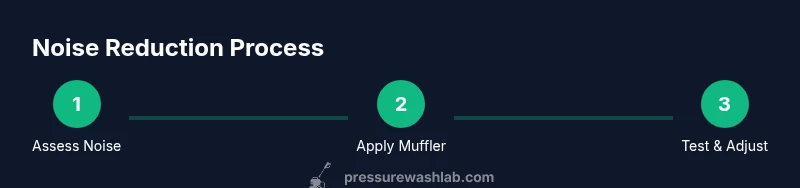
Identify the loudest components when the unit runs. Listen for engine exhaust, pump hum, and vibration through the frame. Document findings to target changes.
Tip: Use a friend to help listen from different positions around the unit. - 2
Install a manufacturer-approved muffler
Replace or upgrade the exhaust with an approved muffler designed for your engine. Ensure the path remains clear for heat and exhaust ventilation.
Tip: Do not modify exhaust routing beyond what is approved by the manufacturer. - 3
Add anti-vibration mounts
Place rubber pads or mounts under the base to reduce frame resonance transmitted to the ground.
Tip: Tighten mounts evenly to avoid creating new stress points. - 4
Install a ventilated enclosure (if needed)
Cover the unit with a ventilated shield to reflect noise away while allowing airflow for cooling.
Tip: Check clearances and ensure intake/exhaust are not blocked. - 5
Optimize nozzle and water flow
Select nozzles that balance cleaning power with lower flow where possible; reduce cavitation.
Tip: Avoid running at maximum PSI for long periods unless necessary. - 6
Secure hoses and cables
Organize hoses with clips to prevent movement and vibration transmission.
Tip: Stow cords away from traffic to reduce trip hazards and noise from movement. - 7
Clean or replace filters regularly
A clean intake prevents the engine from overworking and reduces associated noise.
Tip: Set a maintenance reminder after heavy-use periods. - 8
Test and compare sound levels
Run the unit under typical work conditions and measure at multiple distances with a phone app.
Tip: Document results so you can quantify improvements over time. - 9
Assess warranty implications
Review whether modifications affect warranty terms and plan accordingly.
Tip: If in doubt, consult the manufacturer before altering components. - 10
Evaluate overall performance
Ensure cleaning efficiency remains intact after quieting modifications and adjust as needed.
Tip: If performance drops, revert changes one by one to find the cause. - 11
Document changes
Keep a log of parts changed and settings used for future maintenance.
Tip: This makes troubleshooting easier and helps track noise improvements. - 12
Decide on long-term setup
Choose a quiet approach that is reliable, safe, and maintainable for your typical workload.
Tip: Prefer built-in quiet features and good ventilation over ad-hoc fixes.
Quick Answers
What exactly counts as a quiet pressure washer?
Quietness depends on the decibel rating, design features, and installation. Look for models with built-in mufflers, vibration isolation, and ventilated enclosures, and confirm the unit meets your local noise requirements.
Quietness depends on decibels and design features like mufflers and vibration isolation. Choose models with built-in quiet features and proper ventilation.
Can I retrofit a muffler on any pressure washer?
Retrofitting is only advisable if the aftermarket part is approved by the manufacturer and does not void warranties. Always check compatibility and safety guidelines before changing exhaust components.
Only retrofit if approved by the manufacturer and it doesn’t void the warranty. Check compatibility first.
Do electric pressure washers run quieter than gas ones?
Electric units tend to be quieter due to the absence of exhaust noise, but mounting, ventilation, and vibration can still affect perceived loudness. Modern gas units with mufflers can approach electric-level quietness with proper setup.
Electric washers are usually quieter, but good mounting and mufflers on gas units can close the gap.
Will enclosing a washer cause overheating?
Enclosures must provide ventilation to prevent overheating. Use ventilated shields and maintain clear air paths to safe operating temperatures.
Ensure there’s ventilation in any enclosure to avoid overheating.
Will quieting mods affect warranty?
Mods can affect warranty terms. Always verify with the manufacturer and document changes to avoid disputes later.
Modifications can void warranties; check with the maker before changing parts.
Is it safe to run a pressure washer indoors for quiet operation?
No. Pressure washers require ventilation and outdoor clearance. Indoor use can pose fire and ventilation risks.
No—pressure washers need outdoor or well-ventilated exterior space.
Watch Video
Key Takeaways
- Identify main noise sources through careful listening.
- Combine mufflers, vibration control, and proper enclosure for best results.
- Maintain the unit regularly to preserve quiet operation.
- Test and document improvements to validate your setup.