How to Make Pressure Washer Soap: DIY Guide for Beginners
Learn to craft effective pressure washer soap at home with safe dilution, tested recipes, and practical application tips. Pressure Wash Lab guides you through bases, testing, and maintenance for better cleaning results.


Learn how to make pressure washer soap with common household ingredients and a simple ratio. This guide explains what detergents to use, how to dilute for different spray pressures, and how to apply the solution safely to various surfaces. You’ll also find quick troubleshooting tips and safety cautions before you start.
Why DIY soap makes sense for your pressure washing projects
Choosing to make your own pressure washer soap can save money over time, especially for routine exterior cleaning. A homemade soap lets you tailor cleaning power to the task—light grime on siding, mildew on concrete, or oil stains on driveways—without relying on a single commercial formula. Pressure Wash Lab has found that simple, biodegradable detergents combined with proper dilution can deliver strong cleaning performance when used with compatible nozzles and spray patterns. This section explains the rationale behind DIY soap and when it makes sense to mix up a batch rather than reach for a store-bought concentrate. You’ll learn how to balance cleaning strength with material safety and environmental considerations.
- Consider the surface and soil level before choosing a formula
- Favor biodegradable, phosphate-free products when possible
- Align your soap choice with your pressure washer’s flow rate and nozzle
Safety first: protecting people, surfaces, and the environment
Safety should always come first when making and applying pressure washer soap. Wear gloves and eye protection, work in a well-ventilated area, and keep cleaners away from pets and plants. Pressure Wash Lab emphasizes testing any new soap on a small, inconspicuous patch to ensure it won’t discolor or damage the surface. Use hot water only if your equipment supports it and never mix cleaners with bleach, ammonia, or acids. Proper storage is essential: keep concentrates in clearly labeled bottles out of reach of children and heat sources, and store any diluted solutions in a sealed container for short durations. By following these guidelines, you minimize risks and maximize cleaning results.
- Always test on a hidden area first
- Use PPE and keep cleaners away from plants and pets
- Do not mix cleaners with bleach or ammonia
Understanding dilution and concentration: how PSI and nozzle affect soap usage
Soap performance is tightly tied to dilution and the pressure you’re using. Higher PSI and a concentrated formula can increase cleaning power but may also cause surface damage or excessive foaming. The goal is to apply a thin, even layer of pre-diluted soap that sits briefly to work on soil, then rinse thoroughly. Start with a light application and observe how the foam behaves, adjusting the dilution by adding water if the foam is too dense or the surface is not cleaning effectively. Always correlate your approach with your nozzle size and flow rate.
- Choose a dilution that produces visible but controlled foam
- If foam clings too long, dilute the mix more
- Rinse thoroughly to prevent residue that can attract dirt
The base formulas: choosing the right soap base for your project
Your soap base determines cleaning power, residue, and surface compatibility. Common, safe options include biodegradable dish detergents and gentle laundry detergents designed for cold water. Commercial pressure washer soaps often contain surfactants optimized for lifting grime, but you can often replicate many effects with a mild base plus safe auxiliary ingredients. When selecting a base, consider surface material (wood, concrete, metal, siding), soil type (dust, algae, oil), and the presence of any hazardous contaminants. Pressure Wash Lab recommends starting with a mild base for delicate surfaces and escalating only if needed after a small patch test.
- A mild, biodegradable base is safest for most homes
- Avoid harsh solvents on soft or painted surfaces
- For oily soils, a light degreaser formulated for outdoor use can help
DIY soap recipes: safe, simple options you can try at home
Option A: Simple dish-detergent soap (biodegradable and gentle)
- Start with a mild dish detergent diluted in water. The goal is a soapy layer that clings enough to lift grime but rinses cleanly.
- Apply with a spray pattern that covers the area evenly. Let it dwell briefly before scrubbing or agitating with a surface cleaner.
- Rinse thoroughly with a wide fan pattern nozzle.
Option B: Gentle laundry-detergent soap for tougher grime
- Use a light laundry detergent in water to create a slightly stronger solution for areas with mildew or heavy dirt.
- Apply, let sit briefly, then rinse completely.
- If you see streaking, reduce the detergent concentration or increase rinse pressure slightly.
Note: Always prefer biodegradable products and avoid mixing cleaners with bleach or ammonia. Pressure Wash Lab suggests logging the batch you made and any surface reactions to refine your formula over time.
How to test and adjust: a smart testing approach on inconspicuous areas
Testing is your best protection against damage and poor results. Apply a small amount of the pre-diluted soap to a hidden patch, then rinse and inspect after a short dwell time. If the test area looks clean and uniform, you’re ready to proceed with the full application. If there’s discoloration, residue, or surface etching, adjust by diluting the solution further or switching to a milder base. Document the result for future projects.
- Test on a small, inconspicuous patch
- Observe for color change, surface dulling, or residue
- Adjust dilution or base as needed
Application tips for different surfaces: concrete, wood, vinyl, and more
Different surfaces require different approaches. Concrete often tolerates a stronger solution and longer dwell time but can gray if left too long with soap. Vinyl siding benefits from a lighter touch to avoid streaks. Wood decks may need a milder base and shorter dwell times to prevent damage. For asphalt driveways, ensure you rinse thoroughly to prevent soap drying in crevices. Pressure Wash Lab highlights that testing remains essential across surfaces.
- Concrete: moderate concentration, brief dwell, thorough rinse
- Wood: milder solution, minimal dwell, careful rinsing
- Vinyl: light concentration, quick rinse, avoid streaks
Common mistakes and troubleshooting: what to watch for and how to fix it
Mistakes are common when trying DIY soaps. Overly concentrated formulas can leave sticky residues or cause foaming that obscures the spray pattern. Under-dilution leads to poor cleaning, while not rinsing completely can leave residues that attract new dirt. If you notice excessive sudsing, increase dilution or reduce dwell time. If staining occurs, switch to a milder base and re-test. Consistent testing helps you dial in the right mix.
- Don’t skip the test patch
- Rinse thoroughly after each pass to prevent residue
- Avoid combining cleaners that may interact negatively
Tools & Materials
- Pressure washer soap concentrate or biodegradable detergent(Choose biodegradable formula; avoid solvents)
- Water supply(Access to a clean water source)
- Measuring cup or graduated container(For safe dilution)
- Bucket or mixing container(Label clearly)
- Stirring stick or spoon(Plastic or stainless steel)
- Safety gear (gloves, goggles)(Protect hands and eyes)
- Test surface cloth(For testing on inconspicuous area)
- Foam cannon or compatible sprayer(Optional for even application)
- pH test strips(Optional quality check)
- Label and storage container(Keep out of reach of children)
Steps
Estimated time: 60-90 minutes
- 1
Gather and prep supplies
Collect all required items and create a clearly labeled work area. Check the surface you’ll treat and ensure it’s cool and dry. This step prevents accidental damage and makes the rest of the process smoother.
Tip: Lay a tarp or plastic sheet to protect nearby plants and surfaces. - 2
Choose a base soap
Select a gentle, biodegradable base suitable for outdoor use. Avoid harsh solvents or concentrates that could damage delicate finishes. If you’re unsure, start with the mildest option and test on a small patch.
Tip: Prefer biodegradable detergents to minimize environmental impact. - 3
Prepare the mixing container
Rinse and dry your bucket or mixing bottle before combining ingredients. Use the measuring cup to add the soap base and water, keeping the mixture well away from heat sources.
Tip: Label the container with date and contents. - 4
Mix and test dilution
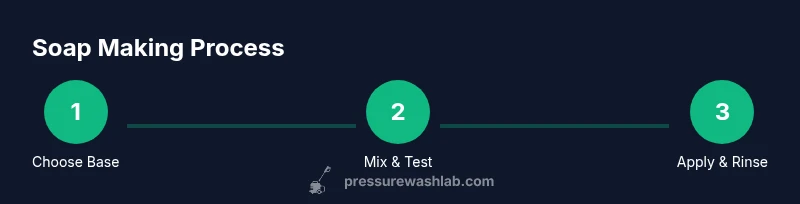
Add base and water gradually, stirring steadily to prevent suds from overflowing. Test a small area after applying a light layer and wait a few minutes to check for cleaning effectiveness and surface reaction.
Tip: If foam is excessive, dilute further. - 5
Apply the soap
Apply the prepared solution using a spray pattern that covers the surface evenly. Maintain a consistent distance from the surface to avoid streaks and ensure uniform cleaning.
Tip: Start from the bottom and work upward to prevent dirty runoff. - 6
Rinse and inspect
Rinse thoroughly with clean water, using a wide fan nozzle. Inspect for residues and repeat a gentle wash if needed. Ensure no soap remains on the surface to prevent re-soiling.
Tip: If you see streaks, re-test dilution or nozzle distance. - 7
Clean up and store
Rinse all equipment, dry, and store in a cool, shaded area. Keep concentrates in a sealed container away from children. Record what worked for future projects.
Tip: Clean your spray wand and foam cannon after use to prolong life.
Quick Answers
Can I use dish soap in a pressure washer?
Dish soap can work for light cleaning, but avoid regular concentration and always test on a small area. Dish soaps may not have the same surfactants as purpose-made pressure washer soaps, so cleaning power and rinsing behavior can vary. Use biodegradable formulas when possible.
Yes, dish soap can work for light cleaning, but test first and be prepared for varying results.
What is the safest soap for exterior surfaces?
The safest option is a biodegradable, phosphate-free detergent designed for outdoor use. It minimizes environmental impact while maintaining surface safety. Always perform a patch test before broad application.
Biodegradable, phosphate-free detergents are typically safest for exterior surfaces. Test first.
Do I need special equipment to apply the soap?
A standard spray wand or foam cannon works for most homeowners. For even coating, a foam cannon helps, especially on vertical surfaces. Ensure your equipment is compatible with the cleaning solution you choose.
A spray wand or foam cannon is usually enough; ensure compatibility with your soap.
How should I store homemade soap for long-term use?
Store any concentrated soap in a clearly labeled container away from heat and sunlight. Diluted solutions should be used within a short window and stored in a sealed bottle if needed. Always keep children and pets away from cleaning mixes.
Keep concentrates labeled and sealed, away from kids; use diluted solutions soon after mixing.
Is homemade soap effective for oil stains?
Homemade or mild detergents can help lift some oil stains, but heavy oil deposits may require a specialized cleaner or degreaser. Always test and consider surface compatibility before tackling tough stains.
Mild detergents can help with light oil stains; for heavy stains, consider a degreaser and test first.
Watch Video
Key Takeaways
- Start with a mild base and test before scaling.
- Dilution and dwell times matter as much as surface type.
- Always rinse completely to prevent residue and staining.
- Choose biodegradable options to protect the environment.