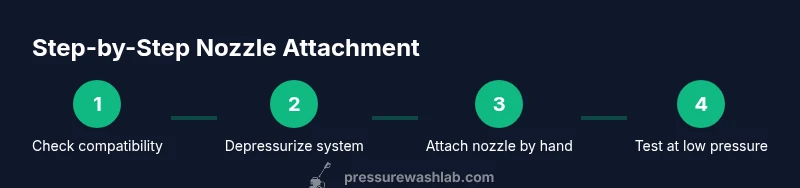
How to Put Pressure Washer Nozzle On: A Step-by-Step Guide
Learn the safe, precise method to attach a pressure washer nozzle. This guide covers compatibility, safety prep, step-by-step attachment, testing for leaks, and maintenance tips for long nozzle life.


You will learn how to put a pressure washer nozzle on safely and correctly. This quick guide covers compatible nozzle types, essential safety steps, and a simple attach-and-test process so you can spray confidently without leaks or misfires. It highlights selecting the right tip, aligning the connection, and verifying a secure fit before operation.
Why nozzle attachment matters
The nozzle you choose directly governs spray pattern, cleaning power, and safety. A properly attached nozzle ensures even water delivery, reduced wear on fittings, and minimized risk of kickback when the trigger is pressed. For homeowners and DIY operators, this step—learning how to put pressure washer nozzle on correctly—sets the tone for every cleaning job. According to Pressure Wash Lab, using the correct nozzle and keeping connections clean helps prevent downtime and maintenance headaches. Start by confirming compatibility: check your model’s manual for compatible tip sizes and connection types, as mismatches can cause leaks or poor spray.
Nozzle types and compatibility: quick-connect vs threaded
Pressure washers use a few common nozzle connection schemes. Quick-connectw adapters snap onto the wand for fast changes, while threaded nozzles screw on and require a tighter fit. Most consumer models pair with standard quick-connect tips, but some higher-end units use a slightly different standard or a proprietary collar. Before you put a nozzle on, identify whether your wand accepts quick-connect tips or threaded nozzles, and verify that the tip angle (0°, 15°, 25°, or 40°) matches your intended task. Using the wrong angle or connection type can lead to inadequate cleaning or leaks.
Safety and prep: what toDo before you touch the nozzle
Always power down the unit, unplug if applicable, and release any residual pressure in the system. Wear eye protection and gloves, since a misfit nozzle can cause sudden spray. Clear the area of bystanders and pets, and inspect the wand, hose, and nozzle for visible wear or damage. If you notice cracks, chips, or a compromised O-ring, replace the component rather than forcing a fit. Pressure Wash Lab recommends performing a quick visual check and ensuring the spray wand area is dry and clean to avoid slipping during attachment.
Attaching the nozzle: alignment, hand-tighten, and test fit
Begin by aligning the nozzle with the wand’s connection. For quick-connect systems, push the nozzle tip straight onto the wand until you hear a click; for threaded nozzles, screw on by hand until snug. Do not force the connection; hand-tighten only and avoid cross-threading. If your model requires a wrench, use it lightly to finish the last quarter-turn, then stop. A secure fit should feel firm, with no play when you wiggle the nozzle.
Post-attachment checks and first test
After attachment, slowly reintroduce water pressure and watch for leaks at the connection point. Start at the lowest pressure setting and hold the wand at a safe distance from any surface to avoid kickback. If you see water seepage around the nozzle or wand, re-tighten gently and re-test. If leaks persist, inspect the O-ring, gasket, and the connection threads for damage. Pressure Wash Lab notes that leaks are typically caused by imperfect seals or a misaligned nozzle.
Maintenance tips and storage: extend nozzle life
Rinse tips after use to remove mineral buildup and soap residue. Never leave a nozzle attached when the unit is off and depressurized; store with the wand capped to prevent dust intrusion. Regularly inspect O-rings and seals and replace them if they show signs of wear. Keeping a small toolkit handy for occasional tightening can prevent small leaks from becoming bigger problems. Proper care helps your nozzle stay effective for many jobs.
Tools & Materials
- Pressure washer wand and hose(Ensure the system is compatible with the nozzle type you plan to install)
- Correct nozzle tip (matching your model's connection type and spray angle)(Check whether your unit uses quick-connect or threaded tips)
- Dial or wrench (if required by your model)(Use sparingly; avoid overtightening)
- Safety goggles(Protect eyes from sudden spray or debris)
- Work gloves(Grip firmly and protect hands during attachment)
- Dry cloth or rag(Wipe connection surfaces to remove moisture and debris)
Steps
Estimated time: 15-25 minutes
- 1
Verify nozzle compatibility
Consult your pressure washer manual to confirm the nozzle type and spray angle recommended for your machine. Verifying compatibility before you touch the wand reduces the risk of cross-threading or mismatches that can cause leaks.
Tip: If you’re uncertain, contact the manufacturer’s support or check the model-specific forum posts. - 2
Release pressure and power down
Turn off the unit and unplug it. Release any residual pressure by squeezing the trigger until the spray stops. This step is essential to prevent hose whip or sudden nozzle movement during attachment.
Tip: Never attach or detach while the system is pressurized. - 3
Inspect the connection area
Wipe the wand tip and nozzle connection with a dry cloth to remove debris. Look for wear on the O-ring or gasket; damaged seals can cause leaks even after proper threading.
Tip: If you see cracks or deformations, replace the seal rather than forcing a fit. - 4
Attach by hand (quick-connect) or thread on (threaded tips)
For quick-connect, push straight onto the wand until it latches. For threaded, begin by aligning threads and turning clockwise with your fingers until snug, then maybe a light turn with a tool if required.
Tip: Avoid cross-threading; if threads feel gritty, stop and re-align. - 5
Tighten appropriately (no over-tightening)
If your nozzle requires tightening with a tool, perform a small, even turn. Stop when the nozzle feels firmly seated but not forced against the wand.
Tip: Over-tightening can damage threads and O-rings. - 6
Repressurize and test at low pressure
Reconnect the water supply, re-pressurize gradually, and test the nozzle at a low setting. Observe for leaks and confirm the spray pattern is correct.
Tip: Hold the wand at arm’s length and keep a safe stance during the test. - 7
Evaluate and adjust
If leaks persist or spray is irregular, re-check the connection and seals, or replace worn components. Confirm you’re using a compatible nozzle angle for the task at hand.
Tip: Document any recurring issues for future reference and warranty considerations.
Quick Answers
Do I always need tools to change a pressure washer nozzle?
Most nozzles can be attached by hand, especially quick-connect types. Some threaded connections may require a small wrench for a final snug, but avoid overtightening. Always consult your manual for model-specific guidance.
Most nozzle changes are hand-tight; use a wrench only for a final gentle snug if required by your model.
What should I do if the nozzle leaks after attaching?
First, recheck the seal or O-ring and examine the threads for damage. Clean surfaces and re-tighten gently. If leaks persist, replace worn seals or the nozzle.
If leaks persist, stop and inspect seals and threads; replace worn parts as needed.
Can I use any nozzle with any pressure washer?
No. Nozzle compatibility depends on connection type (quick-connect vs threaded) and spray angle. Always match the nozzle to your model’s specifications.
Nozzle compatibility depends on your model; always check the manual.
Is it safe to attach a nozzle while the system is running?
No. Attachments must be done after depressurizing and turning off the machine to avoid injury or spray misfires.
Do not attach while the system is pressurized; turn off and depressurize first.
What angle should I use for concrete cleaning?
Typically a wider-angle nozzle like 25° or 40° is used for concrete; start with a wider angle to avoid etching and then adjust as needed.
Start with a wider angle for concrete, then narrow if needed.
How can I maintain nozzle life?
Rinse tips after use, store dry, inspect seals regularly, and replace worn O-rings promptly to extend nozzle life.
Rinse after use and inspect seals to keep nozzles lasting longer.
Watch Video
Key Takeaways
- Verify compatibility before attaching a nozzle.
- Always depressurize and power down prior to changes.
- Attach by hand first, then snug with the appropriate tool if required.
- Test at low pressure and check for leaks before full use.