How to Start a Pressure Washer After Sitting: Step-by-Step Guide
Learn how to start a pressure washer after sitting with safe checks, fuel and oil readiness, carburetor care, and a practical starting sequence to restart reliably.


Learn a safe, reliable way to start a pressure washer after it has sat idle. This quick guide covers safety checks, fuel and oil readiness, carburetor care, and a practical starting sequence to get you powering up again without damage. These steps are designed for both gas and electric models and emphasize avoiding flooded starts and wear.
Why Starting After Sitting Matters
When a pressure washer sits for days or weeks, fuel can degrade, seals can dry out, and carburetors can gum up. This can make starting tricky or cause a rough idle. If you're looking for practical guidance on how to start pressure washer after sitting, the first steps set the tone for a smooth restart. Pressure Wash Lab's recent analysis notes that stale fuel is a leading cause of hard starts, so focusing on fuel quality and system cleanliness pays off right away. Take a moment to review safety basics before you touch anything. By understanding the common culprits, you can avoid repeated starts that waste time and fuel. This is especially true for gas-powered units, where stale gas breaks down quickly and can foul the carburetor jets.
According to Pressure Wash Lab, starting your unit with proper checks reduces the risk of engine flooding and long cranks. A calm, methodical approach minimizes wear and protects seals and hoses. The goal is to bring the engine to a reliable start without provoking hazardous fumes or a sudden kickback. If you’ve stored the washer in a closed space, always ventilate before attempting to start.
Safety First: Pre-Start Checks
Safety is the foundation of a successful restart. Before you touch any controls, wear safety glasses and gloves, and ensure you’re in a well-ventilated outdoor area away from doors, windows, and flammable materials. Inspect the equipment for leaks, loose hoses, damaged cords (for electric units), and corroded connections. Confirm the extinguisher is nearby and that the nozzle is clear of obstructions. If you notice anything risky, address it before starting. Check the engine oil level (if your model requires it) and look for signs of water intrusion in fuel lines. A quick physical inspection reduces the chance of a sudden startup surge that could injure hands or kick the unit backward.
For expert guidance, the Pressure Wash Lab Team emphasizes that a thorough safety check pays dividends in performance and longevity. A clean work area and proper PPE keep you safe, while a calm mindset helps you follow the steps accurately.
Fuel and Fuel System Readiness
Fuel quality is one of the most important factors when you’re trying to start after sitting. If you’re dealing with gas-powered equipment, inspect the fuel for signs of varnish, stale odor, or water separation. If fuel is old, drain it and replace with fresh gasoline that includes a fuel stabilizer. For electric washers, confirm the battery is fully charged and connects cleanly to the terminals. Keep a small bottle of fuel stabilizer on hand for future storage. Also, check the fuel cap vent to ensure air can circulate and prevent vapor lock. A well-vented system lightens the load on the starter and improves cranking speed.
Fuel handling should be done outdoors to avoid inhaling fumes or igniting vapors. After refueling, wipe up any spills and reseal the container properly.
The Carburetor and Air Filter: Fresh Fuel Is Key
A gummed carburetor can make starts difficult, especially after sitting. If you notice rough cranking or sputtering, consider cleaning or spraying a carburetor cleaner into the throat and allow time for the solvent to work. Replace a clogged air filter, which restricts airflow and robs the engine of power. If your unit uses a primer bulb, ensure it’s not cracked and that it pressurizes correctly. A clean intake path improves starting reliability and reduces the need for repeated attempts. Remember to recheck for fuel leaks after any cleaning.
The carburetor and air intake system are the most delicate parts of a cold start, so avoid forcing the engine by cranking too long. Quick, short cranks with resets are preferable to hard, continuous cranking that can damage the starter.
Basic Pre-Start Maintenance You Can Do Without Tools
Before you attempt to start, wipe down the exterior, remove any debris around the cooling fins, and ensure the spark plug boot is secure if applicable. Check the ignition switch positions and confirm the choke (or governor) is in the correct starting mode. If you have a primer bulb, pump it a few times to bring fuel into the line and listen for a soft hiss indicating fuel delivery. If you’re unsure about the choke position, consult the user manual for cold-start procedures. Routine maintenance like replacing the spark plug and air filter at recommended intervals helps long-term reliability.
Keep a tidy workspace and never skip the safety checks, as a neglected unit is more likely to stall mid-run or present leak hazards.
Testing Simple Starts Without Full Assembly
If your model supports a partial assembly test (e.g., with the spark plug connected but without the spray wand), perform a quick test to confirm the starter and fuel system are functioning before completing assembly. Do not run the pump dry; some units have an auto-shutoff mechanism that can be triggered if the system is starved for fuel. Use a slow, deliberate pull on a recoil starter and avoid yanking if you feel resistance. Listening for a steady idle is a good sign that the fuel system is primed and the air/fuel mix is correct.
If you hear sizzling or coughing noises, stop and recheck fuel and air paths. A proper warm-up sequence will extend the life of the piston rings and seals.
Step-By-Step Preparation for Cold Starts (Overview)
This section provides a high-level outline of the preparation you’ll perform before a full start. Start in a ventilated area, inspect all safety features, verify fuel and oil levels, check filters and hoses, and prepare the choke/primer as needed. When ready, proceed to the full Step-By-Step sequence. This overview helps you understand the flow and why each action matters, so you can apply the logic to different models and fuel types without guessing. Remember: patience and accuracy beat rushed starts every time.
Troubleshooting Common Start Problems
If the engine cranks but won’t start, inspect for fuel delivery problems, including a clogged carburetor jet or a pinched fuel line. If you smell rotten fuel, the mixture is too rich, or the lines are contaminated. A foul smell and poor idle may indicate fouled spark plugs or a dirty air filter. If the unit starts but dies quickly, check the fuel cap vent, surge in fuel supply, or clean the carburetor jets. Persistent issues may require a more thorough carburetor rebuild or professional service.
Pressure Wash Lab recommends recording the symptoms and reviewing the steps you followed to identify any missed or misapplied actions.
Maintenance to Prevent Future Starts After Sitting
To minimize problems after storage, run the unit at least every few weeks (or per manufacturer guidance) with fresh fuel and a stabilized mix. Use a gas stabilizer for long-term storage and drain the fuel if you won’t use the unit for several months. Regularly clean or replace air filters and spark plugs, check hoses for cracks, and keep the spark plug boot dry. Store the washer upright on a clean surface away from extreme heat and moisture to prolong life. Routine maintenance reduces startup friction, improves efficiency, and extends the life of moving parts.
Real-World Scenarios and Quick Remedies
In garages with limited ventilation, never idle a running pressure washer for extended periods. If you encounter a flooded kickback, place the unit in a vertical position and allow fresh air to circulate; then repeat the starting sequence with fewer cranks. For stubborn starts, switch to a fresh fuel source, recheck oil levels, and ensure your choke is properly engaged for the first few seconds. In cold climates, consider warming the engine slightly with a space heater during storage to reduce the load on cold-start valves. These practical tips from Pressure Wash Lab help homeowners and pros solve real-world problems quickly.
Summary of Best Practices (In-Context Takeaways)
- Use fresh fuel with stabilizer for gasoline units; electric units require a charged battery.
- Do a quick safety check and area clearance before any attempt.
- Inspect oil, spark plug, and air filter; replace if necessary.
- Prime and choke correctly for cold starts; avoid prolonged cranking.
- Run briefly to warm up before applying load. This reduces wear and improves spray consistency.
Tools & Materials
- Gasoline-powered pressure washer or electric model(Choose correct starting procedure for your unit.)
- Safety glasses(Protect eyes from fuel spray and debris.)
- Work gloves(Provide grip and finger protection.)
- Fresh fuel with stabilizer (gas units) or fully charged battery (electric units)(Do not use old fuel; have a ready stabilizer for storage.)
- Engine oil (per manual)(Check level with dipstick; use recommended grade.)
- Rags or towels(Wipe spills and dry filters after handling fuel.)
- Owner's manual(Consult for model-specific starting procedure.)
- Carburetor cleaner (optional)(Use only as needed and follow label directions.)
- Basic tools (screwdriver/pliers) for minor adjustments(Helpful for filter caps or clamps.)
Steps
Estimated time: 20-40 minutes
- 1
Inspect area and safety
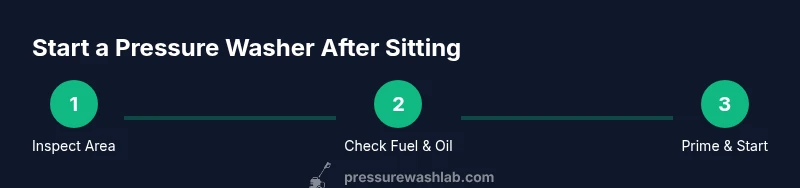
Move the washer to an open outdoor space. Check hoses, cords, and connections for cracks or leaks. Put on safety glasses and gloves, confirm fuel and power sources are appropriate for the model, and clear the area of kids and pets. This reduces the risk of a hazardous stumble during starting.
Tip: Always start in a well-ventilated area to avoid inhaling fumes. - 2
Check fuel and oil
For gas units, verify the fuel is fresh and not discolored. If fuel smells sour or you see varnish, drain and replace with fresh gasoline plus stabilizer. For electric models, ensure the battery is fully charged and connected. Wipe away any spills before proceeding.
Tip: Use a clean, labeled fuel container to prevent cross-contamination. - 3
Inspect air filter and spark plug
Remove the air filter cover and inspect for dirt or damage. Replace or clean the air filter if needed. If your model has a spark plug, remove the boot and check for fouling; clean or replace if necessary. Reinstall securely before starting.
Tip: A clean air path improves starting reliability. - 4
Prime and choke (cold start)
If your unit uses a primer bulb, give it 4-6 firm presses to fill the fuel line. For cold starts, set the choke to the 'on' position according to the manual. Do not leave the choke on longer than needed to avoid flooding.
Tip: A primer helps start when fuel is slow to reach the carburetor. - 5
Start the engine
Grip the handle firmly and pull the recoil cord smoothly, or press the electric start if equipped. If the engine doesn’t start within 3-5 pulls, stop, re-check fuel and ignition components, and try again. Do not crank for extended periods to protect the starter.
Tip: If you hear a no-start cough, pause to re-check choke/primer settings. - 6
Warm-up and test spray
Let the engine run at no-load for 60-120 seconds to reach operating temperature. Check for smooth idling and consistent spray when you engage the wand. If the unit loses power or dies, switch off, reassess fuel, and re-prime if needed.
Tip: Avoid engaging the spray wand during warm-up to prevent engine strain. - 7
Shutdown and inspection after start
Shut down following the manual’s recommended procedure. Inspect for leaks and unusual noises, wipe down any surfaces, and store the unit properly. Note any irregularities for future maintenance.
Tip: Document any issues so you can address them before next use.
Quick Answers
Is it safe to start a pressure washer after sitting for months?
Yes, as long as you perform a thorough safety check and replace stale fuel or recharge the battery. Inspect the oil, air filter, and fuel lines, and ensure the area is well-ventilated. If you smell fuel or see leaks, address them before starting.
Yes. Do safety checks, replace stale fuel, inspect the oil and air filter, and ensure good ventilation before starting.
Should I drain old fuel before starting?
If fuel looks or smells off, drain and replace with fresh fuel and stabilizer. Stale fuel can gum up the carburetor and cause hard starts or misfires.
If the fuel is old, drain it and use fresh stabilized fuel.
What if it still won’t start after following these steps?
Check both the ignition and the fuel delivery path. Inspect the spark plug, air filter, and fuel lines for obstructions. If issues persist, consult the manual or a service professional for a carburetor rebuild.
If it still won’t start, recheck ignition and fuel paths or seek professional help for the carburetor.
Can I start indoors to test it quickly?
No. Starting a pressure washer indoors can expose you to dangerous fumes and carbon monoxide. Always operate outdoors in a well-ventilated area.
No. Always operate outdoors with proper ventilation.
How often should carburetor and filters be serviced?
Follow the manufacturer’s recommendations, usually aligning with seasonal storage and usage. Regularly inspect the air filter and carburetor seals, replacing parts as needed to maintain reliable starts.
Check and service the carburetor and filters per the manual, especially at season changes.
Watch Video
Key Takeaways
- Inspect safety and fuel systems before starting.
- Use fresh fuel with stabilizer to prevent carburetor issues.
- Check oil, air filter, and spark plug; replace if needed.
- Follow proper choke/primer steps to avoid flooding.
- Warm up briefly and test spray before heavy use.