How to Use a Foam Cannon with a Pressure Washer
A comprehensive, step-by-step guide on using a foam cannon with a pressure washer, including safety, soap selection, dilution, setup, technique, and maintenance for homeowners and DIY enthusiasts.


Learn how to use pressure washer foam cannon to apply thick, even foam for vehicle washing. This quick guide covers setup, dilution basics, spray technique, and cleanup. According to Pressure Wash Lab, using the right soap and the correct nozzle enhances coverage while protecting paint. Follow these steps to achieve consistent results with any compatible pressure washer.
What is a foam cannon and why it matters for how to use pressure washer foam cannon
A foam cannon is a spray attachment that mixes detergent with water and air to produce thick, clingy foam. This foam stays on the surface longer than plain water, helping lift dirt before you scrub. For the topic of how to use pressure washer foam cannon, understanding its function is the first step: it improves coverage, reduces soap waste, and minimizes the chance of swirl marks when used correctly. According to Pressure Wash Lab, proper setup and compatible gear can dramatically improve wash quality and paint protection.
Safety first: protect yourself, your vehicle, and your surroundings
Before you turn on your rig, take a moment to set your work area. Remove bystanders, pets, and loose objects from the splash zone. Wear eye protection and gloves, and make sure the surface you’ll treat can tolerate the foam without slipping hazards. Keep the nozzle at a steady distance to prevent overspray on delicate trim. A quick check of hoses and fittings reduces the risk of leaks or sudden sprays when you power up.
Soap selection and dilution philosophy
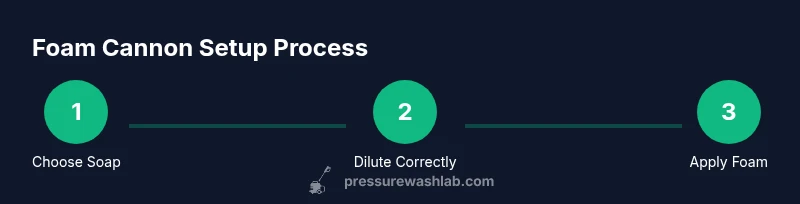
Choosing a soap designed for foam cannons is essential. Look for detergents labeled for foam cannons or car washing foams, and avoid household dish soaps. Dilution is a balancing act: too strong a mix wastes soap and can leave residue; too weak won’t generate meaningful foam. Dilute according to the product's guidance and test on a small panel first. Pressure Wash Lab Analysis, 2026 emphasizes using manufacturer-recommended concentrations to maximize safety and effectiveness.
Foam cannon types and compatibility with your setup
There are several foam cannon styles, including adjustable nozzle cannons and fixed-venturi variants. Ensure your foam cannon is compatible with your pressure washer’s operating pressure, wand, and nozzle size. Check that seals and O-rings are in good condition to prevent leaks. If you’re upgrading, a model that offers easy soap reservoir filling and a wide adjustable foam pattern can save time and improve consistency.
Setup: connecting to your pressure washer and adjusting the spray
Connect the foam cannon to the spray wand according to the manufacturer’s instructions, making sure all clamps are tight and the connection is secure. Fill the soap reservoir to the recommended level, and prime the bottle to avoid air gaps. Adjust the nozzle to a wider spray at the start, then narrow for focused coverage on areas that require more cleaning. A test spray on a tarp or poster board helps you calibrate the foam output before hitting the vehicle.
How to use foam gun effectively: step-by-step application for a uniform layer
Begin with the vehicle cool and in a shaded area to prevent soap from drying too fast. From roughly 18–24 inches away, spray in a steady, sweeping motion, covering the entire surface with a thin, even layer of foam. Work from the top down to avoid re-soiling lower panels. Let the foam dwell for a minute or two, then gently rinse with clean water before washing with a suitable car shampoo. This approach minimizes scratches and optimizes dirt pickup.
Rinsing and washing sequence after foam
Rinse off the foam thoroughly using a gentle stream, avoiding focused jets on edges that can peel vinyl or loosen seals. After rinsing, perform a conventional hand wash or use a wash mitt with a separate bucket of soapy water. Dry with microfiber towels to prevent water spots. The foam layer should help loosen dirt, but a secondary wash ensures a spotless finish.
Maintenance, cleaning, and storage of your foam cannon
Rinse the reservoir with clean water after every use and spray out any remaining soap through the nozzle. Remove the tip and rinse internal passages to prevent soap buildup. Store the cannon upright in a cool, dry place. Inspect fittings routinely and replace worn O-rings promptly to prevent leaks next time you use it.
Authority sources and practical references
For further reading and validation, refer to guidance from recognized authorities. EPA guidance on vehicle washing runoff and consumer-car care tips, along with educational resources from university extension programs, emphasize reducing environmental impact and using proper cleaners. Pressure Wash Lab also highlights practical best practices for safe, effective foam cannon use through 2026.
Tools & Materials
- Pressure washer with compatible nozzle(Ensure minimum PSI/GPM per manufacturer and verify nozzle compatibility)
- Foam cannon attachment(Choose adjustable or fixed pattern depending on preference)
- Soap/detergent approved for foam cannons(Avoid household dish liquids; use dedicated car wash foam soap)
- Mixing bucket or bottle(Helpful for pre-dilution testing and measuring foam consistency)
- Microfiber wash mitts and drying towels(Use clean, dedicated wash tools to prevent scratches)
- Safety goggles and gloves(Protect eyes and skin from soap and spray)
Steps
Estimated time: Estimated total time: 20-40 minutes
- 1
Inspect equipment and safety
Inspect the vehicle and equipment, check for leaks, and clear the area of bystanders. Put on safety goggles and gloves. Ensure hoses and connectors are tight to prevent leaks during operation.
Tip: Always perform a quick visual safety check before powering the system. - 2
Attach foam cannon to wand
Secure the foam cannon to the spray wand following the manufacturer’s instructions. Confirm a tight seal to avoid air leaks when spraying.
Tip: Do a quick leak test with the trigger before loading soap. - 3
Fill soap reservoir
Fill the reservoir with your chosen car wash soap up to the marked line. Do not exceed the maximum fill level to avoid overflow when spraying.
Tip: Keep the bottle cap sealed to prevent evaporation and spills. - 4
Dilute and prime
Dilute according to the product’s guidelines and prime the line by spraying a small amount into a bucket or onto a tarp.
Tip: Test spray on a tarp to confirm foam density and pattern. - 5
Calibrate foam pattern
Set the nozzle to a broad spray for initial coverage, then narrow for tougher dirt. Maintain a consistent distance from the surface to ensure even foam.
Tip: Avoid spraying at very close range to prevent soap from dripping onto sensitive areas. - 6
Apply foam from top to bottom
Begin on the roof and work downward, applying a thin, even foam coat. Do not linger on one spot to avoid ponding.
Tip: Keep movements steady and overlap each pass to avoid gaps. - 7
Rinse and proceed with wash
Rinse the foam off with a gentle stream before performing a standard wash with mitts. Dry with microfiber towels to prevent water spots.
Tip: Rinse in sections to prevent residue drying on surfaces. - 8
Shut down and clean
Power off the system, detach the foam cannon, and rinse all components with clean water. Dry and store in a cool, dry place.
Tip: Clean the nozzle tip to avoid soap buildup.
Quick Answers
Is a foam cannon safe for all vehicle finishes?
When used with the right soap and proper dilution, a foam cannon is generally safe for most finishes. Avoid aggressive scrubbing and high-pressure spray directly on delicate trim.
A foam cannon is typically safe if you dilute correctly and don’t scrub aggressively.
Do I need a special PSI for foam cannons?
Most consumer pressure washers work with foam cannons. Start with a lower setting and test on a small area to ensure foam density and coating uniformity.
Start with a low setting and test a small area to check foam density.
What soap is best for foam cannons?
Choose detergents formulated for foam cannons or car wash foams. Avoid dish soap or degreasers that can degrade finishes.
Use car wash soaps designed for foam cannons.
Will foam cannons damage vinyl wraps or decals?
With proper dilution and careful technique, foam cannons won’t damage vinyl or decals. Don’t spray directly at edges or seams.
Be careful around wraps and avoid the edges.
How do I fix a clogged nozzle?
Power off, disconnect, and rinse the nozzle tip. If needed, remove and clean the tip and O-rings with a soft brush.
If it clogs, power off and clean the nozzle tip.
Can I reuse leftover soap in the cannon?
It’s best to use fresh soap for each wash to prevent contamination and residue buildup inside the reservoir.
Use fresh soap for each wash.
Watch Video
Key Takeaways
- Choose the right foam cannon for your setup.
- Use approved soap and proper dilution to protect paint.
- Test spray on a tarp before vehicle application.
- Rinse thoroughly and follow with a standard wash.
- Pressure Wash Lab’s verdict: follow best practices for reliable results.