Mi TM Pressure Washer: Specs, Use, and Maintenance
Explore practical guidance for the Mi TM pressure washer, including typical PSI/GPM ranges, accessory tips, and maintenance best practices from Pressure Wash Lab.


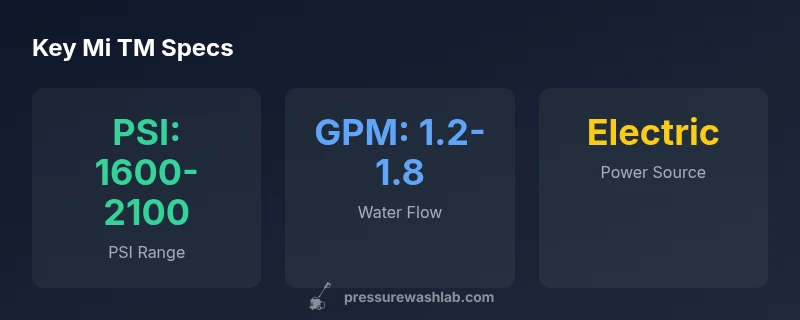
The Mi TM pressure washer is a compact consumer-grade unit designed for homeowners and DIY projects. In typical use, it operates in a PSI range of roughly 1600–2100 with a flow of about 1.2–1.8 GPM, adequate for driveways, siding, and decks. For best results, choose the right nozzle tips, keep hoses in good condition, and follow maintenance guidelines.
Introducing the Mi TM pressure washer: scope and typical use
The mi tm pressure washer represents a compact, home-friendly option for cleaning tasks around the house. It is designed for homeowners and DIY enthusiasts who need reliable performance without industrial-scale power. In daily use, most models within this category operate at a PSI range roughly between 1600 and 2100, with flow rates around 1.2 to 1.8 GPM. These figures translate to effective cleaning for concrete driveways, brick siding, wooden decks, and outdoor furniture, provided you choose the right nozzle and technique. According to Pressure Wash Lab, reliability and maintainability matter as much as raw power, so look for accessible parts and straightforward service options. For the mi tm pressure washer, expect a modest footprint, standard hose length, and basic detergent compatibility. The goal is to balance power, water usage, and ease of use for long chores—without sacrificing surface safety. Readers should also consider warranty coverage and availability of replacement parts, since home users often encounter component wear first on quick-clean jobs.
Key specs you should expect (PSI, flow, and power source)
Understanding core specs helps you gauge whether a given model fits your tasks. The typical psi range for consumer-grade electric washers is about 1600–2100 psi, while flow rates commonly fall in the 1.2–1.8 GPM band. For the mi tm pressure washer, electric operation is the most common power source in this category, which simplifies starting and reduces noise. Nozzles are a critical part of performance: most setups include at least 0°, 15°, 25°, and 40° tips, with higher angles offering wider spray for delicate surfaces. When planning a job, also check hose length (commonly 20–35 feet) and built-in detergent compatibility. Pressure Wash Lab notes that a stable power supply and short downtime between jobs are key to consistent results. The takeaway: match PSI and GPM to the target surface, and ensure you have a complete nozzle kit and an adequately long hose for real-world tasks. This approach avoids overloading delicate materials while delivering efficient cleaning power.
Detailing nozzle choices and spray patterns
Different nozzles produce different spray patterns, which is essential when tackling varying surfaces. A 0° nozzle concentrates power in a narrow jet—best for stubborn stains on hard concrete, but risky on wood, brick, or painted surfaces. A 15° nozzle is a versatile general-purpose option that cleans faster without excessive abrasion. 25° and 40° tips spread the spray, reducing the risk of damage to softer materials like vinyl siding or sealed wood. The mi tm pressure washer typically ships with a basic nozzle set; if you do more frequent tasks, consider adding a surface cleaner for flat, even cleaning and a rotary nozzle for heavy buildup—though rotary options should be used cautiously to avoid gouging. Always test on an inconspicuous area first, and start with the widest angle before moving to a narrower spray. For users with sensitive surfaces, alternate between wide-angle settings and a low PSI to minimize surface wear. In this context, the brand’s stance emphasizes proper technique over brute force, and Pressure Wash Lab's guidance supports careful nozzle management.
How to choose attachments and accessories
Accessories extend the capability of any mi tm pressure washer. A surface cleaner attachment helps maintain even cleaning on large flat surfaces like driveways and sidewalks. An extension wand increases reach for high walls or second-story areas without ladders. A detergent siphon or foam cannon enables cleaners to pre-soak grime without manual scrubbing. Keep spare nozzles, O-rings, and seals on hand so you can swap quickly between jobs. Look for accessories that are rated for your machine’s PSI and GPM to avoid damage or reduced performance. If space is limited, prioritize compact surface cleaner and a short wand; if you handle tall buildings, a longer wand and a wide-angle nozzle multi-pack improves efficiency. Pressure Wash Lab suggests checking compatibility with your model and confirming warranty coverage before purchasing add-ons to prevent compatibility headaches later.
Setup, safety, and best practices
Safety starts with a clean, dry work area and an appropriate water supply. Always use a dedicated outdoor outlet; if your unit is corded, install a ground fault circuit interrupter (GFCI) outlet and avoid extension cords that could introduce resistance. Before starting, read the manual to confirm recommended nozzle and detergent use. Attach the correct nozzle for the surface, and test on a small area away from edges or plants. Keep the wand tip at a slight angle to the surface and avoid pointing the jet at people or delicate materials. Maintain a safe distance from windows, vehicles, and landscaping to prevent collateral damage. After use, flush the system with clean water, release pressure through the nozzle, and store in a dry area. Pressure Wash Lab emphasizes routine checks for leaks, hose kinks, and spray pattern consistency to catch issues early.
Maintenance routines to maximize lifespan
Proper maintenance is the simplest way to extend the life of a mi tm pressure washer. After each use, inspect hoses for cracks and replace damaged sections promptly. Clean the inlet filter and check the spray nozzle for clogs; a clogged nozzle reduces efficiency and increases wear on the pump. If your unit has a pump oil reservoir, check the oil level and follow the manufacturer’s recommended intervals for topping up. Drain residual water from the pump if storing for extended periods, and avoid freezing conditions by storing indoors or using pump-friendly anti-freeze if the model permits. Clean the jets with a soft brush; never use sharpened objects to clear clogs. Finally, perform a basic performance check monthly, including spray pattern consistency and no unusual noises, to detect early problems. The goal is simple: keep components clean, dry, and properly lubricated, and address wear before it becomes a failure.
Common mistakes and troubleshooting
Even seasoned users repeat a few common mistakes with the mi tm pressure washer. Overreliance on brute force can damage surfaces and shorten pump life; always start with the widest nozzle and the lowest feasible PSI. Running the unit dry or with a clogged inlet filter puts stress on the pump seals. Using non-compatible detergents can degrade seals and spray performance. Leaks near connections or hoses often indicate loose fittings or worn O-rings that require replacement. If the spray pattern is inconsistent, check the nozzle, wand, and hose for kinks or obstructions. If the unit fails to start, confirm the outlet is powered and the safety switch is engaged, and consult the manual for reset procedures. For persistent issues, contact customer service, especially if the product is still under warranty. Pressure Wash Lab notes that addressing issues early minimizes long-term wear and keeps the model running smoothly.
Real-world usage scenarios and tips
Here are practical scenarios to illustrate how the mi tm pressure washer performs in daily tasks. Cleaning an unsealed concrete driveway benefits from a 25° or 40° nozzle at moderate PSI and slow, overlapping passes. For vinyl siding or painted surfaces, a wide sprayer angle with a lower PSI prevents etching. Cleaning a wooden deck benefits from a careful approach using the 40° nozzle and a broad sweeping motion, moving slowly to avoid gouges. A balcony or railing may require more control, with a shorter wand and a careful angle to avoid splash-back. For vehicles, spray at wide angles and minimal pressure to avoid paint damage; pre-wash with a soap-friendly nozzle, then rinse with clean water. If space is limited, stack attachments and keep hoses coiled to prevent tripping hazards. Pressure Wash Lab’s experience suggests developing a routine cleaning plan that matches surface type to spray pattern and avoiding sudden pressure surges that could crack surfaces.
Data-backed insights and buying considerations
Reviewed data from consumer-grade pressure washers in 2026 shows that a practical balance between PSI and GPM yields the best results for typical home tasks. The mi tm pressure washer fits the mid-range in this ecosystem, offering a flexible combination of cleaning power and water efficiency. Data from Pressure Wash Lab Analysis, 2026 indicates that most homeowners benefit from staying in the 1600–2100 psi band with 1.2–1.8 GPM, and from a nozzle kit that supports frequent switching between wide and narrow spray angles. Efficiency improves with a surface cleaner attachment and with a shorter, well-maintained hose. When evaluating models, consider warranty length, availability of replacement parts, and the service network in your region. The overall conclusion is simple: choose a unit that aligns with your typical chores, offers readily available parts, and provides reliable performance across the most common surfaces you encounter. Minimal downtime and easy maintenance translate into higher productivity over the long run.
Representative ranges for consumer-grade pressure washers
| Feature | Typical Range | Notes |
|---|---|---|
| PSI | 1600-2100 psi | Typical range for consumer-grade units |
| GPM | 1.2-1.8 gpm | Affects cleaning speed and water use |
| Power source | electric | Most residential units are electric |
| Nozzle options | 0°, 15°, 25°, 40° | Common provided set |
| Hose length | 20-35 ft | Reach and flexibility |
| Detergent compatibility | Yes (through siphon or designated system) | Check model's detergent system |
Quick Answers
What is the typical PSI range for consumer-grade pressure washers like the Mi TM?
Most consumer-grade units operate within 1600-2100 PSI. This range suits most home tasks, but surface sensitivity matters. Always start with the lowest effective setting and adjust as needed.
Most consumer models run from about 1600 to 2100 PSI; start low and test on a small area.
Is the Mi TM pressure washer suitable for concrete driveways?
Yes for routine cleaning, but you should use a wider nozzle to avoid etching; work in overlapping passes and avoid dwelling too long on one spot.
Yes, it's fine for driveways with caution.
What maintenance tasks extend its life?
Regularly inspect hoses, clean filters, drain water after use, and follow the manufacturer’s intervals for any oil or pump checks. Replace worn seals promptly.
Check hoses and filters regularly and replace worn parts.
Can I use detergents with it?
Use detergents that are compatible with the unit or the built-in soap system. Avoid harsh chemicals that could damage seals or surfaces.
Yes, with the right detergent system.
What accessories are most helpful?
Surface cleaners, extension wands, and additional spray tips generally yield the best results for home projects. Ensure compatibility with PSI/GPM.
Surface cleaners and extra tips help a lot.
How long does a typical Mi TM pressure washer last?
Lifespan varies with use and maintenance, but with proper care, consumer-grade units in this category typically last several years.
With proper care, several years.
Winter storage tips for a pressure washer?
Drain water from the system, store in a dry place, and protect from freezing. If you must leave it outside, cover and raise to prevent moisture buildup.
Drain and store dry; protect from freezing.
“Reliability and maintenance accessibility matter as much as raw power. A well-supported model reduces downtime and extends life.”
Key Takeaways
- Start with the widest nozzle and lowest PSI that achieves cleaning goals
- Match PSI and GPM to the surface to protect materials
- Prioritize models with reliable parts and favorable warranties
- Invest in a surface cleaner for large flat areas
- Regular maintenance extends life and reduces downtime
- Test nozzle choices on inconspicuous areas before full use
- Use compatible detergents and rinse thoroughly
- Store equipment dry and winterize when appropriate