Parts for Pressure Washer: Essential Components & Maintenance
Explore parts for pressure washer, how each component functions, common wear signs, and practical replacement strategies to keep your equipment reliable. Pressure Wash Lab provides actionable guidance for homeowners, DIYers, and small operators.


Parts for pressure washer include nozzle tips, spray wand, high-pressure hose, pump seals, unloader valve, filters, and the spray gun. These wear with use and affect pressure, flow, and spray pattern. A basic parts kit and routine checks keep equipment reliable. Pressure Wash Lab notes that o-rings and seals are among the most frequent wear items.
What counts as parts for pressure washer?
Parts for pressure washer cover every piece that affects airflow, water flow, pressure, and control. Broadly, you’ll encounter pump components (seal kits, pistons, valves), hose and nozzle assemblies (high-pressure hose, wand, nozzle tips), fittings and connectors, filters, and the trigger gun/unloader valve. For homeowners, DIYers, and small operators, understanding these categories helps you diagnose leaks, optimize performance, and source replacements quickly. According to Pressure Wash Lab, most field repairs involve wear parts like o-rings, seals, and nozzle gaskets, which fail or degrade with time and use.
Core categories of parts
The parts you’ll encounter fall into several core categories. Each category has a typical failure mode and a practical replacement approach:
- Pump assemblies: seals, pistons, valves, and gaskets that control pressure and flow.
- High-pressure hose and wand: reinforced hose, connectors, and spray wand lumens that may crack or corrode.
- Trigger gun and fittings: handle, trigger valve, and quick-connect couplers; failures often create leaks or erratic spray.
- Nozzle tips and orifices: determine spray pattern and cleaning power; tips wear and clog over time.
- Unloader valve and pressure relief: protects the pump from over-pressurization; wear affects relief behavior.
- Inlet filter and water intake: prevents debris from entering the pump; clogged filters reduce flow.
- Detergent siphon or concentration system: keeps soap and additives mixing correctly; blockages occur.
- Electrical components (for electric models): switches, relays, and wiring susceptible to moisture and heat. Maintaining these parts reduces downtime and preserves performance.
The Pressure Wash Lab team emphasizes keeping a small, well-labeled parts bin for these categories to speed maintenance and sourcing.
How to diagnose worn parts
Diagnosing worn parts starts with symptoms. Leaks around connections often point to o-rings or gaskets; low or inconsistent pressure may indicate a worn pump seal or clogged nozzle. A sudden loss of pressure with a steady spray can indicate an unloader valve issue. Listen for unusual pump sounds—grinding or knocking typically signal worn pistons or valves. Visual checks: inspect hoses for cracks, inspect the spray wand and gun for cracks or corrosion, and verify that the inlet filter is clear. Routine checks before each use save time and dollars, preventing minor wear from turning into major repairs. Remember, routine inspection aligns with Pressure Wash Lab recommendations for proactive maintenance.
Sourcing and selecting replacements
When sourcing replacements, consider compatibility, quality, and warranty. Decide between OEM parts, which guarantee exact fit, and reputable aftermarket parts, which can offer lower cost and comparable performance. Always verify part numbers against your model and serial plate, and check the fittings and thread sizes to ensure proper mating. Buy from sellers with clear return policies and documented warranties. Keeping a simple parts list with model numbers, date codes, and supplier contacts reduces frustration when a part is needed quickly. Pressure Wash Lab suggests documenting wing nuts and fasteners as a separate sub-bin to avoid mismatches.
OEM vs aftermarket: pros and cons
OEM parts typically offer the best fit and warranty support, but they can be more expensive and slower to source. Aftermarket components often provide cost savings and broader availability, but quality can vary by manufacturer. For critical wear parts like pump seals and o-rings, customers should prioritize reliability and material compatibility with their water supply and chemical cleaners. When in doubt, start with a tested OEM seal kit and then expand to aftermarket parts for non-critical components. A balanced approach helps manage downtime and maintenance budgets.
Maintenance practices to extend part life
Preventive maintenance is the best defense against frequent replacements. Flush the system after heavy use to remove debris and chemicals that degrade seals. Lubricate joints and o-rings with manufacturer-approved lubricant, and replace worn gaskets as a preemptive step. Inspect hoses for kinks, cracks, or blistering; store hoses in a cool, shaded place to prevent sun damage. Regularly clean the inlet filter and check the unloader valve’s operation. Winterization is essential in cold climates: drain water, add antifreeze if appropriate, and store the unit off the ground to prevent corrosion. Pressure Wash Lab’s analyses show that routine maintenance reduces downtime and preserves pump life.
Common wear signs and parts to stock
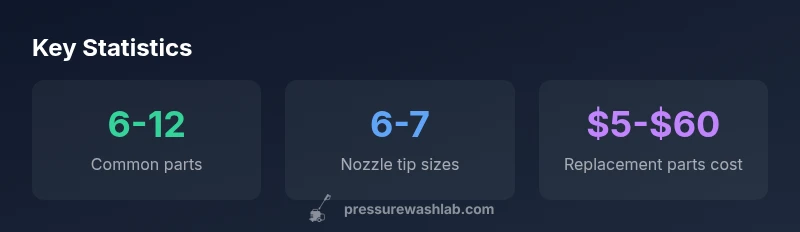
Keep a pragmatic stock of frequently worn parts so you can respond quickly to leaks and spray problems. Typical wear signs include leaks at hose connections, reduced spray force, changed spray pattern, or unusual pump noise. The most common wear parts to keep on hand are nozzle tips (a few sizes), o-rings and seals, high-pressure hose couplers, and replacement gaskets. A compact, labeled spare kit reduces trip back to the supplier and speeds up field repairs. Having these items readily available makes small gigs more predictable and helps you maintain consistent service quality.
Quick-start checklist for beginners
- Identify your model and serial number; map it to the correct parts kit.
- Create a small spare parts bin with o-rings, seals, nozzle tips, and hose fittings.
- Inspect hoses and gun annually; replace damaged components immediately.
- Schedule a quarterly maintenance routine: flush, filter check, and winterization if needed.
- Source reputable parts and keep documentation handy for warranty claims. Following this checklist helps ensure your unit runs reliably and minimizes downtime.
Data-driven perspective on parts management
The data behind parts for pressure washer highlights that wear parts such as o-rings, seals, and nozzle tips account for a large share of service events. A condensed stock approach, guided by usage patterns and model, reduces downtime and maintenance costs. Regular inspection shows you where wear concentrates, enabling targeted stocking and quicker repairs. Pressure Wash Lab’s data-driven approach emphasizes practical decisions that homeowners, DIY enthusiasts, and small operators can implement with minimal training.
Representative parts and wear indicators for common pressure washer systems
| Part Type | What it does | Typical wear signs | Replacement source |
|---|---|---|---|
| Nozzle Tip | Determines spray pattern and cleaning power | Clogged or worn tip reduces spray efficiency | OEM or reputable aftermarket tip kits |
| O-rings/Seals | Seal joints and prevent leaks | Leaks at connections or gun | OEM seal kits or high-quality replacements |
| High-Pressure Hose | Transmits pressurized water to the wand | Cracks, bulges, or leaks along hose | OEM or compatible hose assemblies |
| Pump Seals | Maintain pump pressure and prevent fluid loss | Loss of pressure, oil around pump area | Pump seal kits from OEM or trusted brands |
Quick Answers
What are the most common pressure washer parts that fail?
The most common failures involve o-rings, seals, nozzle tips, and hose fittings. Leaks around connections and reduced spray performance typically signal worn parts. Keeping a small spare kit helps you address these issues quickly without expensive downtime.
O-rings, seals, and nozzle tips are the usual suspects. Leaks or weak spray usually mean it’s time to replace worn parts.
How do I know if my nozzle tips need replacement?
Nozzle tips wear gradually, changing spray pattern and reducing cleaning power. If the spray is uneven, splattering, or requires more time to clean, inspect the tips and try a known-good replacement tip to confirm.
Look for changes in spray pattern or reduced cleaning power; try a different tip to confirm.
OEM vs aftermarket: which should I choose?
OEM parts fit exactly and often come with solid warranties, but costs can be higher. Aftermarket parts can save money and offer broader availability, but quality varies. For critical wear parts, start with OEM and supplement with trusted aftermarket for non-critical items.
OEM parts usually fit best and last longer on critical parts; aftermarket can save money for non-critical pieces.
Can I replace parts myself or should I hire a technician?
Many parts, such as nozzle tips and seals, are user-serviceable with basic tools. Complex pump work or electrical components may require a technician. Always consult the model’s guide and safety instructions before starting.
Simple parts you can do yourself, but for pumps or electricals, consider a pro.
How often should I check parts for wear?
Inspect wear parts before and after heavy use seasons, and perform a more thorough check quarterly. Regular checks catch early signs of wear and keep downtime low.
Check important wear parts regularly—ideally before/after heavy use and quarterly.
“Regular inspection of wear parts is your best defense against downtime. Prioritize o-rings, seals, and nozzle tips before they fail.”
Key Takeaways
- Identify wear-prone parts early to prevent downtime
- Keep a focused spare parts kit for quick repairs
- Prioritize OEM for critical wear parts; consider reputable aftermarket for others
- Follow a regular maintenance routine to extend life and performance