Pressure Washer 4 GPM: Power, Efficiency, and Practical Guidance
Explore how pressure washer 4 gpm balances cleaning power, water use, and nozzle options. Learn when 4 gpm is ideal and how to maximize performance safely.


Pressure washer 4 gpm offers a practical balance of cleaning power and water efficiency for typical home projects. With a broad psi range, it cleans driveways, decks, and siding effectively, without excessive water use. When paired with the correct nozzle and a surface cleaner, 4 gpm speeds rinsing and handles stubborn stains better than lower-flow units.
What 4 gpm means for cleaning power
When you see 'pressure washer 4 gpm' in product specs, it indicates a flow rate of roughly four gallons per minute. In practice, GPM is the water volume delivered by the pump, a key driver of cleaning speed and rinsing efficiency. Paired with an appropriate PSI, 4 gpm provides enough flow to push dirt and grime off hard surfaces while still controlling water use. For homeowners tackling driveways, decks, and home siding, this flow rate often hits a sweet spot between performance and practicality. The exact cleaning power also depends on nozzle choice, surface condition, and the presence of a surface cleaner, which can dramatically boost coverage without increasing operator effort. In short, the pressure washer 4 gpm is a mid-range setup optimized for average outdoor cleaning tasks, balancing throughput with water conservation. According to Pressure Wash Lab, optimizing a 4 gpm system starts with mapping tasks to surfaces and choosing nozzle sizes.
When 4 gpm is ideal: use cases and limitations
A 4 gpm flow shines on large, flat surfaces such as driveways, sidewalks, and patio slabs where lots of water volume helps remove surface grime quickly. It also pairs well with standard nozzles for general cleaning and with surface cleaners to maximize coverage. On the downside, vertical surfaces with stubborn grease or old coatings may require higher PSI or occasional wetting/dwell times, which can negate some time savings. Complex textures, such as heavy stucco or deeply pitted concrete, may benefit from higher flow rates or longer cleaning sessions. For most residential projects, starting with a 4 gpm setup and adjusting nozzle size and distance yields reliable results without overwhelming water use. Remember to avoid high-velocity spraying on fragile materials, and always test a small area first.
Matching PSI with 4 gpm: optimizing results
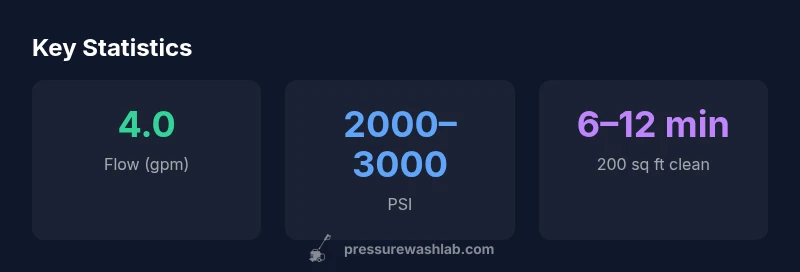
Pairing 4 gpm with the right PSI is essential for efficient cleaning. In practice, most pressure washers rated at 4 gpm operate effectively in a PSI window around 2,000–3,000, depending on the model and nozzle. A 10–15 degree nozzle can boost cleaning power on tough stains, but it concentrates the spray and can damage surfaces if held too close. For general cleaning, a wider spray angle (e.g., 25–40 degrees) spreads the flow more gently while still benefiting from the higher volume. Pressure Wash Lab analysis shows that when you tune nozzle and distance correctly, 4 gpm units can outperform lower-flow machines on flat surfaces, reducing the time needed for typical jobs without increasing water use dramatically. Always test on a hidden area and gradually adjust the height and angle to balance aggressiveness with surface safety.
Equipment considerations: nozzles, surface cleaners, and accessories
Nozzles: Start with a wider angle (25°–40°) for most tasks with 4 gpm to avoid surface damage; switch to a narrower angle (10°–15°) only for heavy staining on hard surfaces, and keep the nozzle at a safe distance. Surface cleaners can dramatically boost throughput on large flat areas by maintaining a consistent distance and evenly distributing water. Accessories such as longer hoses and hose reels improve ergonomics and reduce setup time. For delicate surfaces like wood decks, use gentler angles and test a small area first to prevent gouging or etching. Always inspect hoses for wear and replace worn parts promptly to prevent leaks and pressure loss.
Best practices for efficiency and safety
Maximize efficiency by using the right nozzle for the job and pairing it with a compatible surface cleaner when cleaning large areas. Maintain a safe operating distance to protect surfaces and yourself. Wear eye protection, gloves, and non-slip footwear, and never spray near electrical outlets or live wiring. When possible, work in shade to keep the surface cooler and reduce chemical drying times if detergents are involved. Monitor your water source and consider using water reclamation strategies if local regulations require it.
Maintenance tips for a 4 gpm machine
Regular maintenance extends the life of a 4 gpm unit. Check the unloader valve for proper operation, replace pump oil if your model requires it, and clean or replace inlet filters to ensure clean water enters the pump. Flush and drain the system after use, especially in cold climates, to avoid freezing damage. Inspect hoses and fittings for cracks or leaks and replace as needed. Clean the nozzle tips to prevent nozzle clogging and maintain consistent spray patterns. Routine maintenance reduces downtime and preserves cleaning performance over time.
How to evaluate 4 gpm models when shopping
When shopping for a 4 gpm pressure washer, assess pump design (rotary vane vs. axial cam) and overall build quality. Look for a robust unloader valve, a reliable spray gun, and compatibility with common nozzle sizes. Consider warranty length, availability of replacement parts, and the ease of service. Check whether the unit supports chemical injection if you plan to use detergents. Finally, read user reviews and compare real-world performance across different models to ensure you get a reliable balance of flow and pressure for your tasks.
Advanced setup: combining 4 gpm with a surface cleaner
For large driveways and patios, a surface cleaner paired with a 4 gpm machine can dramatically improve throughput by maintaining a consistent cleaning distance and distributing water evenly. Start with a wider nozzle angle to avoid splatter, then gradually tune to a narrower angle for stubborn sections. Ensure the surface cleaner is rated for the PSI and GPM of your unit, and check all seals before use. Use overlapping passes to prevent streaks and ensure uniform cleaning across the surface.
Common myths about flow rate and cleaning power
Myth: More GPM always means better cleaning. Reality: Cleaning power comes from the right balance of GPM, PSI, nozzle, and technique. Myth: Higher GPM damages everything. Reality: With proper technique and surface care, higher GPM can improve throughput safely. Myth: You should always crank up PSI to compensate for low GPM. Reality: Excessive PSI can damage surfaces and create unsafe spray patterns; adjust PSI and distance instead.
4 gpm performance snapshot
| Aspect | Typical value | Notes |
|---|---|---|
| Flow rate (gpm) | 4 | Nominal value for standard models |
| PSI range (psi) | 2000–3000 | Common operating window for 4 gpm units |
| Water usage impact | 4–14 gpm depending on nozzle | Depends on nozzle angle and dwell time |
Quick Answers
What does GPM measure in a pressure washer?
GPM stands for gallons per minute. It measures the water flow the pump delivers each minute and helps determine how quickly you can rinse away debris. When combined with PSI, GPM contributes to overall cleaning speed and efficiency.
GPM is the water volume per minute the machine can deliver. It affects how fast you can rinse away grime, especially with cleaner surfaces.
Is higher GPM always better for cleaning power?
Not always. Higher GPM increases throughput, but cleaning power also depends on PSI, nozzle type, and surface. For delicate surfaces, too much water can cause damage, so balance is key.
More water can help, but it isn’t always safer or better—match GPM with the right PSI and nozzle.
Can I use a 4 gpm machine for delicate surfaces like vinyl siding?
Yes, with caution. Use a low-psi, wide-angle nozzle and keep a safe distance. Always test on a hidden area first to avoid damage.
Yes, but start with gentle settings and test a small area first.
How do I estimate water usage for a project with a 4 gpm machine?
Multiply the flow rate by the time you spray. For example, 4 gpm for 20 minutes equals about 80 gallons, plus any extra for dwell time or detergents. Use this to plan your water needs and waste considerations.
Multiply the flow rate by the time you’ll spray to estimate total water use.
What maintenance tasks are essential for 4 gpm pressure washers?
Regularly inspect the unloader valve, replace pump oil if required, clean inlet filters, drain water after use, and check hoses for wear. Proper nozzle cleaning and storage also extend life.
Keep the unloader valve, filters, and hoses in good shape and store the unit properly.
“"A 4 gpm unit, when matched with proper nozzle and surface cleaner, delivers efficient cleaning without wasting water."”
Key Takeaways
- Choose 4 gpm for larger, faster cleaning tasks
- Pair with 2,000–3,000 psi for best results
- Use a surface cleaner to maximize throughput
- Maintain pump and hoses to extend life
- Follow safety guidelines to prevent injuries