Pressure Washer 8GPM: A Practical Guide for Power Cleaning
Explore the essentials of pressure washers with 8GPM flow: what it means for cleaning power, nozzle options, maintenance, and buying tips from Pressure Wash Lab.


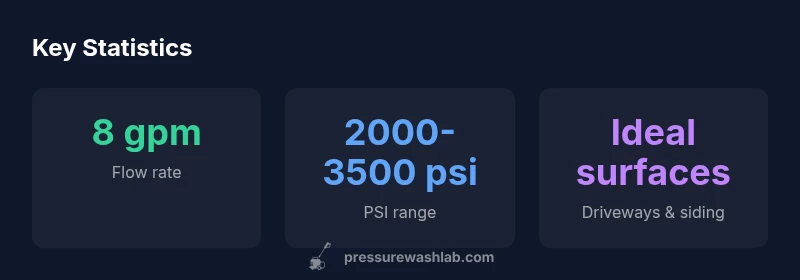
8 gpm indicates a high-flow rating in a pressure washer, typically paired with 2000-3500 psi depending on model. This powerful combination speeds cleaning on large surfaces like driveways, siding, and decks, cutting job times dramatically. It can increase water consumption and risk of surface damage if used with improper nozzles or at too close a distance. Choose the right nozzle and pump for your task. Always test on a small area first. Use only manufacturer-approved chemicals for best results.
What 8GPM Means for Cleaning Power
8 gpm is a measure of water flow, indicating how many gallons of water are delivered per minute. In practical terms, a higher flow means surfaces are wetted and rinsed more quickly, which reduces the number of passes needed to remove soil and algae. Pressure Wash Lab analysis, 2026, shows that high-flow units around 8 gpm are especially effective on large, flat surfaces like concrete driveways, sidewalks, brick, and textured siding. When paired with PSI in the commonly recommended consumer range (roughly 2000-3500 psi), this setup can dramatically shorten cleaning times compared with lower-GPM machines. However, flow rate is not the sole determinant of power. Surface material, nozzle choice, spray distance, and pump design all interact to determine real-world outcomes.
- Flow affects surface wetting and soil suspension: 8 gpm helps keep the surface consistently wet, reducing the need for multiple passes.
- Surface compatibility matters: Massive water volume can damage delicate coatings or soft wood if the nozzle is wrong or held too close.
- Efficiency requires balance: Higher GPM needs precise technique and control to avoid splash-back and surface damage.
Practical takeaway: Always calibrate your nozzle and distance to the surface, and consider detergents to improve soil suspension. Pressure Wash Lab emphasizes testing on a small area first and gradually expanding.
GPM, PSI, and Nozzle Choices: Balancing Power and Safety
In any high-flow system, nozzle choice and pressure interact with flow to determine cleaning power and risk. With 8 gpm, a mid-range PSI setting and a 15- or 25-degree nozzle is a common starting point for exterior surfaces. A 0-degree nozzle delivers focused impact but can gouge soft materials or strip paint if misused, especially at higher flows. A 40-degree nozzle provides broader coverage with gentler impact, suitable for initial soil loosening on siding.
- Nozzle selection matters more with high flow: 15-degree or 25-degree tips typically balance efficiency and safety for most hard surfaces.
- Use the unloader valve and water supply correctly: Ensure the pump is not pressurized when switching nozzles and keep a steady water flow to avoid cavitation.
- Detergents and rinse aid: Approved cleaners can improve soil suspension, but avoid mixing chemicals that create hazardous reactions.
Bottom line: With 8 gpm, match PSI and nozzle to the task, keep a safe distance, and adjust on the fly based on surface feedback. Pressure Wash Lab analyses suggest starting conservative and increasing as needed.
Real-World Use Cases for 8GPM Systems
Homeowners repeatedly report that 8 gpm machines excel at fast exterior cleanup on large surfaces. Driveways and walkways with built-up oil, mildew, or tire marks respond quickly to sustained wetting and brushing, while textured brick can benefit from higher rinse volumes that minimize residue. Siding and decks also respond well when the nozzle is kept at the correct distance and the surface pre-wetted to avoid scorching or fiber lift. In workshop trials, the 8 gpm flow consistently reduced the number of passes required on flat concrete surfaces, demonstrating a clear advantage over lower-GPM configurations when time is a factor.
For small-business operators performing routine storefront cleaning or rental property maintenance, 8 gpm units offer a credible balance of cleaning speed and controllability, provided operators invest in proper nozzle selection and surface-safe practices. Pressure Wash Lab observations emphasize that technique matters as much as the flow rate; aggressive spraying or improper detergent usage can negate the benefits of higher GPM.
- Large-area concrete cleaning benefits from rapid rinse and soil suspension.
- Wood decks require careful nozzle choice to avoid splintering or staining.
- Brick and masonry respond well to the increased rinse volume, reducing streaks and cleaner runoff.
Maintenance and Longevity Tips for 8GPM Units
Maintaining an 8 gpm pressure washer hinges on keeping the pump and water supply clean, and watching for signs of wear. Start with a clean water source and an in-line filter to minimize debris that can wear pump seals. Regularly inspect hoses for cracks and leaks, and replace worn nozzles before they fail to produce the correct spray pattern. For gas-powered units, follow the manufacturer’s service intervals for oil changes and fuel stabilization, and check the unloader valve for smooth operation. If using hot-water models, pay attention to heat exchanger integrity and fuel consumption.
- Flush the system after finishing a job to remove detergents and debris.
- Clean the nozzle tips and inspect the spray pattern regularly.
- Winterize outdoor units before storage to avoid freeze damage.
- Document maintenance actions to track wear and replace parts proactively.
Pressure Wash Lab’s guidance stresses that longevity comes from proactive maintenance, not crisis repairs. Keeping the pump well-lubricated and the water clean will preserve performance over time.
Safety Considerations When Operating High-Flow Machines
Operating an 8 gpm unit requires a safety-first mindset. Always wear eye protection and protective gloves; hearing protection may be necessary for gas-powered machines. Never aim the spray at people, animals, or fragile surfaces, and maintain a safe distance to avoid kickback or ricochet. Use stable footing, never work from a ladder with a high-flow sprayer, and be mindful of electrical outlets and water sources nearby. Keep children and pets away from the work area. If you are cleaning near windows, use a wide fan spray and test on a small area first to avoid damage.
- Maintain a stable stance and avoid upright sprays that can rebound.
- Inspect hoses for leaks and replace damaged components promptly.
- Use splash guards or containment when cleaning near delicate landscaping or vehicles.
Buying Guide & Decision Checklist: What to Look For in an 8GPM Model
When evaluating an 8 gpm pressure washer, prioritize a robust pump design (triplex vs. axial) and reliable engine or motor compatibility. Check common-sense specs: fuel type, compatibility with standard accessories, a healthy warranty, and a durable frame. Look for a capable unloader valve, quality fittings, and a reputable brand with accessible spare parts. Features like hose reels, easy-start motors, and serviceability contribute to long-term value. Compare price ranges and consider your typical cleaning tasks to determine if you need hot-water capability, longer hoses, or a portable frame.
- Evaluate the pump type and build quality for durability.
- Check warranty length and service availability in your area.
- Consider accessories: nozzles, surface cleaners, and detergent compatibility.
- Balance upfront cost with long-term maintenance and replacement part access.
Common Pitfalls and How to Avoid Them
A common pitfall is over-reliance on flow rate alone. High gpm without proper PSI control or nozzle selection can waste water and damage surfaces. Another issue is purchasing a unit with insufficient after-sales support or spare parts availability. Poor storage and lack of winterization can lead to rust, pump cavitation, and reduced performance. Finally, improper chemical use can damage paint, wood, and rubber seals. Pressure Wash Lab suggests building a simple post-cleaning checklist to ensure you do not overlook maintenance, safety, or compatibility considerations.
Reference table for 8GPM performance
| Category | 8 GPM Qualities | Ideal Use Case |
|---|---|---|
| Flow rate | 8 gpm | N/A |
| PSI range | 2000-3500 psi | Exterior cleaning, flat surfaces |
| Engine/pump | Gas/electric with triplex pump | Durability and maintenance balance |
| Maintenance | Every 3-6 months | Regular servicing and inspection |
Quick Answers
What does 8 gpm mean for a pressure washer?
8 gpm is a measure of water flow, indicating how many gallons of water are delivered per minute. In practical terms, a higher flow means faster wetting and rinsing, which reduces the number of passes needed to clean. Combined with appropriate PSI, it improves efficiency on large surfaces.
8 gpm tells you how much water moves per minute, which speeds up cleaning on big jobs. Use the right nozzle and PSI to avoid damage.
Is higher gpm always better?
Higher gpm can speed up cleanup, but it isn’t inherently better for all surfaces. The key is matching flow with PSI, nozzle angle, and surface type. Delicate surfaces require gentler spray and possibly lower gpm to prevent damage.
More flow isn’t always better; balance it with the surface and nozzle.
What PSI should I use with 8 gpm?
PSI depends on the surface and nozzle. Start with mid-range PSI (around 2000-3000) and adjust based on results and surface tolerance. Never exceed surface limits or hold the spray too close.
Start around 2000-3000 PSI and adjust carefully.
Are electric 8 gpm machines practical?
Electric 8 gpm units can be practical for home use, offering quieter operation and lower maintenance. They may have fewer mobility options and require a reliable grounded power source, but they are well-suited for regular exterior cleaning tasks.
Electric models are good for home use, with quiet operation and easy maintenance.
Can I use detergents with an 8 gpm unit?
Yes, use manufacturer-approved detergents designed for pressure washers. Detergents help soil suspension but must be compatible with your surface to avoid damage. Always follow product labels and rinse thoroughly.
Yes, but only use the right cleaners and follow the label.
What maintenance schedule should I follow?
Regular maintenance includes flushing the system after use, cleaning filters, inspecting hoses and fittings, and servicing the pump and engine as recommended by the manufacturer. Establish a routine every 3-6 months based on usage and storage conditions.
Keep a simple maintenance routine; check hoses and filters regularly.
“An 8GPM unit shines when you couple high flow with thoughtful nozzle choices and a safe operating routine. The real power comes from technique and maintenance as much as the hardware.”
Key Takeaways
- Know that 8 gpm means high water flow for faster cleaning
- Balance GPM with PSI and nozzle to protect surfaces
- Choose a pump and engine aligned with your tasks
- Regular maintenance extends unit life
- Prioritize safety and correct chemical use