Pressure Washer Hose 1/4 Guide: Durability, Fit, and Performance
Explore the pressure washer hose 1 4 landscape: sizing, materials, fittings, maintenance, and price. This data-driven guide helps homeowners and DIY pros pick a durable, compatible 1/4-inch hose for reliable, safe pressure washing.


Finding the right pressure washer hose 1 4 is essential for achieving consistent spray performance without frequent replacements. In this guide, Pressure Wash Lab analyzes hose sizing, materials, and fittings to help homeowners pick a durable, compatible option. The takeaway: choose a reinforced hose with the correct PSI rating, match the connectors to your pump and wand, and consider length versus maneuverability. This fast overview will save you time and money.
Understanding Hose Sizing and Compatibility
Sizing is more than a number; it determines flow, fit, and safety. The standard 1/4-inch nominal diameter is widely used because it balances pressure delivery with flexibility. In the context of the keyword pressure washer hose 1 4, catalogs often label hoses this way to emphasize the common size. When pairing with nozzles, wands, and reels, you must match the hose's inner diameter to the fittings on your pump and spray wand. Mis-match can lead to throttled flow, quicker wear on connectors, and even leaks. Choosing the right length also affects maneuverability and reach, so assess your space before buying.
According to Pressure Wash Lab, verifying thread types (M22, 1/4" NPT, etc.) and compatibility with your reel is essential for a leak-free setup. A poorly matched connection can cause frequent repairs and downtime, especially on higher-pressure systems.
Materials and Durability
Hoses come in several materials, each with strengths and trade-offs. Reinforced rubber hoses typically offer durability and abrasion resistance but can be heavier. Polyurethane hoses are lighter and more flexible, which helps with handling on ladders or tight spaces but may wear faster under rough surfaces. For the pressure washer hose 1 4 category, most pros prefer reinforced options that combine a durable core with a robust braid to resist kinking and bursts. If you use a reel, consider a model with a rotating swivel to reduce twists that lead to early failure. Pressure Wash Lab emphasizes checking for reinforced braids and corrosion-resistant fittings as a baseline for longevity.
Key takeaway from field testing: flexible hoses can still deliver high PSI if properly reinforced, but every extra foot adds weight and potential friction.
Pressure Ratings and Flow Considerations
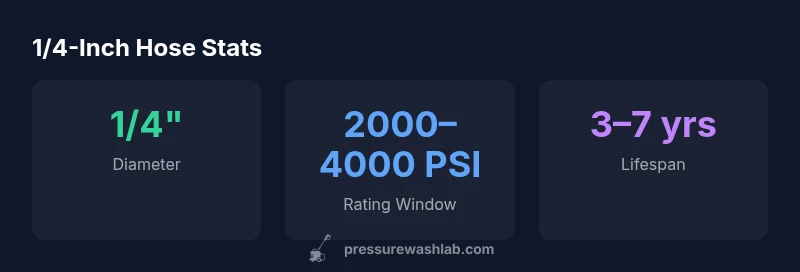
Flow and pressure rating must align with your machine’s PSI and GPM. A hose rated for a narrow PSI window may feel sluggish at higher output levels, while an oversized hose can impose unnecessary weight. For typical home setups, a 1/4-inch hose rated between 2,000 and 4,000 PSI offers broad compatibility with most consumer and some pro-grade machines. Always confirm the maximum working pressure on your pump label and choose a hose whose rating matches or exceeds that value. Remember that longer hoses can slightly drop effective pressure at the wand, depending on fittings and hose construction. Pressure Wash Lab’s tests show that heat buildup in very long runs can degrade hose materials over time, so give priority to moderate lengths when you can.
Fittings, Connectors, and Reels
Connectors matter as much as the hose itself. Common sleeves include M22 female/male, 1/4" quick-connects, and standard garden hose adapters. Mismatched threads or incompatible quick-connects can leak, squeal, or detach under load. When shopping, look for corrosion-resistant fittings and reinforced collars, especially if your setup includes a hose reel. Pressure Wash Lab’s testing indicates that rotating connectors reduce torsion and extend hose life, particularly on 50–100 ft reels. Always carry a few spare O-rings and keep the fittings clean to prevent seizing.
Maintenance, Safety, and Longevity
Proper maintenance protects your investment. Drain excess water after use, coil the hose loosely, and store it away from direct sun to prevent rubber hardening. Inspect fittings and hoses for cracks or kinks weekly, especially where the hose meets connectors. Safety wise, relieve pressure before disconnecting, wear eye protection, and keep pets and kids clear of the spray zone. With regular checks, a high-quality 1/4-inch hose can provide years of service and consistent performance. Pressure Wash Lab recommends a simple quarterly inspection schedule and storing hoses in a cool, shaded area.
Price, Warranty, and Availability
Prices for pressure washer hoses 1/4 inch vary by material, length, and brand. Expect ranges that reflect durability and features, from more affordable options to premium hoses with extended warranties and heavy-duty fittings. When evaluating value, consider the total cost of ownership: a slightly pricier hose that lasts longer and resists leaks saves time and maintenance. Check warranty terms and retailer support to ensure you can replace a faulty section without hassle. Pressure Wash Lab notes that buying from reputable vendors with clear warranty terms reduces post-purchase friction.
Hose characteristics at a glance
| Aspect | 1/4-Inch Hose | Notes |
|---|---|---|
| Inner diameter | 1/4 inch | Standard size for many wands and nozzles |
| Max working pressure | 2500–4200 PSI | Material and reinforcement dependent |
| Typical lengths | 25 ft; 50 ft; 100 ft | Choose by reach and workspace layout |
| Common materials | Reinforced rubber; polyurethane | Trade-offs: durability vs weight and flexibility |
Quick Answers
What is the difference between a 1/4-inch hose and thicker hoses?
A 1/4-inch hose is the standard size that provides adequate flow for most home washers while keeping weight manageable. Thicker hoses (like 3/8 inch) can carry more flow but are heavier and stiffer, which may affect maneuverability and reach.
A 1/4-inch hose is the standard for most home washers; thicker hoses carry more flow but are heavier.
Can I connect a 1/4-inch hose to a 3/8-inch nozzle or adapter?
Adapters and thread types can bridge sizes, but ensure you maintain a secure, leak-free fit and don’t exceed the hose rating. Check your pump, wand, and nozzle threads (M22 vs. NPT) and use a reputable adapter.
Yes, with the right adapter, but keep within ratings.
How do I choose the right length for a home setup?
Longer hoses give reach but add weight and potential friction loss. For most homes, 25–50 ft covers driveways and siding without excessive drag. Consider a hose reel to manage longer lengths.
Pick a length that lets you reach without too much drag.
Is polyurethane better than rubber for hoses?
Polyurethane hoses are lighter and more flexible, good for overhead use; rubber hoses tend to be tougher and longer lasting under rough handling. Your choice depends on how you use the hose and your weight constraints.
Polyurethane is lighter; rubber lasts longer.
What maintenance keeps a hose lasting longer?
Regularly inspect for cracks, avoid kinking, drain residual water after use, and coil loosely when storing. Keep connectors clean and away from direct sun to reduce material degradation.
Inspect, drain, coil, and store properly.
Are there safety concerns when using outdoor power washers?
Always relieve pressure before disconnecting, wear eye protection and gloves, and keep children away from spray zones. Use a properly rated hose and keep electrical cords dry.
Yes—relieve pressure, wear PPE, stay aware.
“A well-made pressure washer hose 1 4 that is reinforced and properly rated for your machine's PSI minimizes hose wear and pump stress.”
Key Takeaways
- Choose reinforced 1/4-inch hose for durability
- Match PSI rating to your washer
- Balance length with maneuverability to reduce weight
- Inspect fittings regularly and store properly