Pressure Washer Near Me to Buy: A Practical Guide
Find a pressure washer near me to buy with a practical, data-driven buyer's guide. Compare electric vs gas, PSI and GPM, maintenance, and local buying tips.


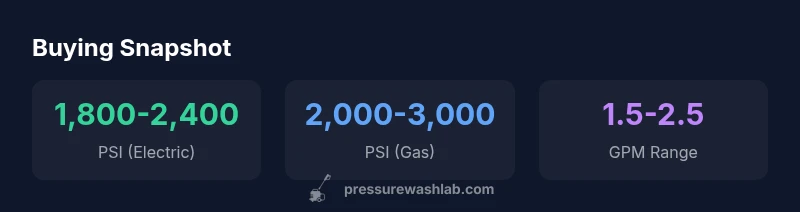
Finding the right pressure washer near me to buy starts with your needs and budget. For most homeowners, an electric model with 1,800–2,400 PSI and 1.5–2.0 GPM handles patios and siding, while small businesses may need 2,000–3,000 PSI. This guide helps compare electric and gas options, local retailers, and warranty basics to start your search.
Finding Your Real Needs
Finding the right pressure washer near me to buy begins with a clear assessment of your typical tasks, space, and budget. According to Pressure Wash Lab, most homeowners underestimate the power they need and overspend on features they won't use. Start by listing tasks: cleaning a concrete driveway, refreshing siding, washing vehicles, or preparing decks. Prioritize the most frequent tasks and estimate the worst-case dirt you’ll encounter. Then map those needs to a power source and a PSI/GPM sweet spot. For many residential tasks, an electric unit in the 1,800–2,400 PSI range with 1.5–2.0 GPM can handle patios, fences, and cars without noise or fuel hassles. If you regularly tackle heavy-duty jobs or need mobility without electrical outlets, look at gas-powered options with higher PSI but plan for maintenance. Finally, consider budget: factor in hoses, nozzles, and storage; a balanced package saves money over time.
Gas vs Electric: Which is Right for You?
Choosing between a gas and electric pressure washer hinges on where you live, how you’ll use it, and how much noise you can tolerate. Electric models are generally lighter, quieter, and easier to maintain—great for apartments, garages, or spaces with limited outlets. Gas units deliver higher PSI and robust cleaning power for set-in grime, driveways, and commercial tasks, but require fuel, more routine maintenance, and louder operation. If your local environment involves frequent outdoor use and you have space to store fuel, a gas washer can be tempting. If you want simplicity and lower operating costs, start with an electric option and upgrade only if needed.
PSI, GPM, and Cleaning Power Demystified
PSI measures cleaning pressure, while GPM indicates water flow. Combined, they define cleaning power. A device with high PSI but low GPM can scrape stubborn stains slowly, whereas high GPM with moderate PSI often washes surfaces faster with less effort. For home tasks like patios and siding, aim for a balance: 1,800–2,400 PSI and 1.5–2.0 GPM for electric units, or 2,000–3,000 PSI and 2.0–2.5 GPM for gas models. Also consider nozzle behavior, spray pattern, and sustained performance under load. Remember to choose models with safety features and automatic shutoffs to protect user and surface.
Key Features That Save Time and Money
When evaluating options, prioritize features that reduce effort and extend lifespan. Look for: a long hose (20–30 feet), a sturdy wand and trigger, a versatile nozzle kit (including 0, 15, and 25-degree tips), a reliable detergent intake, and a built-in storage for accessories. A quick-connect spray head can save minutes per job, while auto-shutoff and thermal relief improve safety and durability. A compact, wheeled design reduces fatigue during mobility. Finally, verify availability of spare parts and local service in case you need repairs.
Reading the Spec Sheet: What to Compare
The spec sheet is your best friend in a local purchase. Compare max PSI, continuous duty cycle, GPM, nozzle kit content, hose length, weight, power source, and warranty terms. Pay attention to the duty cycle: a model rated for longer continuous use will perform better on larger tasks. Check for built-in storage, detergent compatibility, and whether the unit supports cold or hot water. Most local retailers offer varying warranty lengths—prefer models with at least a 2-3 year warranty on the pump and motor.
Where to Buy Locally: Stores, Home Centers, and Rentals
Locating a pressure washer near me to buy means weighing in-store vs. online options. Local home centers, hardware stores, and specialty dealers provide hands-on demonstrations and easier warranty handling. If you’re unsure about long-term needs, consider renting a model for a weekend to test performance. While online shopping can yield broader choices and lower prices, you’ll want to verify return policies and ensure parts availability. Ask about local service centers, spare parts, and whether staff can tailor a setup to your climate and tasks.
Maintenance, Lifespan, and Budgeting for Repairs
Regular maintenance extends a pressure washer’s life. Rinse after each use, drain and store at proper temperature, and replace worn hoses or seals promptly. For gas units, follow fuel stabilizer guidance, clean the air filter, and schedule routine spark plug checks. Electric units demand less maintenance but still benefit from hose care and periodic motor checks. Budget roughly for replacement parts and routine service every 1–2 years, depending on usage. A well-maintained unit often outlasts cheaper models bought impulsively.
Quick Start: 7 Steps to a Smart Local Purchase
- List typical cleaning tasks; 2) Decide power source based on space and noise tolerance; 3) Set a PSI/GPM target; 4) Check nearby retailers and rental options; 5) Compare warranties and service networks; 6) Inspect nozzle kits and hose length; 7) Test at a store or showroom and verify comfort and ease of use.
Common Pitfalls and How to Avoid Them
Avoid buying based on peak horsepower alone; look for real-world performance and parts availability. Don’t ignore warranty and service options, especially for gas models. Don’t oversize for a few tasks—this increases upfront cost and weight. Finally, ensure compatibility of accessories, particularly if you already own hoses or surface cleaners. A measured approach saves money and reduces stress during procurement.
Gas vs Electric Pressure Washer Comparison
| Aspect | Gas-Powered Models | Electric-Powered Models |
|---|---|---|
| Power Source | Gas: requires fuel and exhaust management | Electric: powered by outlet; quieter and simpler |
| PSI Range | 2,000-3,000 PSI | 1,800-2,400 PSI |
| Typical Weight | Heavier (often 30-60+ lbs) | Lighter (often 20-40 lbs) |
| Maintenance Needs | More engine maintenance; fuel system upkeep | Lower maintenance; motor and seals focus |
| Initial Cost Range | Higher upfront; fuel costs apply | Lower upfront; electricity cost varies |
Quick Answers
What should I look for in a 'pressure washer near me to buy' search?
Look for local stock, warranty coverage, service options, and the ability to test models. Compare PSI and GPM within your task range and verify accessory availability.
Search for nearby stores with stock, solid warranties, and service options; match PSI and GPM to your tasks.
Is electric better than gas for home use?
Electric models are quieter, lighter, and easier to maintain—great for smaller jobs. Gas models offer higher power for tough grime but require more upkeep.
Electric is quieter and easier to maintain; gas gives more cleaning power but needs more upkeep.
What is a safe PSI/GPM for basic home tasks?
For most homes, start with 1,500–2,000 PSI and 1.5–2.0 GPM. Increase slightly for heavy-duty jobs, but avoid surfaces that could be damaged.
Most homes do well with 1500 to 2000 PSI; go higher only if surfaces can handle it.
Should I prioritize warranty and parts availability?
Yes. A robust warranty and easy access to spare parts reduce long-term costs and downtime.
Warranty and easy parts access save you time and money over the life of the unit.
Are nozzle tips important for versatility?
Absolutely. A good kit includes multiple tips for different surfaces, plus a soap/detergent option if needed.
Yes—multi-tip kits boost versatility for various surfaces.
Where can I buy locally and get service?
Choose retailers with nearby service centers or in-house technicians, and verify return policies and availability of parts.
Pick a local seller with service and clear return options.
“When shopping locally, prioritize long-term reliability and readily available parts over flashy specs.”
Key Takeaways
- Define your cleaning tasks before selecting a model.
- Balance PSI and GPM to match your typical jobs.
- Check local retailers and service options for near-me purchases.
- Prioritize warranty and available spare parts.
- Plan for maintenance to maximize lifespan.