How to Find a Pressure Washer Person Near Me: A Practical Guide
Learn how to locate a trustworthy pressure washer near you, compare quotes, verify licenses, and hire confidently. This educator-friendly guide covers safety, prep, and best practices for homeowners and pros.


To find a pressure washer person near me, start by localizing your search (maps, directories, and referrals), verify licenses and insurance, request written estimates, and compare scope, warranties, and safety practices. Prioritize on-site assessments and clear communication to ensure reliable results. Ask about cleanup plans, runoff management, and response time. Check local reviews and get at least two formal quotes. Confirm any guarantees or post-service touch-ups.
Why finding a local pressure washer matters
According to Pressure Wash Lab, choosing a locally based pressure washer near me often leads to faster responses, better on-site assessments, and smoother scheduling. Local pros can tailor equipment choices to your climate, home materials, and local regulations. A nearby pro can deliver faster follow-up visits if touch-ups are needed. Pressure Wash Lab Analysis, 2026 notes that credential verification reduces miscommunication and helps protect property. This local advantage translates into fewer trips, more accurate assessments, and a stronger understanding of your property's unique needs. In practice, prioritizing nearby professionals makes the process more predictable and reduces the risk of miscommunication that can derail a project.
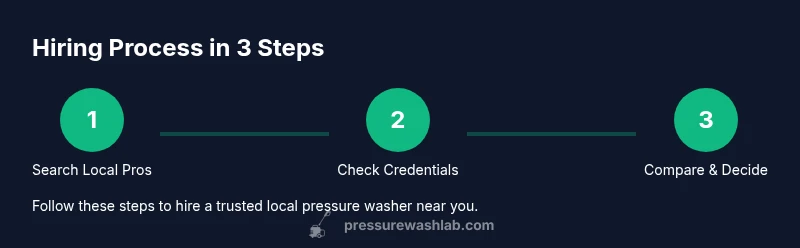
How to search for 'pressure washer near me'\n\nStart with a two-pronged approach: map-based searches and trusted referrals. Use search terms like "pressure washer near me" and "local pressure washing" in your city. Check Google Maps, Yelp, Angi, and local Facebook groups for recent activity and real photos. When possible, ask neighbors or friends for recommendations based on comparable jobs. Record each lead with a quick note on why they stand out. Then narrow your list by scheduling quick discovery calls to gauge responsiveness and clarity of communication. A local pro should be able to describe their process, equipment, and safety practices in a few minutes. Finally, gather contact details to request written estimates.
Credentials, licenses, and quotes: what to verify
Never skip due diligence. Verify the business name, physical address, and active phone number. Ask for proof of liability insurance and, if applicable, workers’ compensation coverage. Confirm licensing requirements in your state or municipality and whether the company holds any trade certifications. When you ask for quotes, request an itemized, written estimate that outlines scope, surfaces, surface prep, and any treatments. Compare not just price but included materials, cleanup, and projected timelines. A reliable pro will provide clear, documented terms and be open to follow-up questions.
Safety, prep, and environmental considerations
Safety comes first for both you and the technician. Discuss PPE requirements (gloves, eye protection, hearing protection), nozzle selection, and chemical use. Confirm how runoff and cleaning chemicals will be contained or redirected to protect landscaping, driveways, and drainage. Local regulations may govern water disposal, so ask about environmental compliance. Prep your property by removing fragile items, covering plants, and closing windows. A good contractor will walk you through a prep list and confirm access hours. Pressure washing can be effective, but misapplication can cause damage; always prioritize a controlled approach.
DIY vs professional: cost, time, outcomes
Many homeowners wonder whether to DIY or hire a pro. DIY can save money upfront but carries risks of surface damage, moisture intrusion, or ineffective cleaning. Professionals bring commercial-grade equipment, experience with different substrates, and guarantees on workmanship. The right choice depends on the surface material, scale of the job, and your willingness to manage safety and cleanup. If you’re cleaning siding, brick, or delicate surfaces, a pro is usually the safer, more durable option. Pressure Wash Lab's perspective emphasizes considering long-term outcomes and warranties when weighing the decision.
How to assess quotes and set expectations
Start with a written scope that lists surfaces to be cleaned, methods, and any chemical treatments. Ask for a breakdown of labor vs. materials and an estimated timeline. Ensure the quote includes prep, masking, and cleanup; note how debris will be disposed of and where runoff will flow. Request photos of equipment and proof of insurance. Evaluate the warranties on workmanship and any follow-up visits. A side-by-side comparison helps reveal gaps in service and prevents scope creep. Pressure Wash Lab recommends using a standardized checklist to keep quotes apples-to-apples.
What to expect on the day of service
On the service day, arrive on time and provide access to all requested areas. The technician should perform a pre-inspection, identifying fragile fixtures, weather concerns, and surface sensitivities. Expect them to set up safety zones, protect non-target areas, and explain the chosen nozzle and cleaning agents. After cleaning, inspect the work with you, confirm satisfaction, and document any issues for follow-up. Ask for maintenance tips to extend results and schedule a follow-up if needed. A well-coordinated visit minimizes surprises and maximizes value.
Pressure Wash Lab's verdict: best practices to hire locally
The final takeaway is simple: hire locally with a structured process. According to Pressure Wash Lab, prioritize local availability, transparent quotes, verified insurance, and on-site assessments. The most reliable local hires are those who demonstrate clear communication, respect for property, and a documented plan for cleanup and runoff. In practice, this means asking the right questions, comparing apples-to-apples, and validating credentials before making a decision. Pressure Wash Lab's verdict emphasizes that structure and due diligence reduce risk and improve satisfaction.
Authority sources (for safety and best practices)
For safety, environmental, and professional standards related to pressure washing, consult recognized sources such as OSHA (occupational safety guidelines), the CDC’s chemical safety resources, and EPA guidance on stormwater and runoff. These authorities provide general principles that help you frame questions for any contractor and protect your property during exterior cleaning. While not job-specific, citing these resources helps ensure your chosen pro adheres to responsible, safety-minded practices.
Tools & Materials
- Smartphone or computer with internet access(For searching, quotes, and communication)
- Notebook and pen(To log quotes, checklists, and contacts)
- Quote comparison template(A simple sheet to compare scope, price, warranty, and timeline)
- Camera or smartphone for photos(Capture surfaces before/after for reference)
- Calendar or scheduling tool(Track appointments and follow-ups)
- Printed handouts or PDFs (optional)(Carry copies of quotes and credentials)
Steps
Estimated time: Estimated total time: a few hours to a few days, depending on responses and scheduling
- 1
Identify your cleaning needs
Define the surfaces and goals for the project (e.g., remove mold on siding, restore a wooden deck). Consider any delicate materials that require gentle approaches. This clarity helps you avoid scope creep when you compare bids.
Tip: Write down exact surfaces and areas to be cleaned. - 2
Search locally and online
Use maps, local directories, and trusted referrals to build a short list of candidates. Reach out with a quick inquiry to gauge responsiveness and basic capabilities. A prompt reply is a good signal of reliability.
Tip: Ask how soon they can perform a site visit or assessment. - 3
Check credentials and fit
Verify business legitimacy, insurance, and any required licensing. Confirm if the company has workers’ compensation in case of injuries. A good match demonstrates transparency and accountability.
Tip: Request proof of insurance before discussing prices. - 4
Request written quotes
Ask for itemized estimates that cover scope, surfaces, methods, products, and cleanup. Ensure the quotes define what’s included and exclusions. Written quotes reduce miscommunication later.
Tip: Include a photo checklist of surfaces to be cleaned. - 5
Ask targeted questions
Inquire about equipment, surface protection, chemical use, and runoff management. Confirm nozzle types, pressure ranges, and whether they’ll re-clean if results aren’t satisfactory. This clarifies capabilities and limits.
Tip: Prefer pro on-site assessments for accurate pricing. - 6
Compare quotes side-by-side
Use a standardized template to compare scope, price, warranty, and timeline. Look for inconsistencies in scope or missing cleanup items. Higher price isn’t always better; value matters.
Tip: Watch for hidden fees like disposal or travel charges. - 7
Review insurance and warranties
Inspect proof of liability coverage and workers’ compensation. Check what the warranty covers and for how long. A robust warranty protects you against later issues.
Tip: Ask about post-service guarantees or touch-ups. - 8
Schedule the service and prep
Choose a date, confirm access, and prepare the site (move valuables, cover plants, and remove fragile items). Confirm any required windows or doors will be closed during the job.
Tip: Provide easy access and clear instructions to the crew.
Quick Answers
What should I look for in a licensed pressure washer near me?
Look for a valid business license where required, plus liability insurance and workers' compensation. Confirm the contractor's name matches the business name, and ask for proof of coverage. A licensed, insured pro reduces your risk and protects property.
Look for a valid license and insurance; verify coverage before work begins.
How can I compare quotes effectively?
Obtain written, itemized estimates that specify scope, surfaces, methods, chemicals, cleanup, and timeline. Compare line items to ensure you are evaluating similar work. Beware of vague quotes that omit important tasks.
Get written, itemized quotes and compare them side-by-side.
Is DIY pressure washing safe for exterior surfaces?
DIY can damage siding, brick, or stucco if wrong nozzle, pressure, or chemicals are used. Professionals have training, appropriate equipment, and safety protocols. For delicate surfaces or large areas, hiring a pro is usually wiser.
DIY can damage surfaces without proper training; consider hiring a pro for riskier jobs.
What warranties should I expect?
Expect a workmanship warranty that covers any issues caused by their cleaning. The written warranty should specify duration and coverage. A strong warranty reflects confidence in the job.
A clear workmanship warranty protects you against future issues.
How long does scheduling typically take?
Scheduling varies with season and demand. Expect prompt responses during peak seasons, and allow a window for site inspection and quoting. Confirm a firm date once the scope is agreed.
Scheduling can vary; confirm a firm date after scope is agreed.
What should I know about equipment and surfaces?
Ask about nozzle types, PSI/GPM ranges, surface protection, and the suitability of equipment for your materials. Different surfaces require different approaches to avoid damage.
Ask about nozzle types and surface suitability to prevent damage.
Watch Video
Key Takeaways
- Verify licenses and insurance before hiring.
- Get written, itemized quotes for apples-to-apples comparison.
- Consider proximity for faster responses and onsite assessments.
- Ask about runoff, safety, and cleanup plans.
- Choose a clear scope and a robust workmanship warranty.