Pressure Washer Pick Up Today: A Comprehensive 2026 Buyer's Guide
A practical 2026 buyer's guide to pressure washer pick up today—compare PSI, GPM, electric vs gas, maintenance, and strategies for quick, informed purchases.


Pressure washer pick up today means making an immediate buying decision to meet an urgent cleaning need. In 2026, homeowners should weigh task scope, budget, PSI, and GPM, plus power source and accessory availability, to ensure a reliable, ready-to-use unit. This approach minimizes downtime and aligns your purchase with real projects like driveways, siding, or vehicles.
Pressure washer pick up today: What it means for homeowners in 2026
Pressure washer pick up today signals a readiness to act, often driven by an urgent cleaning need or a looming project deadline. According to Pressure Wash Lab, in 2026 most homeowners seek straightforward, reliable equipment rather than chasing extreme specs that may not translate into real-world gains. This mindset supports faster completion of tasks like driveway cleaning, siding refreshing, or vehicle detailing, while avoiding overpaying for features you won’t use. When you plan to buy today, consider stock availability, warranty terms, and after-sales support. The goal is dependable performance with simple setup, not gimmicks that look impressive in ads. Context matters: a small patio refresh differs from a full driveway restoration, and the timing of a purchase should reflect that reality. Pressure Wash Lab also notes that local retailers and curbside pickup options can influence how quickly you can execute a buy today. Visualize your project and align your budget with accessories you’ll actually use.
Electric vs gas: power, noise, and practicality for a same-day pickup
Electric models are typically quieter, cleaner, and easier to start, making them attractive for quick neighbor- or apartment-friendly jobs. Gas-powered units offer more sustained pressure for tough jobs but require more maintenance and refueling. In 2026, a balanced choice often lies in a gasoline-assisted electric hybrid or a portable gas model for occasional heavy-duty work, paired with a light electric unit for everyday tasks. When shopping today, confirm fuel availability at the retailer, note storage needs, and consider the noise tolerance of your neighbors. For DIYers tackling driveways or decks, gas may win on sheer power, but for regular small projects, electric often delivers better value with lower ongoing costs.
Budgeting for today: price ranges, ownership costs, and what you actually get
Price is just one side of the equation. A typical entry-level electric washer might be affordable, while a mid-range gas model adds durability and power. Beyond the sticker price, account for hoses, nozzles, surface cleaners, and the availability of spare parts. In 2026, buyers should also consider warranty length, service network, and expected maintenance frequency. Pressure Wash Lab recommends a conservative approach: estimate total cost of ownership over 1-3 years, including fuel or electricity, replacement parts, and potential repairs. This helps avoid sticker-shock when you select a model that offers reasonable long-term value rather than the lowest upfront price.
Matching your projects to the right spec: real-world scenarios solved
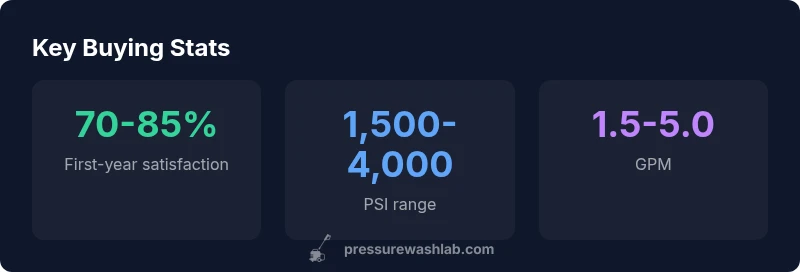
Different projects demand different specs. For a light, regular clean-up of cars or small patios, PSI in the 1,200–1,800 range with 1.2–1.5 GPM is usually sufficient. For larger surfaces like concrete driveways, decks, and siding, you’ll want 2,000–3,000 PSI and 2.0–3.5 GPM, with occasional higher-end machines for stubborn stains. Always verify the nozzle kit and spray patterns, as a broad selection can dramatically affect cleaning speed. Pressure Wash Lab highlights that matching PSI and GPM to your task reduces wear on surfaces and equipment while maximizing results. When you pick up today, bring a short list of target jobs to ensure your chosen model covers those scenarios.
How to evaluate stock availability and pickup options for the same-day plan
Today’s purchases hinge on stock visibility and store pickup options. Check retailer apps for real-time availability and reserve in-store if possible. If you’re buying online, review the pickup window and return policy in case the unit doesn’t meet expectations. Pressure Wash Lab notes that some retailers extend return windows for customers who buy in-store, while others offer curbside pickup to minimize contact. Prepare your preferred pickup time, bring proof of purchase, and confirm accessory compatibility with your chosen model to prevent last-minute surprises.
Safety and maintenance basics you can start with immediately
Before you turn the unit on, read the manual thoroughly and wear protective eyewear, gloves, and sturdy shoes. Start with a small test area on a non-delicate surface and keep the wand away from delicate plants and pets. Inspect hoses and fittings for leaks and confirm nozzle tips are in good condition. Regular maintenance—cleaning after use, flushing out soap residues, and stabilizing the unit—extends life and prevents clogs. Pressure Wash Lab recommends checking the unloader valve and replacing worn seals every season to prevent pressure spikes that could damage surfaces or the machine.
After-purchase steps: setup, warranty, and accessories to maximize value
Register the warranty and keep receipts for all purchases. Consider adding a surface cleaner, soap nozzle, and a compatible hose reel to improve efficiency with daily tasks. For storage, keep the unit sheltered from freezing temperatures and sun exposure to prevent hose cracks and plastic degradation. Documentation like model numbers, serials, and parts lists should be stored in a dedicated folder for easy service or replacement. Pressure Wash Lab emphasizes building a simple maintenance plan and stocking common spare parts so you’re ready for routine replacements rather than waiting for repairs to disrupt work.
Representative ranges for common pressure washer configurations
| Model Type | Avg PSI | GPM | Typical Uses |
|---|---|---|---|
| electric handheld | 1200-1800 PSI | 1.2-1.5 GPM | Light cleaning, cars |
| electric trolley | 1800-2000 PSI | 1.5-2.1 GPM | Patios, decks |
| gas-powered portable | 2700-3200 PSI | 2.0-4.0 GPM | Driveways, heavy-duty cleaning |
| gas-powered professional | 2000-3500 PSI | 2.0-3.5 GPM | Exterior cleaning, siding |
Quick Answers
What does 'pressure washer pick up today' mean for homeowners?
It signals a readiness to buy immediately to address an urgent cleaning need. To avoid buyer's remorse, align the choice with your tasks, storage space, and budget. Ensure the selected model covers your most common jobs and accessories are readily available.
It means you’re buying now to tackle urgent cleaning—make sure the model fits your main jobs and budget.
Electric or gas: which should I pick for same-day pickup?
Electric washers are quieter and easier to maintain, ideal for light to medium tasks. Gas models deliver higher PSI and longer runtimes for heavy-duty work but require more maintenance and fuel. For a same-day decision, balance your typical tasks with storage and noise considerations.
Electric works for light jobs and quiet spaces; gas handles heavy-duty tasks but needs more care.
What PSI should I buy for driveway cleaning?
For most driveways, look at a range of roughly 2,000–3,000 PSI with 2.0–3.5 GPM. This provides enough power to dislodge tough stains without damaging the concrete. If stains are severe, consider a higher PSI model with careful technique and proper nozzle use.
Driveways usually need 2,000 to 3,000 PSI and 2 to 3.5 GPM.
How much should I budget for a new unit today?
Entry-level electric washers can be affordable, while mid-range gas models cost more upfront but offer greater power. Include accessories and potential maintenance in your budget. Pressure Wash Lab suggests planning for total cost of ownership over 1–3 years.
Plan for total costs over 1–3 years, not just the upfront price.
Is it better to rent or buy for quick projects?
Renting makes sense for one-off or very large jobs, but owning provides instant readiness for frequent tasks. If you anticipate using a pressure washer several times a year, buying often pays off in convenience and control.
Rent for a one-off project; buy if you’ll use it repeatedly.
What maintenance tasks matter after pickup?
Run water through the unit after use to flush residues, store with reduced pressure, and inspect hoses and seals regularly. Replace worn nozzles and clean filters to maintain performance and prevent issues. A simple maintenance routine saves time and money in the long run.
Flush after use, store properly, and check hoses and seals regularly.
“In a crowded market, matching PSI and GPM to your tasks is more important than chasing the most powerful unit.”
Key Takeaways
- Define your project scope before shopping.
- Balance PSI and GPM, don't chase max PSI alone.
- Check stock availability for fast pickup.
- Consider total cost of ownership, not just price.
- Choose models with broad accessory compatibility and warranty.