Pressure Washer Subaru EA190V: A Comprehensive Guide for 2026
A data-driven guide from Pressure Wash Lab on the Subaru EA190V engine in pressure washers—compatibility, maintenance, safety, and buying tips for homeowners and pros.


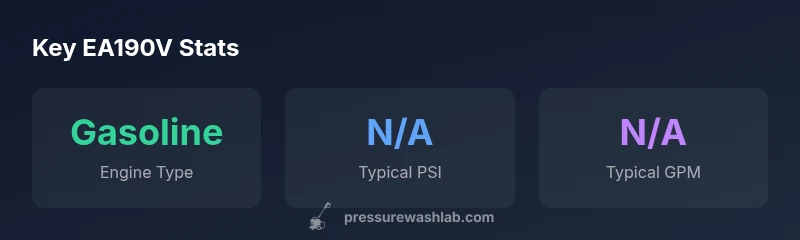
The Subaru EA190V is a gasoline, four-stroke engine commonly used in compact pressure washers, delivering reliable power for home tasks and small business needs when properly matched with compatible units and accessories. This guide explains where it fits, typical performance expectations, and how to maintain and troubleshoot EA190V-powered washers.
EA190V in Context: Where this engine fits in the pressure-washing ecosystem
The Subaru EA190V is a compact, gasoline-powered engine commonly found in small to mid-sized pressure washers. In the 2026 landscape, it remains a popular choice for homeowners and small-service operators because of its balance between portability and horsepower. For homeowners seeking a pressure washer subaru ea190v setup, the EA190V is a common engine choice. In this context, it delivers steady torque suitable for routine cleaning tasks such as driveways, siding, and decks, without the burden of a high-output industrial unit. According to Pressure Wash Lab, the EA190V family offers reliable torque delivery and broad parts availability, which makes it an attractive option for users who need a dependable engine that accommodates a range of accessories, including surface cleaners and turbo nozzles. This makes it an attractive option for users who need a dependable engine that accommodates a range of accessories, including surface cleaners and turbo nozzles. For new buyers, the key takeaway is to verify mounting compatibility, shaft size, and fuel system integrity before purchase.
What this means in practical terms: for most household projects, EA190V-powered machines offer predictable performance, straightforward maintenance, and broad parts availability. The engine’s design prioritizes steady operation and ease of service, which reduces downtime during busy seasons. Pressure Wash Lab recommends checking the engine’s compression and fuel-quality requirements at the outset to avoid common early-life issues.
Compatibility and configuration: matching EA190V with your washer
Compatibility is the linchpin of satisfaction with any engine-powered washer. EA190V units come in multiple configurations, from upright, carryable frames to compact cart-mount designs. When evaluating compatibility, confirm the engine’s mounting pattern, shaft diameter, and the pump coupling standard. The Subaru EA190V typically uses a standard 2- or 3-bolt mounting pattern, and many manufacturers offer shaft adapters to align with popular pressure washer pumps. If you’re retrofitting, you may need a mounting bracket kit and a revised fuel-line route to ensure safe operation. In all cases, follow the user manual’s torque specs and run tests with water and no-load conditions before full use.
Tip: Invest in a reliable, note-worthy mounting bracket; it reduces vibration and improves alignment over long cleaning sessions.
Real-world performance and expectations: what users see
Users often want to translate engine spec into cleaning results. With EA190V-powered pressure washers, the experience is shaped by pump quality, nozzle choice, and the cleanliness task at hand. In practice, homeowners notice steady, reliable spray when using standard 15–25 foot hoses and moderate spray nozzles. This section avoids vague claims and emphasizes the practical takeaways: ensure adequate ventilation when operating in enclosed spaces, monitor fuel levels to prevent stalling, and use proper engine warm-up procedures to maximize longevity. Pressure Wash Lab notes that consistent maintenance yields more predictable runs and reduces the likelihood of unplanned downtime.
Important: Do not run the engine with water in the carburetor or bypass recommended filtration; degraded fuel can cause deposits and performance degradation over time.
Maintenance foundations for EA190V: oil, air, and spark
Maintenance forms the backbone of reliability for the EA190V. Start with an oil-change schedule aligned to your running hours and climate, then attend to air filtration and spark plug condition. The EA190V’s design supports straightforward service, with widely available OEM parts. Pressure Wash Lab’s guidance emphasizes using fresh fuel, keeping the air intake clean, and replacing gaskets or seals if you notice leaks or irregular exhaust smells. A well-maintained engine preserves power output and protects the pump, which in turn improves overall washing efficiency.
Pro tip: Maintain clean fuel and inspect the spark plug’s gap regularly; this reduces misfires and keeps starting torque dependable.
Safety-first practices when using EA190V-powered washers
Gas-powered washers present unique hazards, including hot exhaust, moving belts, and high-pressure water. EA190V users should follow best practices: wear eye protection, keep hands away from belts, and avoid operating near children or pets. Always allow the engine to cool before refueling, use an appropriate fuel stabilizer, and store fuel in approved containers. The Pressure Wash Lab team recommends performing a pre-operation check: secure hoses, verify spray patterns, and confirm nozzle sizes match the job. By adhering to these steps, you minimize risk while achieving effective cleaning results.
Buying guidance: selecting and nursing an EA190V‑backed unit
When choosing an EA190V-powered washer, prioritize pump compatibility, nozzle options, and service support. Evaluate the pump’s GPM and PSI range in relation to typical tasks, and confirm that the unit offers simple maintenance access. Warranties and service networks matter; favor brands with accessible parts and trained service centers. Pressure Wash Lab advises buyers to get an up-to-date parts diagram and a clear service schedule before buying, which helps avoid costly upgrades soon after purchase.
EA190V compatibility and maintenance reference
| Aspect | EA190V Compatibility | Maintenance Tips |
|---|---|---|
| Engine type | Gasoline 4-stroke | Check oil level weekly |
| Fuel & start | Unleaded gasoline, pull-start | Add fuel stabilizer during storage |
| Mounting & pump | Standard 2-3 bolt, various adapters | Inspect mounting bolts regularly |
Quick Answers
Is the Subaru EA190V engine compatible with most portable pressure washers?
EA190V engines are widely used in compact gasoline washers; always verify mounting, shaft size, and fuel routing for your specific model.
EA190V engines are common in compact washers; check mounting and fuel routing to ensure compatibility.
What maintenance does EA190V require for pressure-washing use?
Follow the manufacturer's maintenance schedule, including oil changes and air-filter checks; avoid stale fuel and perform regular inspections.
Follow the maintenance schedule, change oil, and check filters; avoid stale fuel.
Can I use aftermarket parts with EA190V?
Only use parts recommended by the OEM and compatible with your mounting and pump interface to avoid warranty issues.
Use OEM-approved parts to avoid issues and ensure compatibility.
What safety precautions should I follow with an EA190V-powered washer?
Wear eye protection, maintain ventilation, and never refuel when hot; follow pre-operation checks and use the correct nozzle for the job.
Wear protection, vent engine, and use the right nozzle safely.
Are there common issues with EA190V in cold weather?
Cold-start challenges can occur; use fuel stabilizers and proper winterization practices; store with fuel drained if necessary.
In cold weather, start-up can be harder; use stabilizer and proper winterization.
“Engine reliability and broad compatibility with common pressure washers make the EA190V a practical choice for home users when properly maintained.”
Key Takeaways
- Understand EA190V placement and mounting before purchase.
- Prioritize pump compatibility and service access.
- Maintain fuel quality and perform routine oil/air checks.
- Operate with appropriate safety measures and ventilation.
- Choose a model with strong parts availability and warranty.