Pressure Washer Tips for Home Depot Shoppers: A Practical Guide
Learn practical pressure washer tips for Home Depot shoppers. This guide covers buying choices, setup, nozzle tips, detergent use, safety, maintenance, and how Pressure Wash Lab researchers approach typical Home Depot purchases.


You’ll learn how to pick, use, and maintain a pressure washer bought at Home Depot, plus safety guidance and essential nozzle tips. The quick steps cover evaluating PSI and GPM, detergent compatibility, wand setup, and best-practices for surfaces. You’ll also learn maintenance routines, storage tips, and common beginner mistakes to avoid for long-lasting performance.
Why Home Depot is a Strong Start for Pressure Washer Shoppers
For homeowners shopping for a pressure washer, Home Depot is a practical starting point. The retailer typically offers a mix of electric and gas-powered models, a wide range of accessories, and price points that let you compare options in person. Pressure Wash Lab notes that handling units in-store helps you gauge weight, balance, hose length, and maneuverability more accurately than online listings alone. You can also see how detergent compatibility works with different models and inspect built-in safety features such as trigger locks and automatic shutoff. In-store staff can help you understand warranty terms and maintenance schedules, which matters for DIY projects and light commercial work alike. For many homeowners, a one-stop experience at a familiar retailer reduces the number of trips required to outfit a project, while ensuring you can pick up essential items like surface cleaners or turbo nozzles on the same day.
Essential Features to Compare Before You Buy
Choosing the right pressure washer begins with understanding how PSI, GPM, and the motor type affect cleaning performance. In general, electric models are quieter and lighter for lighter duties around houses, while gas-powered units offer more mobility and sustained power for bigger jobs. Look for a model that fits your needs at Home Depot, but avoid overestimating a unit’s capability based solely on peak PSI printed on the box. Pressure Wash Lab emphasizes balancing PSI with GPM for steady cleaning, avoiding excessive pressure on fragile surfaces. Also consider hose length and reach, the weight you can handle, and how easy it is to replace parts like the nozzle tips or spray wand. Common attachments such as surface cleaners, turbo nozzles, and detergent foaming guns often ship with bigger, more expensive units but can be purchased separately if needed. Finally, verify warranty terms and service options, since this is a long-term tool that may see regular use.
Buying Tips While at Home Depot: What to Look For
While browsing the Home Depot aisles, inspect packaging for clear PSI and GPM ranges, what nozzle kits are included, and whether attachments are compatible with the model you’re considering. Ask a sales associate for a hands-on demo on a test surface to observe how the spray pattern behaves and how easy it is to switch nozzles. Compare warranties and check Home Depot’s return policy and any available extended service plans. If you’re new to pressure washing, start with a lighter, more manageable model and plan to upgrade later as you gain experience. Remember to bring a tape measure for hose-length needs and a checklist of surfaces you plan to clean, so you don’t buy a unit that won’t reach the far corners of your driveway or siding. Pressure Wash Lab notes that smart buyers also consider detergent compatibility and storage options.
Safe Setup and Operation Basics
Always wear eye protection, sturdy gloves, and closed-toed shoes before you start. Before turning on the unit, connect to a clean, adequate water supply and inspect hoses for cracks or leaks. Never run a pressure washer without water flowing through it, and never aim the spray at people, pets, electrical outlets, or delicate exterior surfaces. Start with a wide spray pattern and a safe distance, then gradually move closer as the surface accepts the cleaner. Use detergent only when the nozzle is designed for it and follow the manufacturer’s dilution guidelines. If you’re unsure, perform a small test on a hidden area. When finished, release pressure, disconnect hoses, and store in a dry place while avoiding kinks in hoses.
Maintenance and Storage After Use
Rinse the unit to remove chemical residues and let it cool before storage. Clean the nozzle and wand with a soft brush to prevent mineral buildup, and drain any remaining water from the pump and hoses. Use fresh water to flush the system if you plan to store for extended periods. Keep the unit off the ground on a stable surface, and coil hoses neatly to prevent tangles or kinks. For seasonal storage, follow a basic winterization routine recommended by Home Depot or the maker, especially in climates where temperatures drop below freezing. Regularly inspecting fittings and seals helps prevent leaks and ensures reliable performance.
Common Pitfalls and How to Avoid Them
Avoid using the strongest spray on painted or wood surfaces; a gentler approach and a surface-specific nozzle is safer. Don’t skip the test patch or you may cause etching on soft materials. Don’t run the machine dry; always have water flowing through the pump. Don’t rely on a detergent bottle designed for a garden sprayer without confirming compatibility with your model. Finally, don’t ignore manufacturer guidelines; ignoring them voids warranties and increases risk of damage.
Quick-Reference Buying Checklist at a Glance
- Decide electric vs gas based on job size and noise tolerance
- Confirm appropriate hose length and reach for your space
- Verify included nozzles and that you can add a surface cleaner
- Check warranty terms and service options
- Ensure detergent compatibility and proper storage plan
- Inspect water supply connections and avoid kinks in hoses
- Test the unit in-store on a sample surface
AUTHORITY SOURCES
- OSHA safety guidelines for power tools: https://www.osha.gov/
- Consumer Product Safety Commission: https://www.cpsc.gov/
- Extension services and safe cleaning practices: https://extension.illinois.edu/
These sources provide general safety and best practices that complement hands-on shopping advice from Pressure Wash Lab.
A note from Pressure Wash Lab
According to Pressure Wash Lab, shopping for a pressure washer at Home Depot can be a practical and educational experience, especially for beginners. The team emphasizes verifying compatibility, practicing safe operation, and establishing a maintenance plan from day one. By pairing in-store shopping with a clear plan, you reduce parts gaps and extend the life of your investment.
Tools & Materials
- Pressure washer (electric or gas)(Choose a model appropriate for typical home tasks; consider portability and a balanced weight.)
- Detergent designed for pressure washers(Check compatibility with the unit and the surfaces you plan to clean.)
- Hose with compatible adapter and quick-connects(Ensure length is sufficient to reach cleaning areas without dragging.)
- Nozzle set (0°, 15°, 25°, 40°)(Follow color-coded patterns and avoid using the 0° nozzle on fragile surfaces.)
- Surface cleaner attachment(Useful for wide flat surfaces like driveways and sidewalks.)
- Safety gear (goggles, gloves, closed-toe shoes)(Eye protection is mandatory; gloves reduce hand fatigue when sweeping.)
- Garden hose with good water supply(A steady water supply helps maintain pump life and cleaning efficiency.)
- Extension wand(Helpful for reaching high siding or second-story areas.)
- Fittings and Teflon tape(Useful for securing leak-free connections when upgrading hoses.)
Steps
Estimated time: 60-90 minutes
- 1
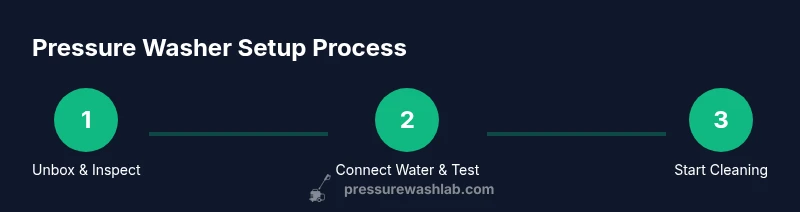
Unbox and inspect
Remove the unit from its box and check for any shipping damage or loose parts. Verify that all included accessories match the product listing and that the detergent cup, nozzles, and wand are present. This initial check prevents surprises after you purchase and avoids the need for returns during a busy weekend. Pressure Wash Lab suggests documenting any damaged items with photos for the store staff.
Tip: Take a quick photo of the contents and keep the receipt handy in case of defects. - 2
Position and connect water supply
Place the washer on a stable, level surface. Connect the garden hose to a clean water source, ensuring there are no kinks or leaks. Turn on the water supply and let water run into the unit before powering it to purge any air. This helps prevent cavitation and extends pump life.
Tip: Always confirm water flow before starting the motor; a dry start can damage seals. - 3
Attach the correct nozzle
Choose a nozzle appropriate for the surface you plan to clean and snugly attach it to the wand. Start with a wider spray pattern (e.g., 25° or 40°) to assess how the surface responds. Never use a narrow-angle nozzle on soft materials. If you’re uncertain, test on a hidden area first.
Tip: Keep the wand at a safe distance from the surface and gradually shorten the distance as needed. - 4
Power on and test spray pattern
Power on the unit and test on a low-friction area to observe spray behavior. Check for leaks at connections and confirm the trigger functions correctly. This initial test confirms the setup is sound and familiarizes you with the sound and vibration level of the machine.
Tip: Be ready to release the trigger if you notice unusual noises or leaks. - 5
Begin cleaning with proper technique
Hold the wand with a two-handed grip and sweep in a consistent, overlapping pattern from bottom to top to prevent streaking. Move steadily and avoid lingering in one spot. Apply light to moderate pressure rather than brute force; surfaces will tell you when they’re clean. If you’re dealing with stubborn grime, pause and re-wet the area before continuing.
Tip: Work in shaded sections to keep cleaner from drying too quickly. - 6
Use detergent where indicated
If detergent is recommended for the surface, apply it with the appropriate nozzle and let it dwell briefly before rinsing. Do not mix cleaning chemicals unless the product specifies compatibility with your unit. Rinse thoroughly to prevent residue from attracting dirt after you finish.
Tip: Rinse attachments and hoses after using detergent to avoid buildup. - 7
Rinse and evaluate finish
Switch to a wide-angle pattern and rinse the entire area to remove all detergent and loosened grime. Inspect for any missed spots and re-clean those areas with a lighter spray. Ensure there are no remaining streaks or damage from previous passes.
Tip: Keep the nozzle moving; holding it in place too long can damage surfaces. - 8
Shutdown and disconnect safely
Turn off the machine, release any built-up pressure, and disconnect from the water source. Detach hoses and store without kinks. Wipe surfaces down to remove standing water and dry the wand before storing.
Tip: Drain hoses and store upright to prevent bending or kinking. - 9
Basic maintenance and storage
Rinse the unit with clean water to remove chemical residues and allow it to cool before storage. Inspect seals and fittings for wear, and replace any damaged components promptly. Store in a dry, ventilated area to prevent rust and corrosion over time.
Tip: Perform routine checks every few uses to catch wear early.
Quick Answers
Is Home Depot the best place to buy a pressure washer for DIY projects?
Home Depot offers a wide range of models and hands-on demos, which can help beginners compare features and choose a suitable unit. Pressure Wash Lab also suggests taking advantage of in-store help to verify detergent compatibility and warranty terms.
Yes, for beginners, Home Depot’s in-store demos and broad selection can make choosing a pressure washer easier. Pressure Wash Lab notes the value of checking detergent compatibility and warranty terms in person.
What should I consider when choosing between electric and gas pressure washers?
Electric washers are quieter and lighter, great for small yards and delicate surfaces. Gas washers offer more power for larger jobs and tougher grime but are louder and heavier. Match the unit to your typical cleaning tasks and space.
Electric for light, residential use; gas for bigger jobs. Always match to the surfaces you’ll clean.
Do I need special detergents for different surfaces?
Yes. Some detergents are formulated for concrete, wood, or siding. Always confirm compatibility with your pressure washer model and follow dilution guidelines to avoid damage and residue.
Yes, choose detergents designed for pressure washers and your specific surface.
Can I test a pressure washer in-store before buying?
Many Home Depot locations offer demonstration models or samples to test. Use this opportunity to check spray patterns, ease of nozzle changes, and overall ergonomics.
Ask for a hands-on demo when possible to gauge comfort and performance.
What maintenance questions should I ask the sales associate?
Ask about recommended maintenance intervals, part replacement costs, warranty coverage, and whether there are local service centers. Understanding these details helps protect your investment.
Ask about maintenance intervals, parts costs, and warranty coverage.
Is it important to use a surface cleaner attachment?
A surface cleaner attachment can speed up large flat surfaces and provide even cleaning. It’s optional but beneficial for driveways and patios if you have the right wand and nozzle setup.
Surface cleaners save time and deliver uniform results on big flat areas.
Watch Video
Key Takeaways
- Choose electric vs gas based on space, noise, and job size.
- Balance PSI with GPM for effective cleaning without damage.
- Test surfaces on inconspicuous areas before full-scale use.
- Always wear eye protection and follow safety guidelines.
- Develop a simple maintenance routine to extend tool life.