How to Use a Pressure Washer Without a Water Source
Learn practical setups to run a pressure washer when no tap is available, including portable tanks, safe configurations, and maintenance tips for homeowners and DIYers.


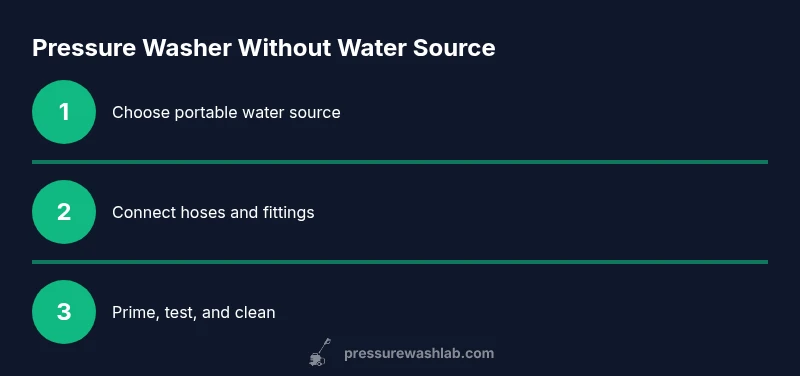
With no fixed water supply, you can operate a pressure washer by using an onboard reservoir or a portable water tank, priming the pump, and selecting the correct nozzle for your task. Fill the tank, connect hoses, and power the unit from a generator or battery if needed. Monitor water level and maintain proper pressure to avoid damage.
Introduction to using a pressure washer without a water source
The concept of a pressure washer without a traditional water tap is more practical than it first seems. The key is to work with a portable water source that can feed the pump reliably, while protecting the machine from air locks and overheating. Whether you’re cleaning a driveway, siding, or a wooden deck, a well-planned setup lets you stay mobile and productive. Pressure Wash Lab has tested multiple configurations to see what balances convenience, cost, and performance. The takeaway is simple: with careful selection of a tank, hoses, and power source, you can maintain steady cleaning power even when a dedicated water source isn’t available. The goal is to keep the water flowing smoothly and the unit cool, so you finish the job efficiently rather than wrestling with repeated priming.
Think about this as a portable water plan rather than a fixed water hookup. Your choice of tank size, suction options, and nozzle family determines how long you can clean before recharging water. The main benefit is flexibility: you can tackle jobs in garages, on driveways, or in rural locations where municipal water is not easily accessible. In this guide, we’ll walk through practical configurations, real-world examples, and safety considerations to help you design a setup that fits your needs. According to Pressure Wash Lab, a well-chosen portable water source can extend cleaning sessions without sacrificing cleaning efficiency. The emphasis is on reliable water delivery, safe operation, and predictable results, even when you’re away from a standard faucet.
-1.0?null
Tools & Materials
- Pressure washer(Ensure the model supports external water sources or onboard reservoirs.)
- Portable water tank(5–20 gallons is typical; larger tanks extend run time for bigger jobs.)
- Suction hose or pickup hose(Long enough to reach your water source and keep the inlet submerged if needed.)
- Delivery hose with fittings(Use high-quality hoses with quick-connect fittings for easy setup.)
- Inline filter or pre-filter(Helps prevent debris from clogging the pump.)
- Water transfer pump (optional)(Useful if you’re pulling water from a distant source.)
- Power source (generator or inverter)(Must match your washer’s electrical requirements and be well-ventilated.)
- Nozzle set (0°, 15°, 25°, 40°)(Choose nozzle angles based on surface and material.)
- Drain containment(Plastic sheeting or a tray to contain runoff on sensitive surfaces.)
Steps
Estimated time: 45-75 minutes
- 1
Prepare the water source
Position your portable tank where it is easy to fill and won't be tripped over. If you’re using a suction line, ensure the inlet is submerged or close to the water surface to avoid air bubbles. Check that the tank has sufficient water for the planned cleaning session.
Tip: Keep the tank above the pump to reduce the risk of air locks. - 2
Connect hoses and fittings
Attach the suction hose to the pump inlet and connect the delivery hose to the pressure washer. Use quick-connect fittings for rapid assembly and leak prevention. Verify that all connections are tight before powering on.
Tip: Apply thread sealant or Teflon tape where threads join to prevent leaks. - 3
Prime the pump and check for leaks
Fill the reservoir enough to prime the pump, then cycle the trigger slowly to purge air. Look for any leaks at hose fittings and seals, and tighten as needed. A smooth prime reduces startup noise and improves discharge.
Tip: If you hear air sputtering, pause and reseat the hoses to eliminate air pockets. - 4
Power up and run a test
Start the pressure washer with the lowest recommended setting and a wide spray nozzle. Stand to the side of the spray to observe the stream and confirm stability. If the flow stops, pause to refill or reposition the tank.
Tip: Begin near the joint of the surface to avoid overspray and damage. - 5
Begin cleaning with controlled pressure
Gradually increase pressure after testing on a hidden area. Use a wider nozzle for delicate surfaces and a narrow one for stubborn stains, keeping the nozzle at a safe distance from the substrate.
Tip: Keep the nozzle moving to avoid concentrating force in one spot. - 6
Finish, refill, and store safely
Turn off the unit, purge remaining water from hoses, and disconnect fittings. Refill the tank if more work is needed, then drain and dry components before storage. Inspect hoses for wear and replace any damaged parts.
Tip: Always store in a dry, ventilated area to prevent mold or corrosion.
Quick Answers
Can I operate a pressure washer without connecting to a water source?
Not without some water supply. You need either a portable onboard tank, an external water tote, or a gravity-fed setup. If your unit lacks an onboard reservoir, it cannot sustain spray without a water feed. Always verify your model’s requirements.
No—without a water source you can’t run most pressure washers. Use a portable tank or external supply and keep water flowing to the pump.
What size water tank should I use for home projects?
For typical home projects, a 5–20 gallon tank provides a good balance between portability and run time. Larger jobs may benefit from bigger tanks, but they become heavier to move.
A 5 to 20 gallon tank is usually enough for most home tasks; bigger tanks extend run time but add weight.
Is it safe to use a generator with a pressure washer?
Yes, but operate the generator outdoors in a well-ventilated area and follow the manufacturer’s safety guidelines. Use a dedicated circuit and avoid overloading outlets.
Yes—ensure outdoor use, proper ventilation, and following the washer’s power needs.
Which nozzle should I start with when cleaning without a water source?
Begin with a wider spray angle (25° or 40°) to prevent damage and gradually move to a narrower nozzle if more cleaning power is needed. Maintain a steady distance from the surface.
Start with a wide nozzle to protect surfaces, then adjust as needed.
What maintenance is essential for water-tank setups?
Regularly inspect hoses for wear, clean filters, and drain and dry tanks after use. Keep connectors tight and replace worn gaskets to prevent leaks.
Check hoses and tanks after each use and replace worn parts promptly.
Watch Video
Key Takeaways
- Use a portable water source to power your pressure washer when a tap isn’t available
- Choose tank size and hose configuration based on job duration and surface type
- Prime properly, run tests on a small area, and monitor for leaks
- Keep safety gear on and follow fuel/electrical guidelines for safe operation
- Plan maintenance and storage to extend the life of your water-tank setup